To winter-proof your appliances, start by inspecting and cleaning filters, vents, and coils to keep them running efficiently. drain your water heater to remove sediment and insulate pipes to prevent freezing. Keep refrigerator doors sealed tightly, and defrost manual units regularly. Check electrical cords and outlets for damage, replacing or repairing as needed. Proper maintenance reduces safety risks and lowers energy costs. For more essential tips, discover how these simple steps protect your home all winter long.
Key Takeaways
- Regularly clean or replace filters and vents in heating and cooling systems to maintain efficiency and prevent system strain.
- Insulate water heaters and exposed pipes in unheated areas to prevent freezing and improve energy efficiency.
- Keep refrigerator and freezer doors sealed tightly, defrost manually when needed, and consider upgrading to energy-efficient models.
- Inspect electrical outlets and cords for damage, and use surge protectors to guard against winter storm power fluctuations.
- Schedule professional inspections for appliances showing signs of malfunction and perform routine maintenance to ensure safety and reliability.
As winter approaches, it’s vital to prepare your appliances for the colder months to prevent damage and guarantee they work efficiently. Cold weather can impact how your appliances perform, leading to higher energy bills and potential safety hazards if not properly maintained. By taking proactive steps now, you guarantee your appliances remain reliable and safe throughout the season.
Start by inspecting your heating and cooling systems. These are key to maintaining a comfortable and safe home during winter. Clean filters and vents to improve airflow, which boosts energy efficiency. A clogged filter forces your HVAC system to work harder, consuming more energy and increasing wear and tear. Guaranteeing your heating system is functioning at its best not only reduces energy costs but also minimizes the risk of fire hazards or carbon monoxide leaks. If you notice any signs of malfunction or unusual noises, schedule a professional inspection before the cold sets in. This preventive maintenance can catch issues early, saving you money and preventing emergency repairs.
Inspect and clean your heating and cooling systems now to ensure safety and efficiency this winter.
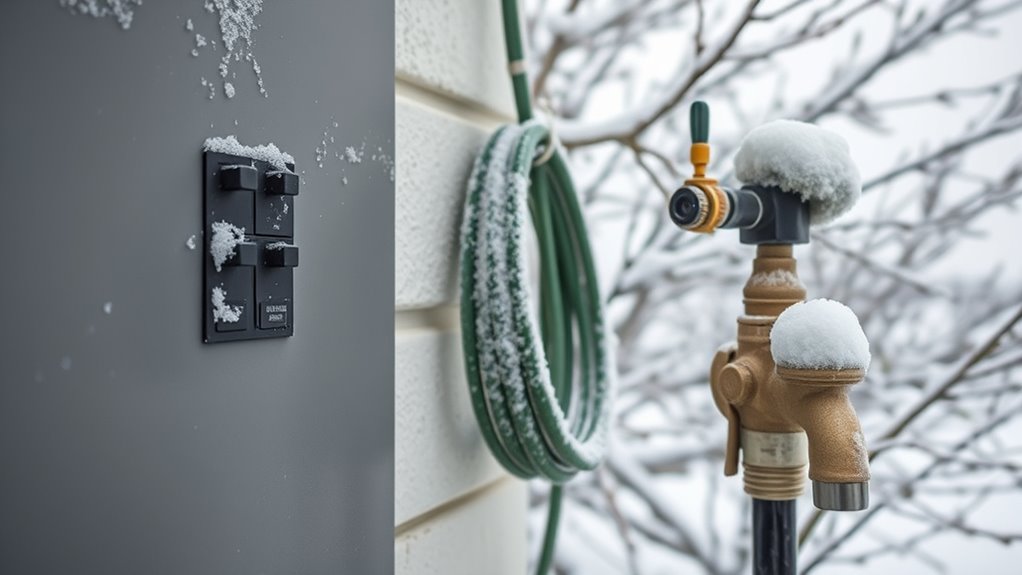
Next, check your water heater. Drain it to remove sediment buildup, which can cause the unit to work inefficiently or overheat. Proper insulation around the tank helps retain heat, reducing energy use and preventing pipes from freezing. Frozen pipes pose a serious safety concern and can cause significant water damage. Insulating exposed pipes in unheated areas, like basements or garages, is a simple but effective step to protect your home. When pipes are well insulated, the risk of freezing drops considerably, and your water heater operates more efficiently, saving energy and money. Additionally, regular maintenance of appliances can prolong their lifespan and improve overall safety.
Refrigerators and freezers should also get attention. Keep doors sealed tightly to prevent cold air from escaping, which forces the compressor to work overtime—wasting energy and shortening appliance lifespan. Regularly defrost manual units to prevent ice buildup, which hampers performance. If you have an older appliance, consider replacing it with a newer, energy-efficient model. This not only improves energy efficiency but also enhances safety, as modern appliances include safety features that older models lack.
Finally, guarantee all electrical outlets and cords are in good condition. Frayed or damaged cords can cause electrical shorts or fires, especially in damp winter conditions. Use surge protectors for sensitive devices to prevent damage during power fluctuations caused by winter storms. Keeping appliances well-maintained and insulated reduces energy consumption, lowers utility bills, and greatly improves safety during the colder months. By taking these steps now, you’ll enjoy a cozy, efficient, and safe winter season.

Kayle 120" Motorized Projector Screen Electric Diagonal Automatic Projection 16:9 HD Movies Screen for Home Theater Presentation Education Outdoor Indoor W/Wireless Remote, Wall/Ceiling Mount (White)
【Widescreen Aspect Ratio】The projector screen features a 16:9 viewing format, same aspect ratio as an HD TV and...
As an affiliate, we earn on qualifying purchases.
Frequently Asked Questions
How Often Should I Inspect My Appliances for Winter Readiness?
You should inspect your appliances at least once a month as part of your seasonal appliance checks, especially before the coldest months. Incorporate these inspections into your winter maintenance schedule to catch any issues early. Look for signs of wear, leaks, or corrosion, and make certain vents and filters are clean. Regular checks help prevent breakdowns and keep your appliances running efficiently throughout the winter season.
Can Outdoor Appliances Be Safely Used During Freezing Temperatures?
Imagine a delicate dance between outdoor appliances and winter’s icy grip; they can be used safely if you prioritize outdoor appliance safety and winter appliance protection. To prevent damage, make certain they’re properly insulated, drained, or covered when not in use. During freezing temperatures, avoid running gas-powered equipment continuously, and always follow manufacturer guidelines. With careful planning and proper winter appliance protection, you can keep your outdoor appliances functional and safe throughout the cold months.
What Are Signs My Appliances Are Damaged by Cold Weather?
If your appliances show signs of appliance failure during winter, it’s likely due to winter damage. Look for freezing or cracking in hoses, especially in washers and dishwashers. Unusual noises, leaks, or difficulty starting can also indicate cold-related harm. You might notice reduced efficiency or sudden breakdowns after a cold snap. Addressing these issues early helps prevent further damage and guarantees your appliances keep working smoothly through the winter.
Should I Drain Water From Appliances Before Winter?
Sure, drain water from appliances before winter, because nobody wants a frozen disaster. By taking this simple winter precaution, you prevent pipes from cracking and appliances from bursting. Just a quick drain of water, and you’re set for the freeze. Don’t ignore this step; your future self will thank you for avoiding the mess and costly repairs when the cold hits. Stay smart, stay dry, and winter-proof your appliances!
Are There Specific Brands Better Suited for Cold Climates?
You should consider brands known for reliability and strong appliance warranties, especially in cold climates. Brands like Whirlpool, GE, and Frigidaire are often better suited because they offer durable appliances designed to withstand harsh temperatures. Their warranties give you peace of mind, knowing repairs are covered if issues arise during winter. Choosing trusted brands guarantees your appliances stay functional and reliable throughout the cold months, minimizing maintenance worries.

Silver Ticket Products STR Series 6 Piece White 1.1 Gain 120" Diagonal 16:9 Format Projection Screen, Aluminum Frame, Wall Mounted, 109.25x63.625 inches STR-169120
Wall Mounted Fixed Frame Projection Screen (Overall Size 63.625" Tall x 109.25" Wide) (Viewing Area 120" Diagonal x...
As an affiliate, we earn on qualifying purchases.
Conclusion
As frost coats your windows and icy winds whisper outside, remember that well-maintained appliances act like warm, sturdy shields against winter’s chill. Picture your appliances safe and humming smoothly, nestled in a cozy, frost-free home. With a little effort now, you’ll avoid frozen pipes and icy surprises, keeping your household running comfortably through the cold months. Stay proactive, and let your appliances stand resilient against winter’s harsh embrace, ensuring peace of mind all season long.

PANSEBA 1080P Mini Projector with Screen, Portable Home Theater Movie Projector with Two-Way Bluetooth, HDMI/USB Input for Smartphone/TV Stick, Ideal for Indoor & Outdoor Use
【Upgraded Two-way Bluetooth 5.2 & HIFI Speaker】Built-in powerful speakers, this portable bluetooth projector provides HIFI sound effect while...
As an affiliate, we earn on qualifying purchases.

TOWOND Projector Screen and Stand, 150 inch Indoor Outdoor Projection Screen, Portable 16:9 4K HD Rear Front Movie Screen with Carry Bag Wrinkle-Free Design for Home Theater Backyard Cinema
Projector Screen with Stand. 150-inch diagonal, 160°wide viewing angle, aspect ratio 1:1 and 16:9 4k HD portable projector...
As an affiliate, we earn on qualifying purchases.

Elena’s passion for the arts and culture shines through in her vivid reporting. From film festivals to gallery openings, her coverage is an essential source for anyone interested in the latest cultural trends and artistic movements.