
Water softeners help you tackle hard water by removing calcium and magnesium minerals that cause buildup, scale, and clogged pipes. They use an ion exchange process to replace these minerals with sodium or potassium, preventing mineral deposits and improving water flow. As a result, your appliances last longer, and soap lathers better, saving you money and effort. To understand how these systems work and their long-term benefits, keep exploring these solutions further.

Get everyday essentials delivered free with Prime
- Fast, free delivery on millions of items
- Prime Video, Amazon Music and more included
- Member-only deals all year
Key Takeaways
- Water softeners remove calcium and magnesium ions, preventing mineral buildup in pipes and appliances on a large scale.
- They use ion exchange to treat water centrally, ensuring consistent softening across entire systems or communities.
- Softened water reduces soap scum, mineral deposits, and clogging, improving efficiency of multiple fixtures and appliances.
- Proper maintenance of softeners extends their lifespan, ensuring reliable large-scale water treatment and cost savings.
- Environmentally, softened water decreases the need for harsh cleaning chemicals and lowers energy consumption system-wide.
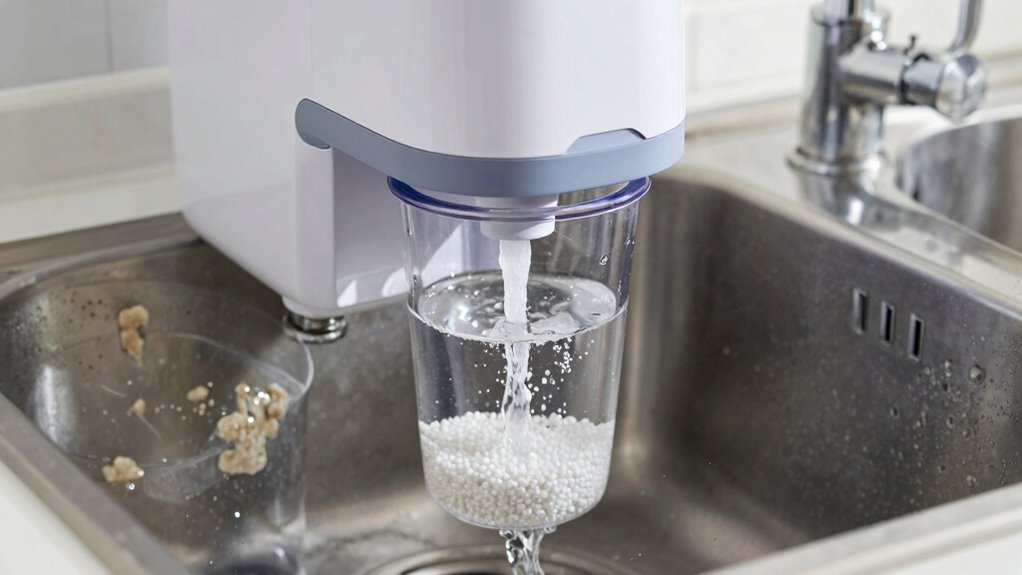
Hard water, which contains high levels of dissolved minerals like calcium and magnesium, can cause numerous problems in your home, from soap scum buildup to reduced appliance efficiency. One of the most noticeable issues is mineral buildup on fixtures, pipes, and appliances. Over time, these minerals accumulate, leading to clogged pipes and decreased water flow. This buildup can also cause your appliances to work harder, which shortens their lifespan and increases energy costs. When minerals settle on surfaces, they form stubborn deposits that are difficult to remove, making cleaning more labor-intensive and less effective.
Soap efficiency is another major concern with hard water. You’ll notice that soap doesn’t lather well, and you might need to use more to clean your skin, dishes, or laundry effectively. This is because the calcium and magnesium in hard water react with soap, creating insoluble scum that prevents proper cleaning. The result is not only wasted soap but also a less effective cleaning process, leaving residues on your skin and in your clothes. Over time, this reduces the overall effectiveness of your cleaning routines and can even cause skin irritation or dryness.
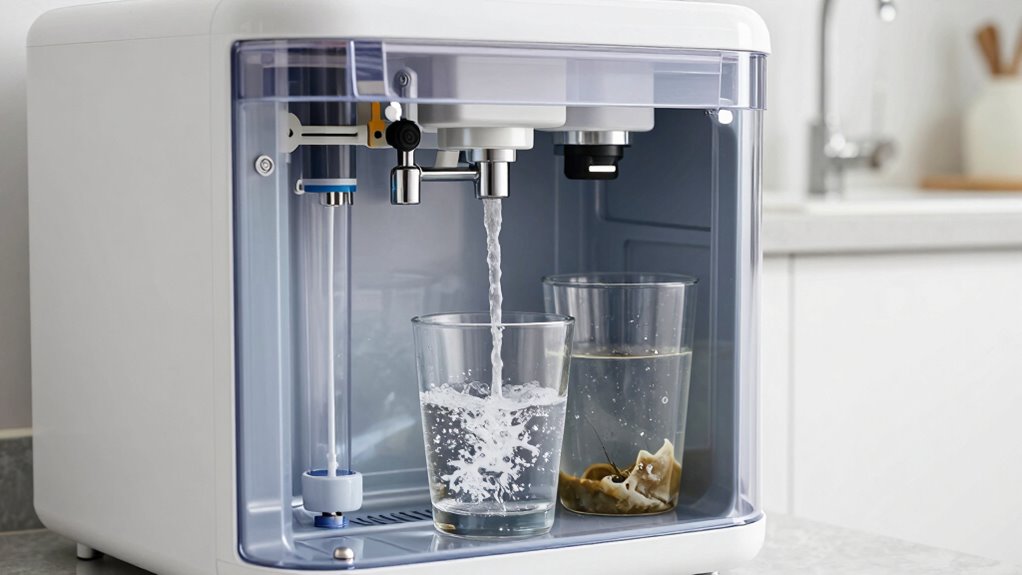
This is where water softeners come into play. They work by removing the calcium and magnesium ions responsible for hard water problems. Most water softeners use a process called ion exchange, where hard water passes through a resin bed that captures the minerals and replaces them with sodium or potassium ions. As a result, the water that reaches your fixtures and appliances contains markedly fewer minerals, which helps prevent mineral buildup. With less mineral deposition, your pipes stay clearer, your appliances operate more efficiently, and you’re less likely to experience costly repairs or replacements. Proper maintenance of water softening systems is essential to ensure they continue to function effectively over time. Additionally, maintaining a clean water supply ensures optimal performance of the softening process and prolongs system lifespan. Regularly monitoring your system’s regeneration cycle is also crucial for maintaining its effectiveness.
Furthermore, the use of softened water can contribute to environmental benefits by reducing the need for harsh cleaning chemicals and decreasing energy consumption related to appliance operation. In addition, softened water improves soap efficiency enormously. Because the minerals are removed, soap can lather properly and work as intended. This means you’ll use less soap for cleaning tasks, and your skin and clothes will feel cleaner and softer. Laundry detergents and dish soaps become more effective, saving you money over time. Plus, appliances like water heaters, dishwashers, and washing machines will last longer and perform better because they’re not constantly battling mineral deposits. Overall, installing a water softener is a smart investment to combat the effects of hard water, making daily routines easier, cleaner, and more efficient. Maintaining the efficiency of your appliances and plumbing systems is crucial for long-term savings and convenience, especially when considering the impact of hard water on your home.
water softener system for large scale use
As an affiliate, we earn on qualifying purchases.
As an affiliate, we earn on qualifying purchases.
Frequently Asked Questions
How Often Should I Replace the Water Softener Resin?
You should replace the water softener resin every 10 to 15 years, depending on its resin lifespan and your water usage. Regular replacement guarantees ideal softening performance and prevents resin bed fouling. Keep an eye on signs like decreased water softness or increased salt usage, which indicate it’s time for a replacement. Following the recommended replacement frequency helps maintain your system’s efficiency and extends its overall lifespan.
Are Water Softeners Effective Against All Types of Mineral Deposits?
Water softeners are effective against most mineral deposits, especially calcium and magnesium, which cause mineral buildup and scale. They work by exchanging these minerals for sodium or potassium ions, helping prevent scale formation. However, they may not remove other contaminants like iron or sulfur. For thorough protection, consider additional treatments. Overall, water softeners are a reliable solution for scale prevention and reducing mineral buildup in your plumbing and appliances.
Can Water Softeners Improve Water Taste and Odor?
Imagine a household where residents complain about a metallic taste and musty odor in their tap water. Installing a water softener can markedly improve taste by removing minerals that cause metallic flavors and reduce odors caused by iron or sulfur compounds. As a result, you’ll notice cleaner, fresher water, making drinking and cooking more enjoyable. Softening not only addresses mineral buildup but also enhances overall water taste improvement and odor reduction.
What Maintenance Is Required for a Water Softener System?
You need to regularly maintain your water softener system by replenishing the salt, ensuring it has enough for the ion exchange process. Additionally, you should perform system flushing periodically to clear out any accumulated minerals or debris. This upkeep keeps your softener running efficiently, prolongs its lifespan, and maintains the quality of your water. Checking salt levels and flushing the system every few months is a good routine to follow.
Do Water Softeners Remove Beneficial Minerals From Water?
Water softeners primarily remove minerals like calcium and magnesium, which cause hardness, but they usually don’t eliminate beneficial minerals like potassium or certain trace elements. You might notice a change in water taste, often becoming smoother or less mineral-like. If you’re concerned about mineral removal, consider options like remineralization filters, which add beneficial minerals back into your softened water while maintaining improved water taste and quality.
best ion exchange water softener
As an affiliate, we earn on qualifying purchases.
As an affiliate, we earn on qualifying purchases.
Conclusion
Think of water softeners as the skilled gardeners tending to a wild, unruly garden. They gently prune and shape the water, removing the harsh minerals that threaten its harmony. With their help, your home’s water flows smoothly, like a well-tended stream, nurturing every corner with gentle care. By embracing water softeners, you’re cultivating a peaceful, resilient system—transforming a chaotic landscape into a serene oasis, where every drop nurtures and sustains.
whole house water softener filter
As an affiliate, we earn on qualifying purchases.
As an affiliate, we earn on qualifying purchases.
As an affiliate, we earn on qualifying purchases.
Halloween Picks
halloween
As an affiliate, we earn on qualifying purchases.