
In 2026, climate variability caused by El Niño and La Niña will shape your weather experience, influencing storm activity, droughts, and floods worldwide. If El Niño dominates, expect more storms, heavy rain, and potential flooding, while La Niña may bring drier conditions and cooler oceans. The oscillation can shift unpredictably, making it important for you to stay aware of upcoming patterns. Keep going, and you’ll discover how these phenomena could impact your region this year.
Key Takeaways
- Climate variability in 2026 suggests either El Niño or La Niña will likely dominate global weather patterns.
- El Niño typically causes increased storms, heavy rainfall, and flooding worldwide.
- La Niña generally leads to drier conditions and cooler ocean temperatures in affected regions.
- The oscillation’s dominance will significantly impact regional storm activity and climate disruptions.
- Staying informed and prepared for either phenomenon is essential due to unpredictable climate effects.
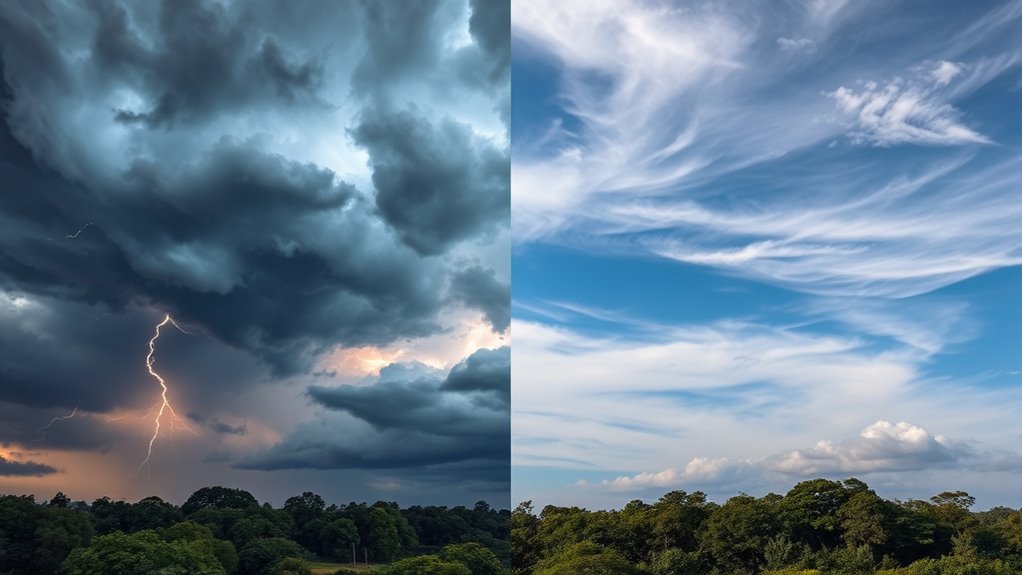
As we look ahead to 2026, climate experts predict notable shifts in global weather patterns that could impact your daily life. One of the key factors influencing these changes is climate variability, which refers to the natural fluctuations in climate conditions over short and long timescales. This variability can lead to unpredictable storm patterns, making it harder to anticipate severe weather events. You might notice more intense and frequent storms, or periods of calmer weather, depending on how climate variability plays out. These shifts could affect everything from your daily commute to the safety of your home, especially if storm patterns become more erratic or extreme.
In 2026, there’s a high likelihood that El Niño or La Niña will dominate the climate landscape, each bringing distinct weather impacts. El Niño, characterized by warmer ocean temperatures in the central and eastern Pacific, tends to disrupt typical weather patterns worldwide. During an El Niño event, you could experience increased storm activity in some regions, such as heavier rainfall and stronger winds, which may lead to flooding or property damage. Conversely, La Niña usually brings cooler ocean temperatures and can create different storm patterns, often resulting in drier conditions in some areas and more active storm systems in others. This oscillation between El Niño and La Niña phases influences storm patterns profoundly, impacting agriculture, infrastructure, and energy demands.
Understanding these phenomena helps you prepare for the potential disruptions they may cause. For example, during an El Niño phase, you might want to review your emergency plans, ensure your property is resilient against heavy rains, and stay informed about weather alerts. During La Niña, the focus might shift to managing drought conditions or preparing for intense storm systems that could cause power outages or flooding. The challenge lies in the unpredictable nature of climate variability, which can amplify or dampen the effects of El Niño and La Niña, making it essential to stay informed about climate forecasts as 2026 unfolds. Additionally, climate variability influences the frequency and intensity of extreme weather events, emphasizing the importance of adaptive planning and resilience strategies.

Waterproof Matches Survival Kit, Stormproof Matches with Case, 20pcs Fire Starter, Emergencys Fire Starter Matches for Hiking Camping Outdoor Survival (100pcs), 5Pcs
🔥【Windproof Matches】Camping Matches can be easily ignited even in strong winds, which overcomes the electronic and mechanical failures…
As an affiliate, we earn on qualifying purchases.
As an affiliate, we earn on qualifying purchases.
Frequently Asked Questions
How Accurate Are Long-Term Weather Forecasts for 2026?
Long-term weather forecasts for 2026 have moderate accuracy, but you should consider that historical accuracy for such predictions can vary. While forecast reliability improves with advanced models and data, uncertainties remain, especially over several years. You’re better off viewing these long-term outlooks as general guidance rather than precise predictions, understanding that climate patterns like El Niño or La Niña can influence accuracy levels considerably.
What Regions Will Be Most Affected by El Niño or La Niña?
You’ll find that regions like the western Pacific, Southeast Asia, and parts of South America face the strongest impacts from El Niño or La Niña. These phenomena cause significant regional impacts, leading to altered rainfall patterns and increased drought or flooding risks. Geographic vulnerabilities, such as coastal areas and drought-prone zones, will experience more severe effects, so staying informed helps you prepare for the expected climate shifts this year.
Could Unforeseen Climate Factors Influence 2026 Weather Patterns?
Unforeseen climate factors could definitely influence 2026 weather patterns. For instance, climate variability shows that unexpected shifts in ocean currents or volcanic activity can alter typical patterns. These factors act like wildcards, making it hard to predict with certainty. You should stay alert, as such surprises may bring more intense storms or droughts than expected, highlighting the importance of monitoring all potential influences on future climate behavior.
How Do Scientists Predict the Intensity of El Niño or La Niña?
Scientists predict the intensity of El Niño or La Niña using oceanic patterns and advanced predictive models. You should know that they analyze sea surface temperatures, wind patterns, and atmospheric data to identify developing trends. These models simulate future climate scenarios, helping experts estimate the strength and impact of these phenomena. By continuously refining these tools, scientists improve their ability to forecast the severity of El Niño or La Niña events.
Will Climate Change Impact the Dominance of El Niño or La Niña?
You might think climate change won’t shake up El Niño or La Niña, but it could totally flip the script! Rising greenhouse gases accelerate climate variability, making ocean temperatures more unpredictable. This means El Niño or La Niña events could become more intense or happen more often, dramatically impacting global weather patterns. So, yes, climate change is likely to influence which phenomenon dominates, turning the climate’s usual rhythm into an unpredictable roller coaster.

Cismorvex 2 Pack Outdoor Extension Cord Safety Cover with Waterproof Seal IP54 Water-Resistant, Weatherproof Electrical Connection Box with 2 Latches, Plug, Socket, Holiday Decoration Light, Black
Versatile: External size for this extension cord cover is 2.51" x 3.24" x 7.45" and its inner size…
As an affiliate, we earn on qualifying purchases.
As an affiliate, we earn on qualifying purchases.
Conclusion
As you navigate the coming year, remember that like the fabled Oracle of Delphi, the climate’s true nature remains a mystery, even amid predictions. Whether El Niño or La Niña takes the lead, stay prepared and adaptable. The weather’s dance is unpredictable—reminding us that, like Icarus, we must heed caution even when aiming for the skies. Embrace the uncertainty and keep your plans flexible; the future’s climate story is still being written.

Hepciee Garden Hose 50 ft, Non-Expanding Water Hose, Flexible Ultra-Light, Anti-Kink, Wear-Resistant, Portable, Easy Storage, Hose with 3/4 for Outdoor, Garden, Yard and Lawn
Non-Expandable Garden Hose Design, More Stable and Study: This hose features a non-extendable design. Ensure that when watering…
As an affiliate, we earn on qualifying purchases.
As an affiliate, we earn on qualifying purchases.

Ortus Collective Exterior Window Shutters – Weather-Resistant Polypropylene, Easy DIY Install – Louver Shutters for Windows Outside, Vinyl, Brick, 14.5"W*35" H, Black
Enhanced Curb Appeal: Transform your home's exterior with louver shutters designed for visual impact. Choose from classic black,…
As an affiliate, we earn on qualifying purchases.
As an affiliate, we earn on qualifying purchases.

Elena’s passion for the arts and culture shines through in her vivid reporting. From film festivals to gallery openings, her coverage is an essential source for anyone interested in the latest cultural trends and artistic movements.