TL;DR

Get everyday essentials delivered free with Prime
- Fast, free delivery on millions of items
- Prime Video, Amazon Music and more included
- Member-only deals all year
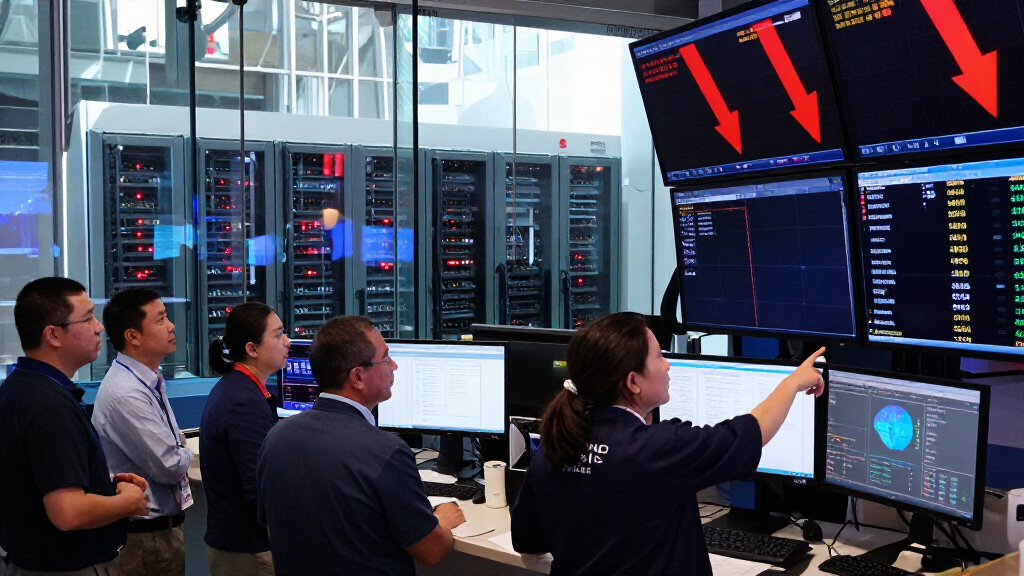
The Nasdaq Composite fell 5.52% on Nov. 5, its steepest daily decline since April 2025, while chip stocks and data center companies fell sharply. Investors were weighing whether Democratic election gains could lead to tighter oversight or higher costs for AI data center projects, but no new federal rules have been enacted.
The Nasdaq Composite fell 5.52% on Thursday, Nov. 5, closing at 24,315.00 after losing 1,421.51 points. The drop came as investors considered whether Democratic gains in Congress and several governor’s races could make AI data center projects slower or more costly; no new federal restrictions have been enacted.
The Composite’s decline was its largest one-day fall since April 4, 2025, when it dropped 5.82% during a market selloff tied to tariffs. The Nasdaq-100, which tracks 100 of the exchange’s largest non-financial companies, fell 6.36% to 26,629.81. Reuters estimated that the Nasdaq-100’s market value fell by about $2.5 trillion. That estimate refers to the Nasdaq-100, not all stocks listed on Nasdaq.
Technology hardware and infrastructure stocks were among the hardest hit. The PHLX Semiconductor index fell 12.25%. Reuters reported that Nvidia shares fell 9% and AMD fell 17%, while several data center operators lost more than 14%. The Nasdaq Composite ended 11.9% below its Oct. 6 record, a decline that meets the commonly used 10% threshold for a market correction.
The political development behind the concern was the Democrats’ election gains, including control of Congress and several governorships in states expected to host major data center projects. Reuters and The National reported that investors were considering possible changes to project approvals, tax incentives and who pays for the power and water infrastructure data centers need. Those are potential policy effects, not changes already in force.
Nasdaq slides as AI data center rules enter the debate
Investors weighed whether election gains could make AI data center projects slower or more costly. No new federal restrictions have been enacted.
Losses spread across tech
Chip and infrastructure stocks fell sharply as investors reassessed AI buildout risks.
How policy could affect projects
Permits, incentives and infrastructure costs shape the pace and economics of new capacity.
Congress, states and local authorities may shape oversight, tax support, siting and permits.
Longer approvals or higher power and water bills could delay construction or raise spending.
Changes to data center plans could affect developers, chip suppliers and technology firms.
Concern versus confirmed action
- Possible tighter oversight and project approvals
- Potentially reduced tax incentives
- Developers paying more for power and water infrastructure
- No new federal restrictions have been enacted
- Election effects remain unsettled
- The UBS capacity figure is a forecast, not confirmed cancellations
What investors will watch
Concrete decisions and company disclosures can show whether political concerns change the buildout.
- Permitting proposals and project pauses, including their scope and timing
- Changes to tax treatment and infrastructure costs
- Company updates on spending, demand and delayed or cancelled projects
Data Center Costs Enter the Market Debate
The selloff shows that investors are treating the cost and pace of AI infrastructure construction as a risk to technology company valuations. Data centers require large amounts of power and water, as well as permits and grid connections. If projects face longer approval timelines, reduced tax support or higher infrastructure bills, developers could delay construction or spend more to complete it.
That possibility matters beyond data center operators. Semiconductor companies supply the equipment used in AI systems, while major cloud and technology firms depend on new computing capacity to expand their services. A shift in expected construction could affect revenue forecasts across those businesses. The market decline reflects investor concern about that possibility; it does not establish that projects will be stopped or that AI demand has weakened.
The scale of the day’s losses also puts the policy debate in a broader market setting. The Composite had already fallen 5.3% in October, according to the source’s calculation from index data. Nov. 5 was the fifth day since mid-October on which it lost more than 500 points. The one-day move therefore arrived amid recent volatility, even as the election added a new source of uncertainty.
Popular right now

De'Longhi La Specialista Touch Semi-Automatic Espresso Machine with Grinder

Hisense 40-Inch Class QD4SR Series Hi-QLED FHD Smart Roku TV (2026 Model)

TCL 43-Inch 4K UHD Smart LED Roku TV (43S435, 2021 Model)
As an affiliate, we earn on qualifying purchases.
From Election Results to Project Permits
The market reaction developed over two sessions. On Wednesday, Nov. 4, the Nasdaq Composite rose 1.44%. Reuters reported that data center operators and power companies fell that day, while Amazon and Microsoft each rose about 6% during the session. One strategist told Reuters that existing data centers could become more valuable if fewer new facilities were built. On Thursday, that pattern reversed: Reuters reported declines of 2.2% for Amazon and Alphabet and 3.6% for Microsoft.
The concerns center on decisions made at several levels of government. Congress can shape federal tax policy and oversight, while states and local authorities play roles in siting, permitting and infrastructure planning. The source material says some incoming governors have promised pauses on large projects, but it does not provide details of enacted pauses or identify final rules. Changes to power and water costs could also affect project economics if developers are required to pay a greater share.
A UBS estimate cited in the source material put about 30% of planned 2028 capacity additions at risk. That is an analyst estimate about future capacity, not a confirmed project cancellation or a measure of facilities already operating. The Nasdaq’s published closing data provides the index figures; Reuters reporting provides the market-value estimate and company moves.
““deepest one-day drop since ‘Liberation Day’ in April 2025””
— Reuters
Policy Changes Remain Unsettled
No new federal law governing AI data center construction has passed, and the source material describes the expected effects of the election as speculation. President Donald Trump retains veto power, while some analysts cited in the reporting expect political gridlock rather than sweeping policy changes.
It is not yet clear whether Congress, state governments or local authorities will change permits, tax incentives, power costs or water requirements, or when any changes might take effect. The UBS capacity estimate is a forecast, and the reported governor pledges do not establish which projects, if any, will be paused. The market data confirms the scale of Thursday’s decline, but does not identify how much of it was caused by each policy concern.
Investors Watch Permits and Costs
Investors will look for concrete proposals and decisions on data center permits, tax treatment and infrastructure costs as the new Congress and governors take office. Details about any project pauses, including their scope and timing, would help show whether the campaign statements translate into restrictions developers must follow.
Markets will also continue to assess technology company results, spending plans and demand for computing capacity. The next useful evidence will be enacted policy or company disclosures showing projects delayed, cancelled or made more expensive. Until then, Thursday’s market move records investor expectations rather than a confirmed change to the AI data center buildout.
Key Questions
How much did the Nasdaq Composite fall?
It fell 5.52% on Nov. 5, 2026, closing at 24,315.00, down 1,421.51 points.
What does the $2.5 trillion figure refer to?
Reuters estimated that about $2.5 trillion in market value was erased from the Nasdaq-100, which tracks 100 large non-financial companies listed on Nasdaq. The figure does not cover every Nasdaq-listed stock.
Have new AI data center restrictions passed?
No. The source material reports investor concern about possible changes to oversight, permits, tax incentives and infrastructure costs, but says no new federal law has passed.
What is the UBS estimate about 2028 capacity?
A UBS estimate cited in the source material says about 30% of planned 2028 capacity additions could be at risk. It is a forecast, not a confirmed list of cancelled projects.
Source: Thorsten Meyer AI