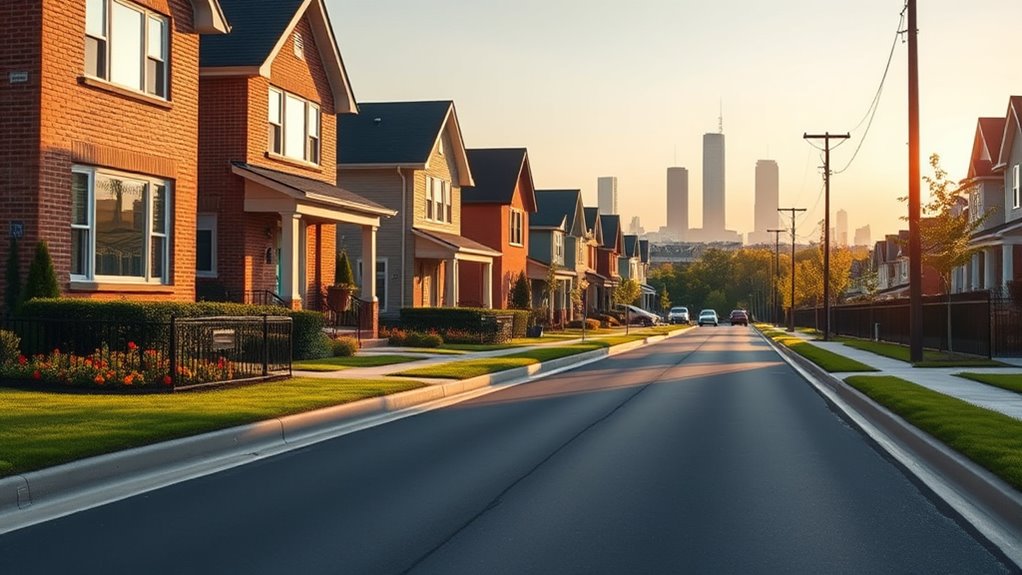

By 2026, housing prices may cool down as increased supply from new construction and policy reforms easing zoning laws help balance the market. Lower interest rates and government incentives could make homes more affordable, but rising material costs and infrastructure expenses might slow growth. Longer commutes and financial trade-offs are likely, yet economic shifts could influence prices further. Staying aware of these factors will help you understand if the housing market finally stabilizes—more insights await you.
Key Takeaways
- Sprawling urban development may increase infrastructure costs but could stabilize or lower prices if supply expands.
- Policy efforts promoting affordable housing and zoning reforms might help cool down rising home prices.
- High interest rates in 2026 could slow price growth, but declining rates may support continued increases.
- Remote work trends could shift demand toward suburban and rural areas, influencing regional price dynamics.
- Market conditions, including inflation and construction costs, will be key factors determining whether home prices decline or rise.
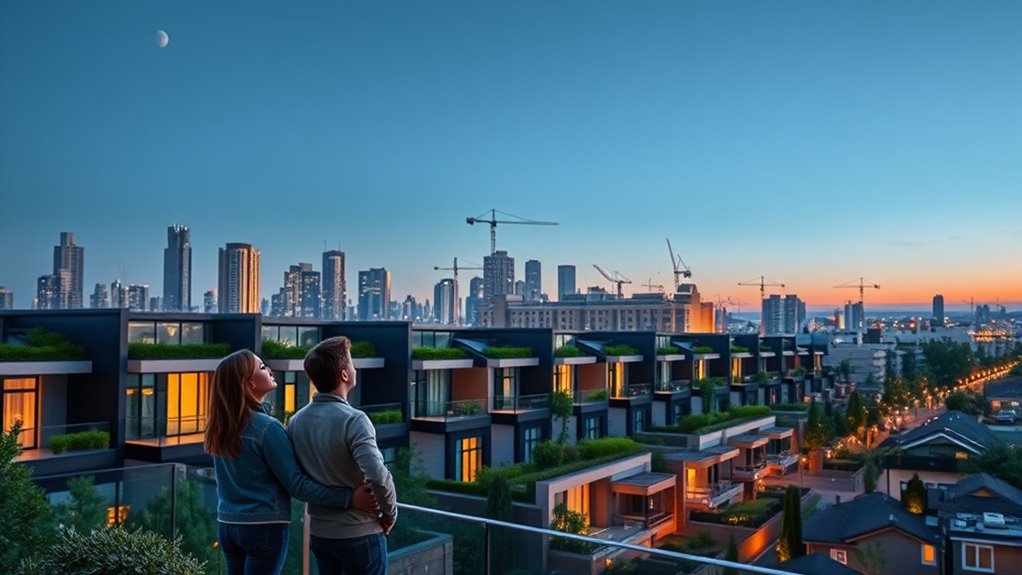
As we look ahead to 2026, the housing market is set to undergo significant changes driven by technological advancements, shifting demographics, and evolving economic conditions. One of the key dynamics influencing this landscape is urban sprawl, which continues to shape how and where people choose to live. As cities expand outward to accommodate growing populations, you might find that housing options are spreading further from city centers. This expansion often leads to longer commutes but also offers more affordable land and housing prices compared to urban cores. However, it also raises concerns about environmental impacts and infrastructure costs, which could influence future development policies. urban sprawl is likely to be a critical factor in determining the balance between affordability and sustainability in the housing market.
With urban sprawl increasing, housing affordability remains a pressing issue. As new developments push into suburban and rural areas, property prices in these zones tend to be lower, making homeownership more accessible for many. Yet, the trade-off is often in the form of longer travel times and potentially higher transportation costs, which can offset the initial savings. As technological innovations like remote work become more widespread, you may see a shift in how much importance is placed on proximity to city centers. This could lead to a more balanced distribution of demand, easing some pressure on high-priced urban neighborhoods and making affordable housing available in previously overlooked areas.
Urban sprawl offers lower-cost housing but may increase travel and transportation expenses, especially as remote work shifts demand patterns.
Government policies and market trends are also likely to play a significant role in shaping affordability. Efforts to promote affordable housing development, such as incentives for builders or zoning reforms, could help stabilize or even lower home prices in certain markets. Meanwhile, rising material costs and labor shortages might slow down new construction, limiting supply and keeping prices high despite the push for affordability. You should keep an eye on these policies and market signals, as they’ll determine whether housing prices will finally cool down or continue to climb.
Furthermore, economic conditions like interest rates and inflation will influence affordability in 2026. If mortgage rates remain high, borrowing becomes more expensive, which can slow down price increases or even cause declines. Conversely, if rates drop or if inflation accelerates, home prices could stay inflated or grow even faster. As a buyer or investor, understanding these trends will be essential. You’ll need to weigh the benefits of lower prices against potential costs, such as increased transportation or infrastructure expenses associated with sprawling developments.
Frequently Asked Questions
How Will Interest Rate Changes Impact Home Affordability in 2026?
Interest rate changes in 2026 will markedly impact your home affordability by influencing mortgage trends and credit accessibility. As rates rise, you’ll find higher monthly payments, making it harder to qualify for loans. Conversely, lower rates could boost your borrowing power and reduce costs. Staying informed about these shifts helps you navigate the market better, ensuring you take advantage of favorable conditions and avoid surprises that could strain your finances.
Are There Specific Regions Expected to See Price Declines?
You should watch regional disparities and market hotspots, as some areas are expected to see price declines while others remain stable or grow. Typically, regions with overheated markets or high inventory may experience cooling, especially in areas facing economic shifts or increased interest rates. Keep an eye on these hotspots, as they could signal potential declines, offering opportunities for buyers seeking more affordable options in areas with declining prices.
Will Rental Prices Follow Home Price Trends in 2026?
Coincidences often hint at larger patterns, and in 2026, rental trends are likely to mirror home price movements. You might see rental prices stabilize or even decline if home prices cool down, improving tenant affordability. This shift could make renting more accessible, offering relief for renters. Stay alert to these trends, as they could profoundly impact your housing decisions and financial planning throughout the year.
How Might Government Policies Influence the Housing Market?
Government policies can markedly influence the housing market. You might see tax incentives that encourage homeownership or development, making it easier to buy or build homes. Zoning regulations also play a role; relaxed rules could increase housing supply, helping cool prices. Conversely, stricter zoning might limit growth, keeping prices high. Staying informed about these policies helps you anticipate market shifts and make smarter real estate decisions.
What Role Will Housing Inventory Levels Play in Price Stabilization?
Housing supply and buyer demand directly dictate price stability. When housing supply surpasses demand, prices tend to soften, creating a more stable market. Conversely, limited supply with high demand can push prices upward. You’ll find that balancing housing supply with buyer demand fosters a fairer, more affordable market. By increasing inventory, you help curb escalating prices, making homes more accessible and promoting price stabilization in the housing landscape.
Conclusion
As 2026 approaches, imagine standing on the porch of your dream home, feeling the cool breeze hinting at change. The relentless rise of prices might finally ease, giving you a chance to breathe easier and settle into your perfect space. With the market cooling, you can see a clearer path ahead—less hustle, more comfort. Keep watching the horizon; the housing landscape is shifting, and your opportunity to find stability is on the horizon.

Elena’s passion for the arts and culture shines through in her vivid reporting. From film festivals to gallery openings, her coverage is an essential source for anyone interested in the latest cultural trends and artistic movements.