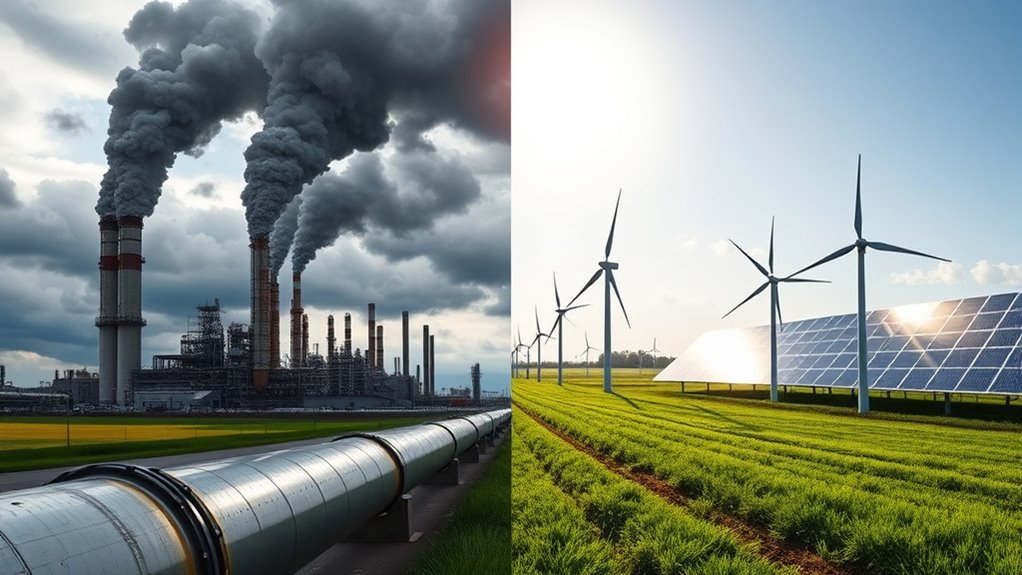

By 2026, you’ll see the global energy landscape shift heavily toward renewables, driven by increased investments and technological advances. Fossil fuel industries are expected to decline as policies favor clean energy and costs drop. This shift offers opportunities for economic growth and energy resilience, but also poses challenges like job transitions. If you want to understand how these changes will impact your sector or investments, there’s more to uncover ahead.
Key Takeaways
- Renewables are projected to account for a significant share of global energy production by 2026, driven by cost competitiveness and policy support.
- Fossil fuel industries face decline due to increasing policies favoring clean energy and falling renewable costs.
- Investment in renewable energy sectors is expected to surpass fossil fuels, creating new economic opportunities.
- Technological advances in energy storage and smart grids improve renewable integration, reducing reliance on fossil fuels.
- The energy market landscape will shift geopolitically, favoring countries investing heavily in clean energy infrastructure.
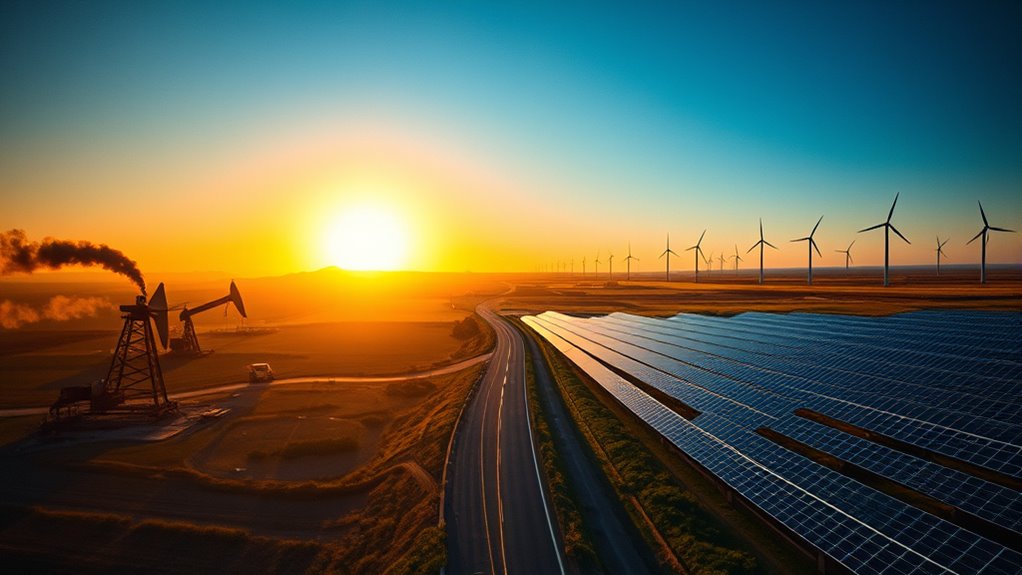
As we look ahead to 2026, the global energy landscape is set to undergo significant shifts driven by technological advancements, policy changes, and evolving consumer demands. One of the most noticeable trends will be the rapid renewable expansion, which is reshaping how nations generate and consume energy. Governments and private investors are increasingly channeling funds into solar, wind, and other clean energy sources, recognizing their long-term benefits and declining costs. As a result, fossil decline becomes more apparent, with traditional coal, oil, and natural gas industries facing mounting challenges. This progression isn’t just about environmental responsibility; it’s about economic opportunity and resilience. Renewables are becoming more cost-effective, providing a competitive edge over fossil fuels, which are often subject to volatile prices and geopolitical risks.
You’ll see more countries setting ambitious targets to phase out fossil fuels, driven by climate commitments and the push for energy independence. These policies accelerate renewable deployment, making clean energy infrastructure a priority. Technological innovations, such as improved energy storage and smart grid systems, further facilitate this movement by addressing intermittency issues and enhancing grid stability. As renewable projects scale up, their operational costs decrease, creating a positive feedback loop that encourages even greater investment. This means that, by 2026, renewables could account for a significant share of global energy production, fundamentally altering the market landscape.
For you, as an energy consumer or investor, this progression presents both opportunities and challenges. The declining costs of renewables mean cheaper electricity in many regions, which can reduce household bills and operational costs for businesses. Meanwhile, the decline of fossil fuels could lead to job losses in traditional energy sectors, prompting a need for economic transition plans and workforce reskilling initiatives. The shift also influences energy geopolitics, as countries rich in fossil fuel resources see their influence wane, while those investing heavily in renewable technologies gain strategic advantages.

ECO-WORTHY 10KW Output 9.36KWH Off Grid Solar System Complete Kit for Home:12pcs 195W Solar Panels(2340W)+10KW 120V/240V Inverter (UL 1741)+ 2pcs 48V 100AH Lithium Batteries(UL 1973&UL 9540A)
[Ideally Output of 9.36KWH] The power of 9.36KWh per day under 4 hours full sunshine by the 2340W…
As an affiliate, we earn on qualifying purchases.
As an affiliate, we earn on qualifying purchases.
Frequently Asked Questions
How Will Geopolitical Tensions Impact Global Energy Investments?
Geopolitical tensions will likely increase risks around energy security, prompting you to reconsider investment strategies. These risks can cause supply disruptions, driving up costs and making fossil fuels more volatile. You might shift focus toward cleaner energy options, which offer greater stability amid geopolitical uncertainties. Staying informed on global developments helps you adapt your investments, balancing potential rewards with the need for resilient, secure energy sources in an unpredictable geopolitical landscape.
What Role Will Emerging Technologies Play in the Energy Transition?
Imagine you’re stepping into a future powered by AI optimization and smart grids, transforming how energy is managed. Emerging technologies will play a vital role in the energy shift by making renewable sources more efficient and reliable. You’ll see AI-driven systems optimize energy flow, balancing supply and demand seamlessly. These innovations will accelerate clean energy adoption, reduce costs, and help you achieve a more sustainable and resilient energy future.
How Might Climate Policies Influence Fossil Fuel Demand?
Climate policies like renewable incentives and carbon regulations directly reduce fossil fuel demand. When governments implement stronger regulations, you’ll see increased investments in clean energy, making fossil fuels less attractive. These policies push industries and consumers toward greener options, accelerating the progression. As a result, fossil fuel consumption drops, and the shift to sustainable energy sources becomes more urgent, shaping a cleaner, more resilient energy future.
What Are the Economic Implications of Shifting to Clean Energy?
Think of it as turning the tide—you’ll see the economic implications of shifting to clean energy unfold. You could benefit from increased job creation in renewable sectors and enjoy government incentives like renewable subsidies. While initial investments might seem hefty, long-term savings and sustainable growth become clear. This changeover also reduces reliance on fossil fuels, boosting your resilience against volatile energy markets and fostering a greener, more stable economy.
How Will Energy Storage Advancements Affect Future Supply Stability?
Advancements in energy storage, like battery innovations and improved grid integration, will greatly enhance your supply stability. With better batteries, you’ll experience more reliable energy storage, especially during peak demand or when renewable sources fluctuate. Grid integration ensures these stored energies seamlessly feed into the system, reducing outages. As a result, future energy supply becomes more resilient, giving you consistent, clean power while minimizing dependence on fossil fuels.

VEVOR 500W Wind Turbine Generator, 12V Wind Turbine Kit, 5-Blade Wind Power Generator with MPPT Controller, Adjustable Windward Direction & 2.5m/s Start Wind Speed, Suitable for Home, Farm, RVs, Boats
500W High-Efficiency Output: VEVOR 500W high-power wind turbine generator delivers exceptional wind energy utilization and efficiency, making it…
As an affiliate, we earn on qualifying purchases.
As an affiliate, we earn on qualifying purchases.
Conclusion
By 2026, you’ll see clean energy investments surpass fossil fuels for the first time, reflecting a significant shift in global priorities. notably, clean energy funding grew by over 20% last year alone, highlighting rapid momentum. This trend suggests that your future energy choices will increasingly favor sustainability, reducing emissions and fostering innovation. Embrace these changes, as they’re shaping a more resilient and environmentally responsible energy landscape for generations to come.

ECO-WORTHY (Cubix 100) 48V 400Ah 20.48kWh LiFePO4 Solar Battery, UL1973 & UL9540A & CEC Listed, 4 Pack 48V 100AH Server Rack Battery with Bluetooth for Solar Energy Storage, Home Backup Power
UL1973 | UL9540A | CEC LISTED – Completed comprehensive testing by Intertek and has officially earned two key…
As an affiliate, we earn on qualifying purchases.
As an affiliate, we earn on qualifying purchases.

Power System SCADA and Smart Grids
As an affiliate, we earn on qualifying purchases.
As an affiliate, we earn on qualifying purchases.

Elena’s passion for the arts and culture shines through in her vivid reporting. From film festivals to gallery openings, her coverage is an essential source for anyone interested in the latest cultural trends and artistic movements.