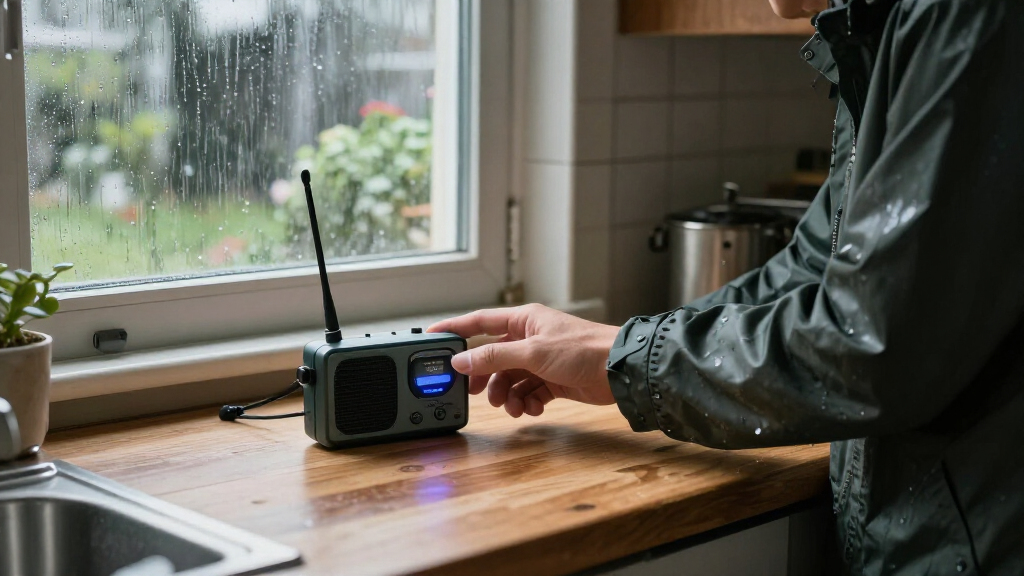
For dependable alerts at home, I’d choose the Midland WR120B as the best overall weather radio because SAME alerts and battery backup focus on clear, targeted warnings. The Midland WR400 is a stronger fit for buyers who want a more feature-rich home unit, while the Kaito Voyager Max KA900 stands out for a portable emergency setup with several charging options. The main tradeoff is between specific alerting and simple home use versus portable radios with flexible backup power. Hand-crank and solar charging can add resilience, but they do not replace planning for reliable batteries or keeping the radio charged. Continue reading for the full breakdown of all 10 weather radios and how I’d match each type to a buyer.

Get everyday essentials delivered free with Prime
- Fast, free delivery on millions of items
- Prime Video, Amazon Music and more included
- Member-only deals all year
Key Takeaways
- The Midland WR120B earns the clearest home-alert role: SAME alerts and battery backup suit buyers who want warnings tied to their area, and the model appears twice in this lineup.
- The Midland WR400 is the step-up home option: it shares the WR120B’s alert-focused approach but is positioned as the deluxe alternative for buyers seeking more from a stationary radio.
- Portable models differ most in their power choices: hand-crank, solar, and USB-C combinations can help during outages, but buyers should not treat any one charging method as a guaranteed power source.
- The Midland ER10VP prioritizes compact emergency utility: its flashlight and SOS strobe make it more suited to a grab-and-go kit than a dedicated home alert station.
- The lineup splits into two distinct jobs: the XHDATA D221 adds shortwave reception, while the Kaito Voyager Max KA900 and multi-charge radios lean toward emergency power flexibility.
| Hand Crank Emergency Radio with AM/FM/NOAA Weather Band, Solar and USB-C Charging |  | Best Compact Emergency Kit Pick | Radio bands: AM/FM and NOAA weather band | Power options: Hand crank, solar, and USB-C | Battery capacity: 2000mAh | VIEW LATEST PRICE | See Our Full Breakdown |
| Midland WR120B NOAA Weather Radio with SAME Alerts and Battery Backup |  | Best for Home Alert Monitoring | Model: WR120B | Weather channel scanning: Seven channels | Alerts: SAME county-level alerts; over 60 event types | VIEW LATEST PRICE | See Our Full Breakdown |
| Midland ER10VP AM/FM Weather Radio with Flashlight and SOS Strobe |  | Best Simple Battery-Powered Option | Model: ER10VP-MFN | Radio bands: AM/FM | Power source: Three included AA batteries | VIEW LATEST PRICE | See Our Full Breakdown |
| Portable AM/FM/NOAA Weather Radio with Hand Crank, Solar Panel, and Type-C Charging |  | Best for Extended Outages | Radio bands: AM/FM/NOAA | Power options: Solar, hand crank, Type-C charging, and AAA batteries | Built-in battery: 5000mAh | VIEW LATEST PRICE | See Our Full Breakdown |
| XHDATA D221 Portable AM/FM/SW/NOAA Weather Radio |  | Best for Multi-Band Listening | Model: D221 | Radio bands: FM, AM, shortwave, and weather band | FM range: 87–108 MHz | VIEW LATEST PRICE | See Our Full Breakdown |
| Kaito Voyager Max KA900 Emergency Radio with Solar and Hand-Crank Charging |  | Best Feature-Rich Portable Radio | Radio bands: AM, FM, shortwave, and 7 NOAA weather channels | Power sources: Hand crank, solar panel, USB-C, rechargeable lithium-ion battery, or optional AC adapter | Audio: Stereo; Bluetooth, AUX, and USB connectivity | VIEW LATEST PRICE | See Our Full Breakdown |
| Portable Hand-Crank Emergency Radio with AM/FM, NOAA Weather Band, Solar Charging, LED Flashlight, and USB-C |  | Best Compact Hand-Crank Pick | Radio bands: AM, FM, and NOAA weather band | Power options: Hand crank, solar, and battery | Battery capacity: 2,000 mAh | VIEW LATEST PRICE | See Our Full Breakdown |
| Midland WR120B NOAA Weather Radio with SAME Alerts and Battery Backup | | Best for Straightforward Home Alerts | Radio type: NOAA weather radio | Channels: 7 public weather channels | Alert system: SAME county-level alerts | VIEW LATEST PRICE | See Our Full Breakdown |
| Midland WR400 Deluxe NOAA Weather Radio with SAME Alerts and Battery Backup |  | Best for Customizable Alerting | Radio bands: NOAA weather, AM, and FM | Weather-channel scanning: Scans 10 channels | SAME programming: Up to 25 counties | VIEW LATEST PRICE | See Our Full Breakdown |
| NOAA Emergency Weather Radio with AM/FM, Solar and Hand Crank Charging, 2600mAh Power Bank |  | Best for Multiple Backup Power Options | Radio bands: AM, FM, and NOAA weather | Power options: Hand crank, solar, AAA batteries, and Type-C charging | Power bank capacity: 2,600 mAh | VIEW LATEST PRICE | See Our Full Breakdown |
| weather radio | Radio bands | Dimensions | Additional features |
|---|---|---|---|
| Hand Crank Emergency Radio wit | AM/FM and NOAA weather band | Conflicting listings: 5.1 × 2.1 × 2.4 inches and 2.6 × 2 × 5.15 inches | — |
| Midland WR120B NOAA Weather Ra | — | 2 × 5.3 × 6.1 inches | — |
| Midland ER10VP AM/FM Weather R | AM/FM | — | — |
| Portable AM/FM/NOAA Weather Ra | AM/FM/NOAA | 3 × 2 × 3 inches | SOS alarm, USB power output, and telescopic antenna |
| XHDATA D221 Portable AM/FM/SW/ | FM, AM, shortwave, and weather band | — | — |
| Kaito Voyager Max KA900 Emerge | AM, FM, shortwave, and 7 NOAA weather channels | — | LED flashlight, 5-LED reading lamp, alarm clock, sleep timer, calendar, MP3 player, and phone charger |
| Portable Hand-Crank Emergency | AM, FM, and NOAA weather band | 2.6 x 2 x 5.15 inches | LED flashlight, built-in speaker, telescoping antenna, and frequency display |
| Midland WR120B NOAA Weather Ra | — | — | Built-in clock, selectable alarm tones, and SOS alarm |
| Midland WR400 Deluxe NOAA Weat | NOAA weather, AM, and FM | — | — |
| NOAA Emergency Weather Radio w | AM, FM, and NOAA weather | 6.3 x 3 x 2.3 inches | Bluetooth, LED flashlight, and SOS alarm |
More Details on Our Top Picks
Hand Crank Emergency Radio with AM/FM/NOAA Weather Band, Solar and USB-C Charging
This radio suits buyers who want weather reception plus basic emergency tools in a small package. It receives AM/FM and NOAA broadcasts, while its hand crank, solar panel, and USB-C charging offer several ways to restore power when an outlet is unavailable. The 140-lumen flashlight and SOS siren add signaling and visibility functions without requiring separate devices. Compared with the Rartlytir portable radio, this model has a smaller stated battery capacity and no foldable reading lamp, but its reported weight is lighter. The main tradeoff is that crank charging takes effort and solar charging depends on sunlight, so neither should be treated as an instant recharge. Product information also lists conflicting dimensions and weights, making exact fit in a tightly packed kit less certain.
Pros:- Receives AM/FM and NOAA weather broadcasts.
- Hand-crank, solar, and USB-C charging give multiple ways to power it.
- 140-lumen flashlight and SOS siren add practical emergency functions.
- Compact stated weight makes it suitable for a kit or backpack.
Cons:- The listed dimensions and weights conflict across the product information.
- Hand-crank charging requires manual effort, while solar charging depends on available sunlight.
Best for: People assembling a compact emergency kit who want NOAA reception, several charging options, a flashlight, and an SOS alarm in one device.
Not ideal for: Buyers who need a clearly documented size and weight, or who want a larger battery and reading lamp for extended outages.
- Radio bands:AM/FM and NOAA weather band
- Power options:Hand crank, solar, and USB-C
- Battery capacity:2000mAh
- Flashlight:3W LED, up to 140 lumens
- SOS alarm:Siren exceeding 80dB
- Dimensions:Conflicting listings: 5.1 × 2.1 × 2.4 inches and 2.6 × 2 × 5.15 inches
- Weight:Conflicting listings: approximately 0.51 lb and 8 ounces
- Color:Black-red
Our verdict“Choose this compact pick if you want NOAA alerts and several emergency functions without carrying a larger radio.”
Midland WR120B NOAA Weather Radio with SAME Alerts and Battery Backup
For home use, the WR120B prioritizes targeted weather warnings over portability. Its SAME feature lets you program alerts for a specific county, helping limit notifications to the area you care about. The radio scans seven weather channels, and its mix of spoken alerts, siren, and flashing indicator gives you more than one way to notice a warning. Unlike the handheld Midland ER10VP, this is a stationary desktop unit; it also has battery backup for outages, though you need to supply six AAA batteries. The multilingual setup menu is useful for households that prefer English, Spanish, or French, but this model is less suited to a go-bag or outdoor use. Choose it for a fixed alert point, not as your only portable emergency radio.
Pros:- SAME county-level alerts can focus warnings on a programmed area.
- Scans seven weather channels.
- Spoken alerts, siren, and flashing indicator provide multiple notification methods.
- Setup menu supports English, Spanish, and French.
Cons:- Desktop design is not intended for carrying in a pack.
- Battery backup requires six AAA batteries.
Best for: Households that want county-specific NOAA alerts at a bedside, desk, or central home location, with battery backup if AC power fails.
Not ideal for: Campers and people building a lightweight go-bag who need a portable radio or charging options beyond AC and AAA batteries.
- Model:WR120B
- Weather channel scanning:Seven channels
- Alerts:SAME county-level alerts; over 60 event types
- Power:AC power and battery backup
- Battery backup requirement:Six AAA batteries
- Display:LCD
- Languages:English, Spanish, and French
- Dimensions:2 × 5.3 × 6.1 inches
Our verdict“Pick the WR120B for a home alert station with county-level filtering, rather than for portable weather monitoring.”
Midland ER10VP AM/FM Weather Radio with Flashlight and SOS Strobe
The ER10VP is a straightforward choice for buyers who want a small radio and light, but its weather-radio role is more limited than the NOAA-equipped emergency models in this lineup: the listed bands are AM/FM, with no NOAA weather band specified. That makes it a poor substitute for a dedicated alert receiver such as the Midland WR120B, which offers county-level SAME alerts. Its strengths are instead simple AA-battery operation, a flashlight, and an SOS strobe. Three AA batteries are included, so there is no charging method to manage, though you will need spares for longer-term readiness. The headphone jack and clock add everyday utility. Skip it if NOAA broadcasts or water resistance are priorities; the product is explicitly not water resistant.
Pros:- Three included AA batteries let it operate without charging equipment.
- Built-in flashlight and SOS strobe provide light and a signaling option.
- Headphone jack supports private listening.
- Compact, lightweight design is easy to carry.
Cons:- NOAA weather-band reception is not listed; the specified bands are AM/FM.
- Not water resistant.
- Requires replaceable AA batteries for continued use.
Best for: Buyers who want a basic, battery-powered AM/FM radio with a flashlight and SOS strobe for a small emergency kit.
Not ideal for: People who need NOAA weather-band reception, county-specific alerts, rechargeable power, or protection from rain and splashes.
- Model:ER10VP-MFN
- Radio bands:AM/FM
- Power source:Three included AA batteries
- Emergency features:Built-in flashlight and SOS strobe
- Connectivity:Auxiliary input and headphone jack
- Display:LCD or LED, as listed
- Water resistance:Not water resistant
- Weight:1.6 oz
Our verdict“Choose this only if basic AM/FM listening and compact emergency lighting matter more than NOAA weather alerts.”
Portable AM/FM/NOAA Weather Radio with Hand Crank, Solar Panel, and Type-C Charging
The Rartlytir stands out for combining NOAA reception, a 5000mAh battery, and multiple power sources. Alongside solar, hand-crank, and Type-C charging, it accepts AAA batteries, giving buyers more fallback choices than the USB-C-and-crank Hand Crank Emergency Radio in this roundup. Its foldable six-LED reading lamp is a useful distinction for indoor outages, while a separate flashlight, SOS alarm, and USB output broaden its emergency role. Those additions make it more of a small preparedness hub than a bare-bones radio. The tradeoffs are practical: solar output depends on sunlight, and the product details do not say whether AAA batteries are included. At 500g, it is also heavier than the most compact options.
Pros:- 5000mAh built-in battery is larger than the 2000mAh battery listed for the Hand Crank Emergency Radio.
- Supports solar, hand-crank, Type-C, and AAA battery power.
- Combines a flashlight with a foldable six-LED reading lamp.
- USB power output can provide an additional device-charging option.
Cons:- Solar charging performance depends on available sunlight.
- The product details do not specify whether AAA batteries are included.
- At 500g, it is heavier than the smallest radios in this group.
Best for: Campers and households preparing for longer outages who want a larger built-in battery, several power sources, and both task and area lighting.
Not ideal for: Ultralight packers or buyers who want a clearly specified, included battery backup without relying on manual or sunlight-dependent charging.
- Radio bands:AM/FM/NOAA
- Power options:Solar, hand crank, Type-C charging, and AAA batteries
- Built-in battery:5000mAh
- Lighting:Flashlight and foldable six-LED reading lamp
- Additional features:SOS alarm, USB power output, and telescopic antenna
- Dimensions:3 × 2 × 3 inches
- Weight:500g
- Enclosure material:ABS
Our verdict“Choose the Rartlytir if outage lighting and a larger battery matter more than minimizing pack weight.”
XHDATA D221 Portable AM/FM/SW/NOAA Weather Radio
The D221 is the most versatile listening option here: it adds shortwave reception to FM, AM, and NOAA weather broadcasts. That makes it a better fit for people who want more than local stations and weather updates, while its DSP chip is designed to improve reception. Compared with the Midland WR120B, it is portable and battery-powered rather than a home alert station; it does not list SAME county-level alerts or a siren. Its two-AA setup is also easier to replace from common spares than a radio that depends on built-in charging, but batteries are not included. A speaker and headphone jack give flexible listening, though the plastic body is not water resistant. This is a compact receiver, not a ruggedized storm-alert system.
Pros:- Receives FM, AM, shortwave, and NOAA weather broadcasts.
- DSP chip is designed to improve reception.
- Built-in speaker and 3.5 mm headphone jack support different listening situations.
- Two replaceable AA batteries offer a familiar power option.
Cons:- Two AA batteries are not included.
- Not water resistant.
- Does not list SAME alerts or an SOS alarm.
Best for: Travelers and radio listeners who want NOAA weather broadcasts alongside AM, FM, and shortwave reception in a small battery-powered unit.
Not ideal for: Households that need automated county-specific warnings, an SOS alarm, water resistance, or a rechargeable power source.
- Model:D221
- Radio bands:FM, AM, shortwave, and weather band
- FM range:87–108 MHz
- AM range:520–1730 kHz
- Shortwave range:5.6–22.0 MHz
- Weather band range:162.40–162.55 MHz
- Power source:Two AA batteries, not included
- Audio output:Built-in speaker and 3.5 mm headphone jack
- Dimensions and weight:125 × 74 × 30 mm; 125g without batteries
Our verdict“Pick the D221 if broad band coverage and portability matter more than automated warnings or emergency-focused extras.”
Kaito Voyager Max KA900 Emergency Radio with Solar and Hand-Crank Charging
The Kaito Voyager Max KA900 is the most versatile portable pick here for buyers who want weather alerts plus useful ways to listen and recharge. Its seven NOAA channels with automatic alerts sit alongside AM, FM, and shortwave reception, while hand-crank, solar, USB-C, and rechargeable-battery power give you several options when outlets are unavailable. Compared with the more focused Midland WR120B, the KA900 adds stereo audio, Bluetooth, MP3 playback, a reading lamp, and phone charging—but the WR120B is the more straightforward choice for a stationary, county-alert setup. The KA900’s extra functions also mean a larger, heavier unit, and its water resistance has no stated rating. I’d choose it for a shelter or outage kit, not for exposed use in heavy rain.
Pros:- Seven NOAA weather channels with automatic alerts, plus AM, FM, and shortwave reception
- Hand-crank, solar, USB-C, and rechargeable-battery power options
- Stereo audio, Bluetooth, AUX, and MP3 playback offer more listening flexibility than the Midland WR120B
- Includes a flashlight, reading lamp, and phone-charging capability
Cons:- At 1.7 pounds and 9.5 inches long, it is bulkier than pocket-sized emergency radios
- Water resistance is listed without a rating or submersion guidance
- An AC adapter is optional rather than included as a listed power source
Best for: Preparedness-minded households that want NOAA alerts, broad radio reception, lighting, and multiple ways to power one portable unit
Not ideal for: Buyers who need a compact, clearly water-rated radio or only want a simple desktop alert receiver
- Radio bands:AM, FM, shortwave, and 7 NOAA weather channels
- Power sources:Hand crank, solar panel, USB-C, rechargeable lithium-ion battery, or optional AC adapter
- Audio:Stereo; Bluetooth, AUX, and USB connectivity
- Display:Backlit LCD
- Additional features:LED flashlight, 5-LED reading lamp, alarm clock, sleep timer, calendar, MP3 player, and phone charger
- Water resistance:Listed as water resistant; no rating specified
- Dimensions and weight:9.5 x 5.5 x 2.5 inches; 1.7 pounds
- Color:Black
Our verdict“Choose the KA900 if you want a portable weather radio that doubles as a multi-source entertainment, lighting, and backup-power unit.”
Portable Hand-Crank Emergency Radio with AM/FM, NOAA Weather Band, Solar Charging, LED Flashlight, and USB-C
At just 2.6 x 2 x 5.15 inches, this eguiwyn radio is the lineup’s space-saving choice for a small emergency kit or day bag. It covers the essentials—AM/FM, NOAA weather-band reception, a telescoping antenna, a flashlight, and hand-crank and solar charging—without the broader listening features of the Kaito Voyager Max KA900. That smaller footprint is useful when storage matters, but the tradeoff is a more basic radio with a 2,000 mAh battery and USB-C phone backup intended for emergencies rather than routine charging. Solar input also depends on daylight, so it should not be treated as a dependable sole power source. I’d favor it over larger radios for compact carry, but not when extended runtime or richer alerts are the priority.
Pros:- Compact dimensions make it easier to store or carry than the Kaito Voyager Max KA900
- Hand-crank and solar charging provide alternatives when power is unavailable
- Receives AM/FM and NOAA weather broadcasts with a telescoping antenna
- Built-in LED flashlight and USB-C phone backup add emergency utility
Cons:- The 2,000 mAh battery and phone-charging feature are suited to backup use, not extended power needs
- Solar charging depends on daylight and cannot be relied on as the only recharge method
- No shortwave reception or county-level SAME alert capability is specified
Best for: Hikers, commuters, and apartment residents who want a compact AM/FM and NOAA radio with crank charging and a built-in light
Not ideal for: Buyers seeking extended phone charging, shortwave reception, stereo playback, or detailed county-specific alert controls
- Radio bands:AM, FM, and NOAA weather band
- Power options:Hand crank, solar, and battery
- Battery capacity:2,000 mAh
- Connectivity:USB-C
- Additional features:LED flashlight, built-in speaker, telescoping antenna, and frequency display
- Dimensions:2.6 x 2 x 5.15 inches
- Color:Orange and black
- Model number:KJDH-V8M2-BFK8
Our verdict“Pick this model when compact storage and basic crank-powered weather listening matter more than advanced alerts or long-duration charging.”
Midland WR120B NOAA Weather Radio with SAME Alerts and Battery Backup
The Midland WR120B is designed around one job: keeping a home informed about relevant weather and emergency warnings. Its county-level SAME alerts can filter notifications for a selected area, which is more targeted than the broad alert approach described for the portable Kaito Voyager Max KA900. The WR120B scans seven public weather channels, runs from AC power, and switches to battery backup during an outage. A backlit display, selectable alarm tones, and English, Spanish, and French setup menus make it a practical fixed-location alert receiver. Unlike the KA900, it does not provide hand-crank or solar charging, and it is not meant to travel with you. The six AAA backup batteries are a separate requirement, so I’d set those aside before relying on it during a power failure.
Pros:- SAME alerts can focus notifications on the selected county
- Scans seven public weather channels
- AC operation with battery backup helps it keep working through power outages
- Backlit LCD and multilingual setup support use in low light and across English, Spanish, or French menus
Cons:- Desktop design is less suitable for travel than the Kaito Voyager Max KA900
- Backup power requires six AAA batteries
- Does not include hand-crank or solar charging
Best for: Households that want a stationary radio with county-specific alerts and battery backup for a bedroom, kitchen, or home office
Not ideal for: Campers and people who need a portable radio with crank or solar charging, a flashlight, or phone backup power
- Radio type:NOAA weather radio
- Channels:7 public weather channels
- Alert system:SAME county-level alerts
- Power:AC power with battery backup
- Backup battery requirement:6 AAA batteries
- Display and languages:Backlit LCD; English, Spanish, and French setup menus
- Additional features:Built-in clock, selectable alarm tones, and SOS alarm
- Dimensions and weight:2 x 5.3 x 6.1 inches; 16 ounces
Our verdict“Choose the WR120B for at-home, county-specific warnings rather than portable listening or off-grid charging.”
Midland WR400 Deluxe NOAA Weather Radio with SAME Alerts and Battery Backup
The Midland WR400 is the strongest fit here for households that want more control over which warnings arrive and how they sound. It supports SAME programming for up to 25 counties, scans 10 weather channels, and offers a siren, spoken alerts, or an LED flasher. That range of alert choices sets it apart from the simpler Midland WR120B, which is a more direct option for a single-county home setup. The WR400 also adds AM/FM tuning, an alarm clock, snooze, and USB output, making it more than a dedicated alert receiver. Its corded-electric design still needs four AA batteries for outage backup, and it is explicitly not water resistant. I’d place it indoors where alert customization matters, not in a damp workspace or outdoor emergency kit.
Pros:- SAME programming supports alerts for up to 25 counties
- Siren, voice alerts, and LED flasher provide several notification styles
- Scans 10 weather channels and also tunes AM and FM
- USB output, clock, alarm, and snooze add practical indoor functions
Cons:- Backup operation requires four AA batteries, which are not included
- Not water resistant, limiting placement in exposed or damp settings
- Corded-electric operation makes it less suitable for mobile use than the eguiwyn compact radio
Best for: Households, caregivers, or small organizations monitoring several counties and wanting distinct audible or visual warning options
Not ideal for: Buyers who need a water-resistant portable radio, hand-crank charging, or a simple low-complexity single-area alert unit
- Radio bands:NOAA weather, AM, and FM
- Weather-channel scanning:Scans 10 channels
- SAME programming:Up to 25 counties
- Emergency alerts:80 types
- Alert options:85 dB siren, voice alert, or LED flasher
- Power:Corded electric with backup from 4 AA batteries
- Connectivity and display:USB output; LCD and LED display
- Dimensions and weight:5.5 x 6.8 x 2.3 inches; 8 ounces
- Water resistance:Not water resistant
Our verdict“Choose the WR400 if multi-county alert programming and flexible warning signals matter more than portability or water resistance.”
NOAA Emergency Weather Radio with AM/FM, Solar and Hand Crank Charging, 2600mAh Power Bank
This portable NOAA radio makes a practical choice for buyers who value four ways to power the unit over advanced alert controls. Hand crank, solar, AAA batteries, and Type-C charging give it more fallback options than the battery-backed Midland WR120B, which is built for a fixed home location. The radio also adds an LED flashlight, SOS alarm, and a 2,600 mAh power bank for limited device backup. That capacity is a reserve for small emergencies, not a substitute for a dedicated high-capacity battery, and the description does not specify county-level SAME alerts. Its compact ABS housing should suit a grab-and-go kit, though the AAA option means keeping spare batteries on hand. I’d pick it for basic portable readiness, not for detailed warning customization.
Pros:- Hand crank, solar, AAA batteries, and Type-C charging provide several power routes
- Receives AM/FM and NOAA weather broadcasts
- Includes an LED flashlight and SOS alarm
- Compact ABS housing is easier to pack than the Kaito Voyager Max KA900
Cons:- The 2,600 mAh power bank is for backup charging rather than extended device use
- Battery-powered operation requires AAA batteries
- SAME county-level alerts and water-resistance details are not specified
Best for: People assembling a compact emergency kit who want NOAA listening, several recharge methods, a flashlight, and limited phone backup
Not ideal for: Buyers who need SAME county alerts, stereo or shortwave listening, strong phone-charging capacity, or water-resistance details
- Radio bands:AM, FM, and NOAA weather
- Power options:Hand crank, solar, AAA batteries, and Type-C charging
- Power bank capacity:2,600 mAh
- Additional features:Bluetooth, LED flashlight, and SOS alarm
- Enclosure material:ABS
- Dimensions:6.3 x 3 x 2.3 inches
- Style:Contemporary
Our verdict“Choose this radio for a compact kit with varied power options, but look to the Midland WR400 if location-specific alerts are your priority.”
How We Picked
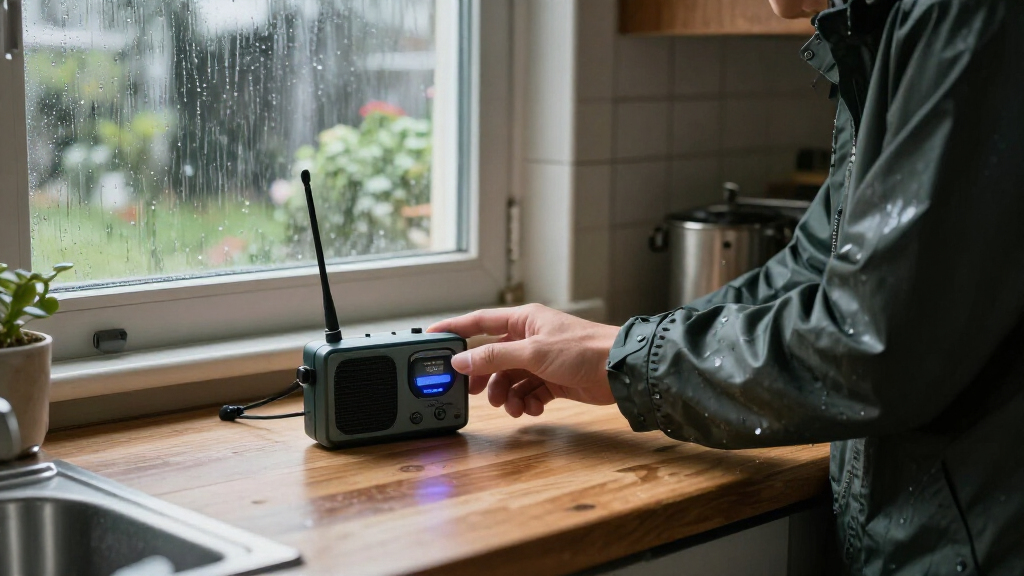
I ranked these weather radios by how well their features serve the two main jobs buyers need: receiving useful weather warnings and staying usable when normal power is unavailable. I gave extra weight to alert targeting and battery backup for home-focused radios, since a warning that is easy to receive and relevant to a local area matters more than a long feature list. For portable models, I compared power options, portability, and practical emergency extras, including lights and SOS signaling.
The ranking also reflects usability and role clarity. A dedicated SAME-alert radio ranks ahead for buyers who want a home warning station, while hand-crank and solar models rank higher for people building portable kits. Radios with AM/FM or shortwave add listening flexibility, but those bands do not replace NOAA weather reception. The product list includes the Midland WR120B twice; I treat the repeated listing as one model rather than inventing a difference between identical entries.
| weather radio | Additional features |
|---|---|
| Hand Crank Emergency Radio wit | — |
| Midland WR120B NOAA Weather Ra | — |
| Midland ER10VP AM/FM Weather R | — |
| Portable AM/FM/NOAA Weather Ra | SOS alarm, USB power output, and telescopic antenna |
| XHDATA D221 Portable AM/FM/SW/ | — |
| Kaito Voyager Max KA900 Emerge | LED flashlight, 5-LED reading lamp, alarm clock, sleep timer, calendar, MP3 player, and phone charger |
| Portable Hand-Crank Emergency | LED flashlight, built-in speaker, telescoping antenna, and frequency display |
| Midland WR120B NOAA Weather Ra | Built-in clock, selectable alarm tones, and SOS alarm |
| Midland WR400 Deluxe NOAA Weat | — |
| NOAA Emergency Weather Radio w | Bluetooth, LED flashlight, and SOS alarm |
Factors to Consider When Choosing Weather Radios
Before choosing a weather radio, decide where it will live and what you expect it to do when conditions worsen. A radio kept plugged in at home has different priorities from one packed into a vehicle or evacuation kit. These factors help prevent paying attention to a feature that does not solve your main problem.
Choose Localized Alerts or General Weather Listening
Start by separating alerting from listening. A radio that receives NOAA weather broadcasts can provide forecasts and warnings, but SAME capability lets a compatible model target alerts by geographic area. That distinction matters in regions where neighboring counties receive different warnings. Check that the radio supports the alert method you want and that you can program it correctly before an emergency. If you mainly want a portable receiver for travel, broad band reception may matter more than home-style alert setup. Do not assume that the words “NOAA weather band” alone mean the radio can filter alerts for your location.
Plan for Power Beyond the Charging Feature
Hand cranks, solar panels, USB charging, and replaceable batteries each solve different power problems. A hand crank can provide a backup when outlets are unavailable, but it takes effort and is better treated as a reserve than a routine charging plan. Solar charging depends on access to suitable light and may be slow, especially indoors or during poor weather. USB charging is convenient when you have a charged power bank, while battery backup helps a plugged-in home radio remain on during an outage. Match the radio’s power options to what you can realistically maintain, and keep any required batteries or power bank ready. Buying several charging methods does not help much if none is checked before the radio is stored.
Match the Radio to Its Storage Location
A home radio can prioritize clear controls, dependable standby power, and alert setup, while an emergency-kit radio should be easy to carry and quick to retrieve. Compact models with lights or SOS signaling may be more useful in a car or go-bag than a larger stationary unit. Before buying, think about where the radio will sit, whether its display and controls will be easy to reach, and whether you can hear it from nearby rooms. A device stored deep in a packed kit may be portable on paper but inconvenient when time is short. For a household warning station, portability is less valuable if it comes at the expense of simple daily readiness. Choose for the place you will actually keep it.
Treat Extra Bands as a Separate Benefit
AM/FM reception is useful for regular broadcasts, and shortwave adds access to a broader range of stations where reception and conditions permit. Those features can make a radio more versatile, but they are separate from receiving NOAA weather broadcasts. If your priority is storm warnings, do not pay extra attention to band count while overlooking alert controls, local programming, or backup power. Shortwave is more compelling for listeners who have a reason to seek out distant broadcasts and are willing to learn how reception varies. For a basic emergency kit, a simpler radio may be easier to operate. Decide whether extra listening options will get real use before treating them as a deciding feature.
Check Alert Setup and Maintenance Before an Outage
Weather radios work best when they are configured and ready before warnings arrive. With an alert-focused model, set the correct location or SAME codes, review the alert settings, and test reception where you plan to keep it. For a portable model, check the charge level and confirm that its crank, cable, or batteries are available. Keep instructions with the radio if setup is not intuitive, and revisit readiness after moving or changing the power source. A feature-rich device can be less useful than a simpler one if no one in the household knows how to operate it. Build these checks into routine emergency-kit maintenance rather than waiting for severe weather.
Frequently Asked Questions
Is a SAME weather radio worth choosing over a basic NOAA receiver?
SAME is useful when you want alerts targeted to a particular area rather than every alert broadcast within range. It can reduce irrelevant warnings, especially near county or regional boundaries. The benefit depends on correct setup, so check whether you are comfortable entering location information and reviewing alert settings. A basic receiver may be enough if you want to listen to NOAA broadcasts manually or need a simpler portable radio. For a household warning station, I’d generally favor targeted alerts when the model supports them.
Should I buy a hand-crank radio or a home radio with battery backup?
Choose based on where you expect to use it. A home unit with battery backup is designed to remain available when utility power fails, while a hand-crank radio is easier to carry and offers a manual reserve power source. Cranking takes time and effort, so it is not a direct substitute for keeping batteries charged. Some buyers may want both: a stationary alert radio for the household and a portable model in a go-bag. If you only want one, prioritize the radio that matches your most likely emergency use.
Can I rely on solar charging during a storm-related outage?
Solar charging is a useful extra, but cloudy conditions, limited daylight, and indoor placement can restrict how much power it provides. It should not be your only plan for keeping an emergency radio ready. A charged battery, compatible USB power source, or the radio’s other supported backup method can help cover periods without good sunlight. Check the product instructions for charging expectations rather than assuming a small panel will quickly replenish a depleted battery. For an outage kit, treat solar as one part of a power plan, not the whole plan.
Does a weather radio with AM, FM, or shortwave give better emergency alerts?
Extra bands broaden what you can listen to, but they do not automatically improve NOAA alert reception or location targeting. AM/FM can provide access to local broadcast stations, and shortwave can add listening options for people who value wider reception. For weather warnings, focus on NOAA capability, alert features, reception where you live, and the radio’s power plan. A simpler model with the right alert setup may fit better than a multi-band radio whose extra features go unused. Choose added bands for a specific listening need, not as a stand-in for alert functions.
Why does the Midland WR120B appear twice, and should I treat the listings as different radios?
The lineup contains two entries with the same Midland WR120B name and the same stated SAME-alert and battery-backup features. I treat them as the same model because the provided information does not establish any difference in version, bundle, or specifications. If you encounter separate listings while shopping, compare model identifiers and included accessories before assuming one performs differently. The repeated entry does not give the WR120B two separate advantages in this comparison. Its recommendation rests on its fit as a dedicated home alert radio.
Conclusion
For most households seeking a dedicated warning station, I’d choose the Midland WR120B as the best overall because its SAME alerts and battery backup fit that job directly. The best value depends on your priorities: the Midland ER10VP is a straightforward pick for a compact kit with a flashlight and SOS strobe, while a hand-crank or USB-C model makes more sense if backup charging matters more. Buyers who want the best premium home option should look at the Midland WR400, while beginners may prefer the WR120B’s clear focus on local alerts over a portable radio with more charging and listening features to manage. For specific needs, choose the Kaito Voyager Max KA900 for a multi-method portable setup or the XHDATA D221 if shortwave listening is part of the plan. Pick the radio you can configure, power, and reach quickly; the feature list matters only if it fits how you’ll use it.