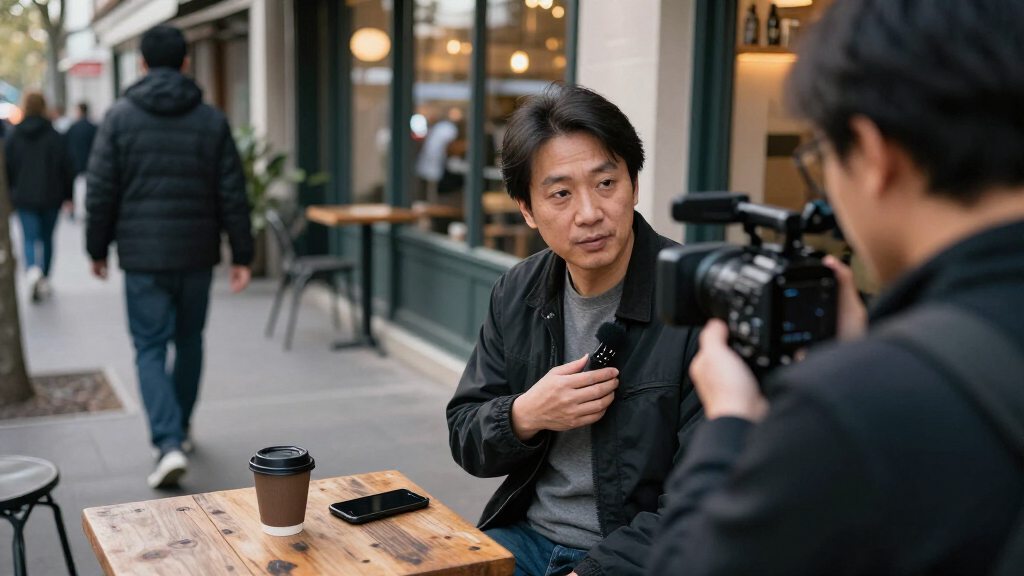
For most phone-based interviews, the DJI Mic Mini (2 TX + 1 RX) is my best overall pick because a two-transmitter kit can cover both sides of a conversation while staying compact. The COMICA Revo S suits reporters who prefer a handheld mic, while the RØDE Interview PRO is the premium choice for a more traditional interview setup. The main tradeoffs are clip-on convenience versus handheld control, single-person simplicity versus two-person coverage, and phone-only compatibility versus a kit that can serve more devices. I also weigh charging, noise controls, and how much setup each format asks of the interviewer. Read on for the full comparison and guidance by recording style.

Get everyday essentials delivered free with Prime
- Fast, free delivery on millions of items
- Prime Video, Amazon Music and more included
- Member-only deals all year
Complete the kit

Key Takeaways
Two-transmitter kits are the clearest fit for sit-down conversations. The DJI Mic Mini bundles make it easier to capture an interviewer and guest without moving one mic between them.
Handheld models serve a different reporting style. The COMICA Revo S and RØDE Interview PRO suit street interviews where passing or aiming a microphone is part of the conversation.
Phone-first lavaliers keep the setup simple. Mini Mic Pro, MAYBESTA, and the 2-pack lavalier options focus on clipped-on recording, though buyers should verify the connector matches their device.
Similar names can hide different bundles. The Mini Mic Pro with a charging case and the versions without one, as well as the three DJI Mic Mini listings, call for careful checking of included receivers and accessories.
Compatibility and workflow outrank headline specs. A kit that connects cleanly to a phone or camera and suits the interview format is more useful than extra controls a buyer will not use.




| wireless interview microphone | Form factor | Channels |
|---|---|---|
| Labstandard Professional Wirel | Lavalier, mini | 2 |
| Mini Mic Pro | Mini clip-on microphone | 1 |
| Mini Mic Pro Wireless Micropho | Lavalier | 1 |
| Wireless Lavalier Microphone f | Lavalier | 1 |
| COMICA Revo S Wireless Handhel | Wireless handheld | — |
| Wireless Lavalier Microphone f | — | 2 |
| MAYBESTA Wireless Mini Lavalie | — | — |
| COMICA Revo S Wireless Handhel | Handheld | — |
| PQRQP 3 in 1 Wireless Lavalier | — | 1 |
| DJI Mic Mini | — | 1 |
| RØDE Interview PRO Wireless Ha | Handheld | — |
| DJI Mic Mini Wireless Micropho | — | — |
| DJI Mic Mini | — | — |
More Details on Our Top Picks
Labstandard Professional Wireless Lavalier Lapel Microphone for iPhone, iPad, Mini
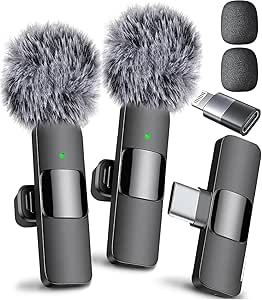
Two transmitters and real-time mixing give this Labstandard set a practical advantage for interviews with a host and guest: both voices can be captured at once, unlike the single-channel Mini Mic Pro. Its stated noise reduction and low-latency 2.4G transmission are aimed at keeping speech clear when recording in busy surroundings. Lightning and USB-C connectors also cover many current phones and tablets, though the product data does not clarify whether every listed device works without an adapter.
The tradeoff is a less straightforward power story: the listing describes up to six hours of use but also specifies two C batteries. It is a better fit for paired sit-down or walk-and-talk interviews than for buyers seeking a weather-ready kit; no water resistance is listed. Compared with the handheld COMICA Revo S, it leaves the speakers hands-free but gives up a directional cardioid pickup pattern.
Pros:- Two channels support recording two interview participants
- Lightning and USB-C connectors cover a range of phones and tablets
- Noise reduction and low-latency 2.4G transmission are listed
- Lavalier clips leave both speakers’ hands free
Cons:- The listing’s C-battery requirement makes its six-hour power claim harder to assess
- Omnidirectional pickup can capture surrounding sound
- No weather-resistance rating is provided
Best for: Mobile journalists recording a host and one guest on compatible Lightning or USB-C phones or tablets.
Not ideal for: Interviewers who need weather protection, a clearly documented battery system, or a directional handheld microphone for noisy locations.
- Form factor:Lavalier, mini
- Channels:2
- Pickup pattern:Omnidirectional
- Connectors:Lightning, USB Type-C
- Compatible devices:Camera, 3.5 mm port devices, Lightning devices, Type-C devices
- Stated battery life:Up to 6 hours
- Listed batteries:2 C batteries required
- Weight:0.05 kg
Our verdict“Choose the Labstandard set when you need two clipped microphones and real-time mixing for a mobile interview.”
Mini Mic Pro – Wireless Lavalier Microphone for iPhone & Android
Plug-and-play setup and broad device compatibility make this Mini Mic Pro a straightforward pick for solo interviews recorded on a phone, tablet, or laptop. Its compact clip-on design keeps the microphone close to the speaker, while included wind protection can help when recording outside. The listing describes noise cancellation and up to six hours of use, giving it a simpler run-and-gun profile than the two-channel Labstandard set.
The main limit is its single channel: it suits one subject at a time, not a host and guest who each need a mic. Its omnidirectional pickup can also take in nearby traffic or room noise, so the COMICA Revo S may be a better fit when a handheld mic with cardioid pickup and gain controls suits the interview format. The product data conflicts on power, listing a rechargeable battery while also specifying two C batteries; check the supplied kit before relying on a long recording session.
Pros:- Plug-and-play connection is designed for phones, tablets, and laptops
- Compact 80 g form factor is easy to carry
- Included wind protection suits outdoor speech recording
- Battery indicator light and one-touch recording are listed
Cons:- One channel does not provide separate microphones for interviewer and guest
- Omnidirectional pickup may capture background noise
- Power details conflict between the rechargeable-battery description and C-battery spec
Best for: Solo creators and reporters who want a compact clip-on mic with Lightning or USB-C phone support and included wind protection.
Not ideal for: Two-person interview crews or buyers who need clearly specified rechargeable power and more control over background pickup.
- Form factor:Mini clip-on microphone
- Channels:1
- Pickup pattern:Omnidirectional
- Connectors:Lightning, USB Type-C
- Compatible devices:Android, laptop, smartphone, tablet, iPad, iPhone
- Stated battery life:Up to 6 hours
- Listed batteries:2 C batteries
- Weight:80 g
Our verdict“Pick this Mini Mic Pro for simple solo phone interviews, but choose a two-channel kit if both interviewer and guest need microphones.”
Mini Mic Pro Wireless Microphone for iPhone & Android with Charging Case
The charging-case bundle gives this Mini Mic Pro a more portable storage setup than the basic Mini Mic Pro, which is useful for interviewers who carry a mic between shoots. It also lists Lightning and USB-C connectors, noise reduction, wind protection, and plug-and-play operation for phones, tablets, and laptops. Like the other Mini Mic Pro, it is a single-channel omnidirectional mic, so its natural role is a one-person interview or a single speaker recording rather than a two-person conversation.
That makes the Labstandard set a stronger choice when both interviewer and guest need separate mics. The COMICA Revo S is another alternative for buyers who prefer a handheld, directional mic and a clearly stated built-in battery. Here, the power details need scrutiny: the description says rechargeable operation, while the specs call for two C batteries and say charging during recording may need extra setup. The case adds convenience, but the listing does not spell out its charging capacity or recording workflow.
Pros:- Charging case is included for storage and transport
- Lightning and USB-C connectors support many phones and tablets
- Noise reduction and wind protection are listed
- Plug-and-play design suits quick interview setups
Cons:- Single channel is suited to one mic feed at a time
- Omnidirectional pickup can collect surrounding noise
- Power specs conflict between rechargeable operation and the stated C-battery requirement
Best for: Solo interviewers who want a compact phone mic bundled with a case for carrying and organizing the kit.
Not ideal for: Teams recording two speakers at once, or buyers who need clear, consistent details about battery charging and runtime.
- Form factor:Lavalier
- Channels:1
- Pickup pattern:Omnidirectional
- Connectors:Lightning, USB Type-C
- Compatible devices:Android, laptop, smartphone, tablet, iPad
- Included accessory:Charging case
- Listed batteries:2 C batteries required; included
- Warranty:90-day refund guarantee; 6 months free replacement or warranty
Our verdict“Choose this bundle for a carry-friendly solo interview setup, provided its charging and battery details match your recording workflow.”
Wireless Lavalier Microphone for iPhone, Android, PC, Live Streaming, Vlog (Black)
Up to 20 meters of stated range makes this USB-C lavalier appealing for interviews where the subject needs to move away from the recording phone. The listing also gives it a six-hour runtime, noise reduction, and wind accessories, so it can serve a mobile reporter working with a single speaker. Its 40 g weight and small body are easier to clip onto clothing than carrying the handheld COMICA Revo S, although the COMICA has a cardioid pattern that may suit interviews where reducing off-axis sound matters.
This mic is a one-channel, omnidirectional option, and the connector detail is narrower than the broad title suggests: the spec lists USB-C only. Android users may also need to enable OTG, which adds a setup step before recording. The stated range and runtime are useful on paper, but six hours may not cover extended field days, and no separate weather-resistance rating is provided.
Pros:- Stated wireless range reaches up to 20 meters
- Up to six hours of use is listed
- Windproof covers and sponge heads are included
- Light 40 g clip-on design keeps the speaker hands-free
Cons:- USB-C is the only connector specified
- Android devices may require OTG to be enabled
- Omnidirectional pickup can capture surrounding noise
Best for: Mobile interviewers using a USB-C phone who need a clipped mic and room for the subject to move within the stated range.
Not ideal for: Lightning-device users, crews recording two speakers, or interviewers who need directional pickup for noisy environments.
- Form factor:Lavalier
- Channels:1
- Pickup pattern:Omnidirectional
- Connector:USB Type-C
- Wireless range:Up to 20 meters
- Stated battery life:Up to 6 hours
- Signal-to-noise ratio:65 dB
- Weight:40 g
Our verdict“Pick this lavalier for a single speaker moving within a USB-C phone interview setup, and look elsewhere for Lightning or two-mic support.”
COMICA Revo S Wireless Handheld Microphone
The COMICA Revo S changes the interview format: its handheld body and cardioid pickup suit a reporter passing a mic between speakers or asking questions in a busy public place. Unlike the clip-on Mini Mic Pro options, its unidirectional pattern is designed to focus more on sound in front of the mic, while three gain levels let the user adjust output for different voices and distances. It also records at 48 kHz/24-bit and lists one-key noise reduction, giving audio-focused creators more control than the simpler lavaliers here.
That control comes with a less hands-free setup: someone has to hold or position the microphone, and the USB-C receiver means Lightning devices need a separate compatible adapter. Its built-in battery is rated for up to 15 hours, substantially longer than the six-hour claims for the lavaliers. For two people who need to speak simultaneously, the two-channel Labstandard set is the more suitable format; the Revo S is strongest when a single handheld mic can move between speakers.
Pros:- Cardioid pickup is suited to focusing on the person speaking into the mic
- 48 kHz/24-bit recording and three gain levels provide recording control
- Built-in battery is rated for up to 15 hours
- One-key noise reduction is included
Cons:- Handheld design requires someone to hold or position the mic
- Lightning devices need a separate USB-C-to-Lightning adapter
- A single handheld mic is less convenient for simultaneous two-person recording than the Labstandard set
Best for: Reporters and podcast hosts who want to hold one directional microphone between interview participants and record on USB-C devices.
Not ideal for: Interviewers who need hands-free microphones on two speakers or direct Lightning connectivity without an adapter.
- Form factor:Wireless handheld
- Microphone capsule:14 mm condenser
- Pickup pattern:Cardioid, unidirectional
- Recording quality:48 kHz / 24-bit
- Gain adjustment:3 levels
- Noise reduction:One-key CalMix denoise
- Battery:Built-in 350 mAh lithium battery; up to 15 hours
- Connector:USB Type-C
Our verdict“Choose the Revo S for a reporter-style interview where directional handheld audio and long runtime matter more than hands-free two-person capture.”
Wireless Lavalier Microphone for iPhone, iPad, Android – 2 Pack with Noise Reduction, Plug and Play
For a two-person smartphone interview, this two-mic lavalier set offers a straightforward way to record both speakers without passing a handheld mic back and forth. Automatic pairing and plug-and-play setup reduce prep, while the listed 98-foot transmission range gives an interviewer room to step away from the phone. Compared with the MAYBESTA Wireless Mini Lavalier, this set lists a specific range and two channels, but MAYBESTA includes both USB-C and Lightning receiver connections; this model lists USB-C. Noise reduction and reverb provide some recording flexibility, though neither replaces a controlled recording space. The main limits are its roughly five-hour battery life and the need to enable OTG on some Android devices. Buyers recording longer sessions or working in loud locations may want a different setup.
Pros:- Two microphones and two channels support interviews with two speakers.
- Automatic pairing and plug-and-play setup simplify recording.
- Listed wireless range reaches up to 98 feet.
- Noise reduction, mute, and reverb modes add recording controls.
Cons:- Battery life is limited to about five hours per charge.
- Some Android devices require OTG to be enabled.
- USB-C receiver may not suit users who need a Lightning connection.
Best for: Smartphone interviewers who need two clip-on mics for short conversations and have a USB-C connection.
Not ideal for: Android users who want setup without changing phone settings, or interviewers recording sessions longer than about five hours.
- Connectivity:2.4 GHz wireless
- Connector:USB Type-C
- Microphone type:Omnidirectional lavalier
- Channels:2
- Wireless range:Up to 98 feet
- Battery life:About 5 hours per charge
- Special features:Noise reduction, mute, reverb mode
Our verdict“Choose this set for short, two-person interviews on a USB-C phone when easy pairing and a stated wireless range matter most.”
MAYBESTA Wireless Mini Lavalier Microphone for USB-C and Lightning Phones
The standout here is the receiver with both USB-C and Lightning connections, which can simplify interviews when a household or production team uses different phone types. It also includes two lavalier microphones, windscreens, and automatic pairing without an app, giving a small crew the basics for a two-person conversation. Compared with the USB-C-only Wireless Lavalier Microphone for iPhone, iPad, Android, MAYBESTA is more adaptable across phone generations, but its listing does not specify wireless range or battery runtime. That makes it harder to judge whether it suits interviews where the subject must move far from the phone or recording runs long. Noise reduction and windscreens can help with everyday background sound and light wind, while the unspecified channel count and runtime leave some planning uncertainty.
Pros:- Receiver supports both Lightning and USB-C connections.
- Includes two microphones for two-person interviews.
- Automatic plug-and-play pairing requires no app.
- Windscreens and noise reduction can help with light wind and ambient sound.
Cons:- Wireless range is not specified.
- Battery runtime is not specified.
- Phone-case compatibility is described only as applying to most cases.
Best for: Interviewers who switch between Lightning and USB-C phones and want two clip-on mics in one kit.
Not ideal for: Crews that need a published range, confirmed long runtime, or predictable coverage for extended interviews.
- Connectors:Lightning and USB Type-C
- Microphone type:Omnidirectional lavalier
- Included microphones:2
- Frequency:2.4 GHz
- Signal-to-noise ratio:80 dB
- Audio sensitivity:15 dB
- Included components:Receiver, USB charging cable, 2 sponge tips, 2 microphones, 3 clips
- Warranty:120-day refund policy, 18-month replacement, 2-year comprehensive warranty
Our verdict“Pick MAYBESTA when connector flexibility across iPhones and Android phones matters more than having a published range and runtime.”
COMICA Revo S Wireless Handheld Microphone for iPhone, USB-C, 48kHz/24-bit Audio, 15H Battery, Smartphone Mic for Content Creators, Reporters, Podcasts, Street Interviews
When an interview calls for a reporter to hold the microphone between speakers, the Revo S’s handheld design is more natural than clipping lavaliers to everyone. Its unidirectional pickup focuses on sound from the direction it faces, and the three-level gain control gives the interviewer a way to adjust for different speaking distances. The stated 48 kHz/24-bit recording and up to 15-hour battery life also make it better suited to long field days than the five-hour Wireless Lavalier Microphone for iPhone, iPad, Android. The tradeoff is less flexibility: a handheld mic must be positioned deliberately, and it records on one channel. Its listed USB-C connection also narrows device fit, despite the title naming iPhone compatibility. Consider it for direct-to-phone reporting, not discreet multi-person capture.
Pros:- Handheld form makes it easy to pass or aim the mic between speakers.
- Unidirectional pickup helps focus on the person being interviewed.
- Three gain levels provide adjustment for different speaking distances.
- Up to 15 hours of battery life supports long recording days.
Cons:- Single-channel design does not provide separate wireless channels for multiple microphones.
- Handheld recording requires the interviewer to keep the mic positioned.
- USB-C connection may limit compatibility with some devices.
Best for: Mobile reporters and podcasters who want to hold one directional mic while interviewing people in the field.
Not ideal for: Interviewers who need discreet clip-on microphones, two-speaker wireless capture, or a receiver for non-USB-C devices.
- Form factor:Handheld
- Connector:USB Type-C
- Polar pattern:Unidirectional
- Recording format:48 kHz/24-bit
- Wireless range:Up to 65 feet
- Battery life:Up to 15 hours
- Signal-to-noise ratio:60 dB
- Build material:Metal
Our verdict“Choose the Revo S for field interviews where a directional handheld mic and long battery life are more useful than discreet, two-person lavaliers.”
PQRQP 3 in 1 Wireless Lavalier Microphone for iPhone, Android, and Camera
The PQRQP’s main advantage is its three-connector receiver, which is designed to work with USB-C, Lightning, and 3.5 mm inputs. That makes it a flexible candidate for interviews recorded across phones, cameras, and computers, while the listed 65-foot range and up to seven-hour runtime cover typical mobile sessions. Compared with the MAYBESTA Wireless Mini Lavalier, PQRQP specifies both range and battery life; MAYBESTA instead includes two lav mics and a receiver for USB-C and Lightning phones. PQRQP is listed as one channel, so the three-in-one compatibility should not be mistaken for a two-person, separately tracked setup. Its omnidirectional pickup captures sound around the mic, which is convenient for natural placement but can admit more surrounding noise. Some Android devices also require OTG activation.
Pros:- USB-C, Lightning, and 3.5 mm connectors broaden device options.
- Listed wireless range reaches up to 65 feet.
- Up to seven hours of battery life suits many interview sessions.
- Automatic connection setup does not require an app or Bluetooth pairing.
Cons:- Single-channel configuration is not suited to separate multi-mic tracks.
- Omnidirectional pickup may capture surrounding noise.
- Some Android devices require manual OTG activation, and 3.5 mm compatibility varies.
Best for: Solo interviewers and creators who move a single wireless lavalier between phones, cameras, and compatible 3.5 mm inputs.
Not ideal for: Two-person interview crews needing separate microphone channels or users recording in loud spaces where omnidirectional pickup is a concern.
- Connectors:USB-C, 3.5 mm jack, Lightning
- Microphone type:Omnidirectional lavalier
- Wireless range:Up to 65 feet
- Battery life:Up to 7 hours
- Channels:1
- Signal-to-noise ratio:80
- Special features:One-touch recording, noise reduction, voice-activated recording
Our verdict“Choose PQRQP if you need one lavalier system to connect across several device types and can work within its single-channel design.”
DJI Mic Mini (2 TX + 1 Mobile RX), Ultralight, Active Noise Cancelling
The 10 g transmitters make the DJI Mic Mini a strong choice when a visible microphone could distract from the conversation. Its active noise cancelling and stated 300-meter transmission range suit mobile interviews where the subject may move around, while the 11.5-hour battery life outlasts the PQRQP lavalier’s listed seven hours. The tradeoff is that this compact system is listed as one channel, so it does not fit workflows that need separate audio tracks from multiple microphones. It is also described as not waterproof, which matters for outdoor reporting in wet weather. Compared with the handheld COMICA Revo S, DJI is easier to wear discreetly and offers a much longer stated range, while the COMICA’s handheld shape may be simpler for a reporter who wants to aim the mic directly at each speaker.
Pros:- Ultralight 10 g design is less conspicuous on clothing.
- Active noise cancelling can help keep vocals clearer in noisy surroundings.
- Listed 300-meter transmission range allows substantial distance from the receiver.
- Up to 11.5 hours of battery life supports extended recording.
Cons:- One-channel audio is unsuitable for workflows requiring separate multi-mic tracks.
- Not waterproof, limiting confidence in wet outdoor conditions.
- Magnetic components may interfere with certain devices.
Best for: Mobile interviewers who want a lightweight wearable mic, active noise cancelling, and long-distance freedom with compatible phones or computers.
Not ideal for: Production teams needing multiple independently recorded mic channels or reporters who regularly work in wet conditions.
- Transmitter weight:10 g
- Transmission range:300 meters
- Battery life:Up to 11.5 hours
- Connector:USB Type-C
- Microphone type:Lavalier
- Channels:1
- Signal-to-noise ratio:70 dB
- Compatible devices:iPhone 15/16/17 series, Android phones, PCs, tablets
Our verdict“Choose the DJI Mic Mini for discreet, mobile interviews where low weight, noise cancelling, and long range outweigh the one-channel limitation.”
RØDE Interview PRO Wireless Handheld Condenser Microphone
For interviews where the microphone itself belongs in the shot, the RØDE Interview PRO offers a handheld format with a broadcast-grade omnidirectional capsule. Its 32-bit float onboard recording provides a backup if wireless audio levels prove difficult to manage, while GainAssist helps balance levels during changing speech. Compared with the COMICA Revo S Wireless Handheld Microphone, this pick puts more emphasis on onboard recording and RØDE Series IV receiver integration. That focus comes with a compatibility catch: the receiver is sold separately, so it makes most sense for buyers who already own a compatible RØDE receiver or plan to add one. Its 2.4GHz link also depends on suitable conditions, and the handheld form is less discreet than a lavalier for unobtrusive interviews.
Pros:- Broadcast-grade omnidirectional capsule suits spoken interviews
- 32-bit float onboard recording provides a backup recording
- GainAssist helps balance levels during recording
- Pairs with compatible RØDE Series IV wireless receivers
Cons:- Receiver is not included
- Requires a compatible RØDE receiver for wireless use
- 2.4GHz transmission may face range limits in some conditions
Best for: Reporters and video producers who want a handheld interview mic and already use, or plan to buy, a compatible RØDE Series IV receiver
Not ideal for: First-time buyers seeking a complete wireless kit in one box, or interviewers who need a small clip-on microphone
- Form factor:Handheld
- Connectivity:Wireless, 2.4GHz
- Polar pattern:Omnidirectional
- Recording feature:32-bit float onboard recording
- Audio feature:GainAssist
- Signal-to-noise ratio:74 dB
- Power:Included lithium-ion battery
- Warranty:2 years
Our verdict“Choose the Interview PRO if you want a broadcast-oriented handheld with onboard backup recording and can supply a compatible receiver.”
DJI Mic Mini Wireless Microphone Kit (2 Transmitters, 1 Receiver, Charging Case)
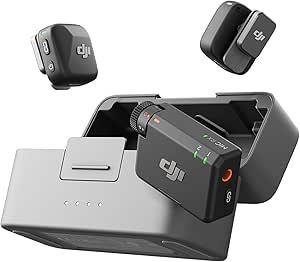
The DJI Mic Mini kit is the more practical choice here when two people need separate microphones: it includes two 10 g transmitters, one receiver, and a charging case. That gives interviewers a ready-to-connect setup, unlike the RØDE Interview PRO, which requires a compatible receiver sold separately and is a single handheld mic. The DJI kit also offers two noise cancellation levels and automatic audio limiting, useful tools when interviews move between quieter rooms and noisier locations. Its stated transmission range reaches 400 m, though real-world conditions can affect wireless links. The tradeoff is that this small kit is not waterproof, and some connections to Osmo Mobile devices require a specific first-generation Multifunctional Module. Buyers who want a visible handheld microphone may prefer the RØDE format.
Pros:- Two transmitters support interviewer and guest audio
- Receiver and charging case are included
- Two noise cancellation levels suit different environments
- Automatic limiting helps reduce clipping
Cons:- Not waterproof
- Some Osmo Mobile connections require a first-generation DJI OM Multifunctional Module
Best for: Solo video journalists and small teams recording two-person interviews on a camera or smartphone
Not ideal for: Interviewers who need waterproof equipment, a handheld reporter-style mic, or compatibility with every Osmo Mobile setup
- Transmitters:2
- Receiver:1 included
- Transmitter weight:10 g
- Audio sampling rate:48 kHz
- Audio bit depth:24-bit via supported OsmoAudio devices
- Maximum transmission range:400 m
- Battery life with charging case:Up to 48 hours
- Noise cancellation:Basic and Strong levels
- Maximum sound pressure level:120 dB SPL
Our verdict“Pick this kit for a compact, complete two-person interview setup with a receiver and charging case included.”
DJI Mic Mini (2 TX + 1 RX), Ultralight, Detail-Rich Audio
For interviewers who prioritize a tiny kit, this DJI Mic Mini pairs two 10 g transmitters with a receiver and supports 48 kHz, 24-bit audio. Its 400 m stated transmission range and noise cancellation suit mobile reporting where the speakers need to move freely. Compared with the similarly named DJI Mic Mini Wireless Microphone Kit, the provided data describes a shorter, 10-hour battery life rather than up to 48 hours with a charging case; check what is included in the specific listing before choosing between them. This model’s compact size makes it less conspicuous than the handheld RØDE Interview PRO, but it also lacks that microphone’s stated onboard recording. It is not waterproof, and its listed compatibility is limited outside Osmo devices, so it may not fit every phone-and-camera workflow.
Pros:- Two 10 g transmitters are light and discreet
- 48 kHz, 24-bit audio is specified
- Stated transmission range reaches 400 m
- Noise cancellation supports recording in noisier settings
Cons:- Listed battery life is 10 hours
- Not waterproof
- Compatibility with non-Osmo devices is limited
Best for: Mobile interviewers who want two lightweight transmitters for compatible Osmo devices and prioritize a low-profile setup
Not ideal for: Buyers needing a waterproof mic, broad compatibility with non-Osmo gear, or longer recording sessions without recharging
- Transmitter count:2
- Receiver count:1
- Weight:10 g
- Audio quality:48 kHz, 24-bit
- Transmission range:Up to 400 m
- Battery life:Up to 10 hours
- Connectivity:Bluetooth, Wi-Fi
- Connector:USB Type-C
- Microphone pattern:Omnidirectional
Our verdict“Choose this version for a lightweight two-transmitter mobile setup when its compatibility and 10-hour battery life meet your needs.”

How We Picked
I ranked these wireless interview microphones by how well their format serves common interview situations: a phone-recorded one-on-one, a walk-up street interview, or a more flexible creator setup. I gave weight to the number of people a kit can cover, device connections, portability, noise-control options, battery and charging arrangements, and how much setup the buyer must manage. Those factors affect whether a microphone is ready when a guest arrives and whether it fits the device already in use.
The order favors kits that balance practical interview coverage with straightforward operation. Two-transmitter systems rank highly for paired conversations; handheld models earn their place for reporters who need a visible, easy-to-aim mic. Phone-focused lavaliers remain sensible for solo recording and beginners, but rank below more adaptable kits when their listing offers less flexibility. Product listings with similar names or multiple bundle configurations need particular scrutiny: buyers should confirm the exact receiver, connector, and case included before choosing.
| wireless interview microphone | Form factor |
|---|---|
| Labstandard Professional Wirel | Lavalier, mini |
| Mini Mic Pro | Mini clip-on microphone |
| Mini Mic Pro Wireless Micropho | Lavalier |
| Wireless Lavalier Microphone f | Lavalier |
| COMICA Revo S Wireless Handhel | Wireless handheld |
| Wireless Lavalier Microphone f | — |
| MAYBESTA Wireless Mini Lavalie | — |
| COMICA Revo S Wireless Handhel | Handheld |
| PQRQP 3 in 1 Wireless Lavalier | — |
| DJI Mic Mini | — |
| RØDE Interview PRO Wireless Ha | Handheld |
| DJI Mic Mini Wireless Micropho | — |
| DJI Mic Mini | — |
Factors to Consider When Choosing Wireless Interview Microphones
Start with the way interviews actually happen: who speaks, where you record, and which device captures the audio. These choices often matter more than adding features to a kit that does not fit your workflow.
Choose a format that fits the conversation
A clip-on lavalier keeps the microphone close to the speaker and leaves their hands free, which works well for sit-down interviews and short social clips. A handheld mic is easier to aim, pass between speakers, and present visibly during street reporting. The tradeoff is movement: a lavalier can stay in place while the subject talks, while a handheld requires someone to manage its position. For two people speaking at once, check whether the kit has two transmitters; one transmitter may mean taking turns or adding another recording method. Match the format to your interview routine before comparing extra controls.
Check device connections before buying
Phone microphone kits may use USB-C, Lightning, or a separate receiver, and the connector that fits one phone may not fit another. Check the exact phone or camera model, including any case that could block a plug-in receiver. A listing that says it works with several devices may rely on adapters or a specific receiver configuration. Buyers who change phones or record on both a phone and camera should favor a setup with clearly stated cross-device support. Confirm what is in the box rather than assuming a similarly named bundle includes the same parts.
Decide how much control you need over noise
Wind, traffic, room echo, and clothing rustle can affect speech more than a microphone’s headline audio format. Noise reduction can help in some settings, but aggressive processing may change voices, so it is not a substitute for choosing a quieter position. For outdoor interviews, prioritize a way to manage wind and place the microphone close to the speaker. In a controlled room, stable placement and clear speech may matter more than extra processing modes. Think about the noisiest place you expect to record and check whether the kit includes the accessories or controls for it.
Plan for two speakers and backup recording
Interview coverage can fail when a second speaker is not miked or a phone runs out of storage or power. A two-transmitter kit addresses the first problem by giving each person a dedicated mic, while a charging case can simplify longer recording days. Check whether the receiver and transmitters can run for the length of a typical session, and whether charging is practical between interviews. If a conversation cannot be repeated, look for a recording workflow that leaves a backup option, such as a second device or a separate recorder. Extra channels and charging gear add equipment to carry, so choose them based on how often you record extended sessions.
Balance portability with handling and setup
Small clip-on transmitters are easy to pack, but can be fiddly to attach and may pick up contact noise from clothing. A handheld microphone is quicker to offer to a guest and easier to position deliberately, though it takes a hand and more bag space. Plug-and-play labels do not remove the need to check pairing, receiver connection, and phone recording settings before an interview. A short pre-recording routine can catch muted transmitters or an unrecognized input before they spoil a conversation. Choose the setup whose handling demands you can manage while asking questions.
Frequently Asked Questions
Should I choose a handheld microphone or a wireless lavalier for interviews?
Choose a lavalier when each speaker can wear a mic and you want hands-free conversation. Choose a handheld when you need to pass the mic, point it toward different speakers, or make the recording setup visible to the guest. A handheld can be more practical for quick street questions, while a lavalier suits longer exchanges where holding a mic would distract. If you interview two people at once, check whether the lavalier kit has two transmitters or plan how the handheld will be shared.
Can one wireless microphone kit record both the interviewer and guest?
It can if the kit includes two transmitters and the receiver supports recording both channels. A single-transmitter kit usually covers one person at a time, even if it connects to a phone that records stereo audio. Before buying, confirm the transmitter count and how the receiver handles the two voices; separate channels can make it easier to adjust each speaker later. For a guest-focused video where the interviewer stays behind the camera, one mic may be enough.
Will a phone-focused wireless microphone work with my camera?
Not automatically. Some kits are built around a phone plug-in receiver, while others include a receiver or connection method suited to cameras as well. Check the exact camera input and the kit’s listed receiver and cable contents, since an adapter may be needed. If you plan to switch between a phone and camera, choose a bundle that spells out support for both rather than relying on a broad compatibility claim.
Do I need noise reduction for outdoor interviews?
Noise reduction can help with steady background sounds, but it cannot reliably remove every problem caused by wind, traffic, or a distant speaker. Placing the mic close to the person talking and using suitable wind protection can make a larger difference. A handheld mic gives the interviewer control over direction, while a lavalier stays consistent only if it is positioned and secured well. If possible, record a short sample in the actual location and listen for wind and clothing noise before starting the interview.
What should I verify when two listings have nearly the same product name?
Compare the included receiver, number of transmitters, connector type, charging case, and any cables or adapters. Similar names can describe different bundles, and a case or second transmitter may be the difference that matters for your workflow. Read the device compatibility details for the exact listing and confirm whether it supports your phone generation. If those details are unclear, choose the configuration whose contents and connection method are explicitly stated.
Conclusion
For a versatile phone-based interview setup, I recommend the DJI Mic Mini two-transmitter kit as the best overall choice, especially when both interviewer and guest need coverage. The phone-first lavalier kits are the best value direction for buyers who want a simple clipped-on setup; compare the Mini Mic Pro bundles and 2-pack options by connector and included accessories. For beginners, the plug-and-play lavalier options make sense when the phone connection is confirmed and the recording is straightforward. Reporters who prefer a mic they can pass or aim should choose the COMICA Revo S, while the RØDE Interview PRO is the best premium fit for a dedicated handheld workflow. Choose the format first, then verify the exact kit contents for your device.
Fall Picks
fall essentials
As an affiliate, we earn on qualifying purchases.