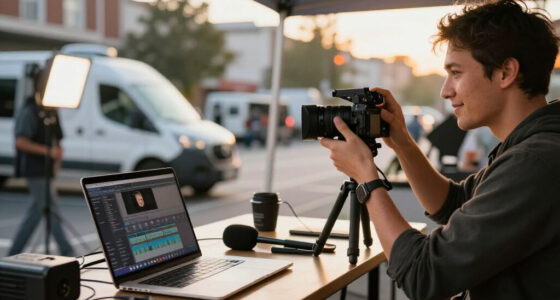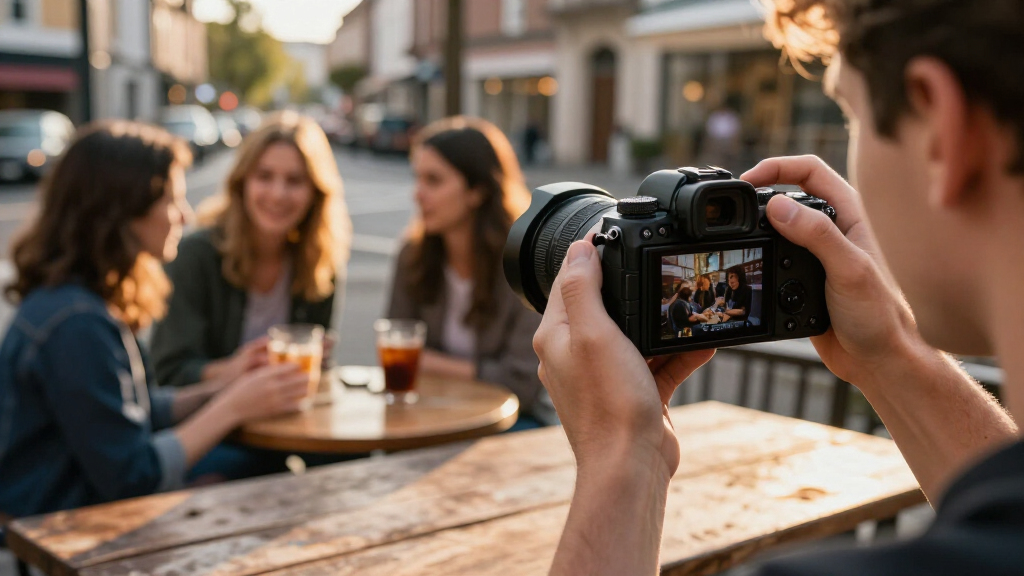
Among these mirrorless cameras for content creators, I’d put the Canon EOS R50 Content Creator Kit first for its approachable controls and useful starter accessories. The Sony ZV-E10 is a strong alternative for creators who want a compact vlogging setup, while the Sony Alpha 7 IV suits those who need a full-frame system and broader lens flexibility. The main tradeoffs are portability versus sensor size, simple creator features versus more advanced controls, and a complete kit versus room to choose accessories yourself. Several listings are bundle versions of the same camera, so the included lens and accessories can matter as much as the body. Read on for how I’d match each option to a creator’s workflow.

Get everyday essentials delivered free — and shop member deals
- Fast, free delivery on millions of items
- Access to Prime Big Deal Days deals on October 6–7
- Prime Video, Amazon Music and more included
Key Takeaways
- The Canon EOS R50 Content Creator Kit is my best overall pick because it pairs an accessible camera with a lens and creator focused accessories, reducing the setup decisions facing a new shooter.
- Sony’s ZV-E10 appears in three bundle listings; the underlying camera is the common thread, so compare lenses and included accessories rather than treating each listing as a distinct camera upgrade.
- The Sony Alpha 7 IV is the premium system choice for creators who value a full-frame body and a versatile 24–105mm lens, but its larger system may be more than casual vloggers need.
- Canon’s R50 variations offer different starting kits: the standard lens listings keep things simple, the R50 V bundle adds a wider lens, and the R10 kit includes a longer zoom and creator accessories.
- The two generic 4K rotating-lens listings and the Insta360 Luna Ultra stand apart from the named interchangeable-lens cameras; check sensor, lens, stabilization, and support details carefully before choosing one as a long-term camera system.




| mirrorless cameras for content creator | Sensor | Included lens | Video | Autofocus |
|---|---|---|---|---|
| Canon EOS R50 Content Creator | 24.2 MP APS-C CMOS | RF-S18-45mm F4.5-6.3 IS STM | Uncropped 4K up to 30 fps; Full HD up to 120 fps | Dual Pixel CMOS AF II with 651 AF zones and subject detection |
| Sony ZV-E10 APS-C Mirrorless V | 24.2MP APS-C Exmor CMOS | 16–50mm | 4K (2160p) and 1080p | 425-point Fast Hybrid AF; Real-Time Eye AF and Tracking |
| Panasonic LUMIX S9 Full-Frame | — | 18–40mm F4.5–6.3 | — | — |
| Sony ZV-E10 24.2MP Mirrorless | 24.2MP APS-C | 16–50mm | 4K | Real-time Eye AF and Tracking |
| Canon EOS R10 Content Creator | 24.2-megapixel APS-C CMOS | RF-S18-150mm F3.5-6.3 IS STM | 4K | Dual Pixel CMOS AF with people, animal, and vehicle detection |
| 4K Pocket Vlogging Camera with | — | — | — | — |
| Canon EOS R100 Mirrorless Came | 24.1 MP APS-C CMOS | RF-S 18-45mm f/4.5-6.3 IS STM | — | Dual Pixel CMOS AF with up to 143 zones; face, eye, animal, and vehicle detection |
| 4K Vlogging Camera with 330° G | — | — | — | — |
| Canon EOS R50 Mirrorless Camer | 24.2 MP CMOS APS-C | RF-S18-45mm F4.5-6.3 IS STM | Uncropped 4K up to 30 fps; Full HD up to 120 fps | Dual Pixel CMOS AF II with 651 AF zones and subject tracking |
| Canon EOS R50 Mirrorless Camer | 24.2 MP APS-C CMOS | RF-S 18-45mm F4.5-6.3 IS STM | Uncropped 4K up to 30 fps; Full HD up to 120 fps | Dual Pixel CMOS AF II with 651 AF zones and subject tracking |
| Canon EOS R50 V Mirrorless Cam | 24.2 MP APS-C CMOS | — | Uncropped 4K at 30p; Full HD at 120p | Dual Pixel CMOS AF with eye and subject detection |
| Sony Alpha 7 IV Full-Frame Mir | 33MP Exmor R CMOS | FE 24-105mm F4 G OSS | Up to 4K 60p, 10-bit 4:2:2 | — |
| Sony ZV-E10 Mirrorless Camera | APS-C | Sony E PZ 16-50mm f/3.5-5.6 OSS II | 4K | Real-time tracking and eye autofocus |
| Insta360 Luna Ultra 8K Vloggin | — | — | — | — |
More Details on Our Top Picks
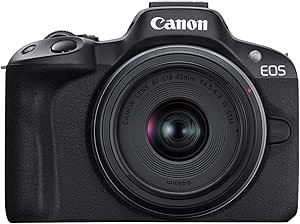
Canon EOS R50 Content Creator Kit Mirrorless Camera with RF-S18-45mm Lens
The EOS R50 Creator Kit is a strong starting point for creators who want a capable camera and basic recording accessories together. Its uncropped, oversampled 4K and subject detection give it an advantage over a phone for polished video and moving subjects, while Product Demonstration mode shifts focus to an item held near the lens. Compared with the Sony ZV-E10, this kit adds a built-in flash and lists a tripod grip, microphone, and remote, so less of the setup has to be assembled separately. Its compact body and 18–45mm lens suit desk videos and everyday shooting, though the lens’s modest zoom range can limit framing flexibility. I’d choose the R10 kit for more reach and faster shooting; the R50 is the simpler creator-focused package.
Pros:- Uncropped 4K video oversampled from 6K
- Autofocus detects and tracks people, animals, and vehicles
- Product Demonstration mode helps focus shift from presenter to item
- Includes a tripod grip, microphone, and wireless remote
Cons:- The 18–45mm kit lens has limited reach for distant subjects
- The kit’s compact lens has a variable F4.5–6.3 aperture
Best for: New creators who want an interchangeable-lens camera, guided product demos, and a starter set of recording accessories.
Not ideal for: Creators who need a long-reach lens or faster continuous shooting for action; the EOS R10 kit offers more range and higher burst rates.
- Sensor:24.2 MP APS-C CMOS
- Processor:DIGIC X
- Included lens:RF-S18-45mm F4.5-6.3 IS STM
- Video:Uncropped 4K up to 30 fps; Full HD up to 120 fps
- Autofocus:Dual Pixel CMOS AF II with 651 AF zones and subject detection
- Continuous shooting:Up to 12 fps with Electronic First Curtain; 15 fps with Electronic Shutter
- Included accessories:Tripod grip, microphone, wireless remote control
Our verdict“Choose the EOS R50 Creator Kit if you want polished 4K, creator-friendly focus tools, and useful accessories in one compact setup.”
Sony ZV-E10 APS-C Mirrorless Vlogging Camera with 16–50mm Lens
The Sony ZV-E10 puts the priorities of a solo presenter up front: a flip-out screen for checking framing and a built-in directional microphone for capturing speech without an immediate accessory purchase. Its oversampled 4K and Real-Time Eye AF make it a practical step up from simpler pocket vlog cameras in this roundup, with the added option to change Sony E-mount lenses as a channel’s needs grow. Compared with the Canon EOS R50 Creator Kit, it has no built-in flash and its supplied setup lists fewer creator accessories, but the directional mic is built into the camera. The main compromises are the lack of a viewfinder and unclear stabilization details, which matter more for handheld shooting in bright light or while walking. It suits screen-facing creators better than hybrid shooters who also want eye-level composition.
Pros:- 24.2MP APS-C sensor with oversampled 4K video
- Flip-out vari-angle screen supports self-framing
- Built-in directional microphone is suited to speech
- Sony E-mount allows interchangeable lenses
Cons:- No viewfinder for eye-level composition
- Stabilization details are unclear in the supplied product data
- The 16–50mm kit lens has a limited range compared with the EOS R10 kit lens
Best for: Solo vloggers who frame themselves on the rear screen and want to expand their setup with Sony E-mount lenses.
Not ideal for: Photographers who rely on a viewfinder or creators who need clearly specified in-body stabilization for handheld movement.
- Sensor:24.2MP APS-C Exmor CMOS
- Included lens:16–50mm
- Lens mount:Sony E
- Video:4K (2160p) and 1080p
- Autofocus:425-point Fast Hybrid AF; Real-Time Eye AF and Tracking
- Screen:3-inch flip-out vari-angle LCD
- Viewfinder:None
- Continuous shooting:Up to 11 frames per second
- Connectivity:Bluetooth, Wi-Fi, Micro HDMI, USB
Our verdict“Pick the ZV-E10 for screen-facing vlogs and a flexible lens system, provided you can work without a viewfinder.”
Panasonic LUMIX S9 Full-Frame Mirrorless Camera with 18–40mm Lens
The LUMIX S9 stands apart from the APS-C Canon and Sony options here by pairing a compact body with a full-frame sensor and Open Gate recording. That combination gives creators more room to reframe one clip for vertical and horizontal posts, while frame markers and LUMIX Lab wireless transfer support a phone-centered publishing workflow. Compared with the Sony ZV-E10, the S9 prioritizes full-frame capture and flexible crops over a listed built-in directional microphone or viewfinder. The supplied data calls its video high-resolution but does not specify frame rates or recording limits, so creators choosing around exact video modes have less information. The 18–40mm lens keeps the kit compact, though its F4.5–6.3 variable aperture is less suited to dim scenes than a brighter lens. This is a specialized fit for adaptable social footage, not the most fully detailed vlogging kit.
Pros:- Full-frame sensor in a compact camera body
- Open Gate recording supports reframing for multiple formats
- Frame markers help compose for social aspect ratios
- Wi-Fi and LUMIX Lab support smartphone transfers
Cons:- Included 18–40mm lens has a variable F4.5–6.3 aperture
- Supplied information does not specify video frame rates or recording limits
- The product data does not list a built-in microphone or viewfinder
Best for: Traveling social video creators who want full-frame capture and the option to crop footage into several aspect ratios.
Not ideal for: Creators who need a clearly specified video mode, a brighter included lens, or a built-in directional microphone.
- Camera type:Full-frame mirrorless
- Included lens:18–40mm F4.5–6.3
- Connectivity:Wi-Fi
- App:LUMIX Lab
- Video recording:High-resolution video
- Framing:Open Gate with multiple frame markers
Our verdict“Choose the LUMIX S9 if full-frame footage and flexible social crops matter more than a fully specified, ready-to-vlog setup.”
Sony ZV-E10 24.2MP Mirrorless Camera with 16–50mm Lens and 38-Piece Video Bundle
This ZV-E10 bundle makes the most sense for a creator who wants to begin filming with a broader collection of gear in the box. Alongside the camera and 16–50mm lens, it lists an LED light, microphone, memory card, grip, filters, tripod, and case. The camera itself shares the vlogging strengths of the standalone ZV-E10, including a vari-angle screen, 4K video, and real-time Eye AF and Tracking. Compared with the Canon EOS R50 Creator Kit, this package lists more accessory categories, while the Canon specifies its autofocus zones and includes a wireless remote. Here, the bundle’s accessory models and specifications are not provided, so the number of pieces alone says little about their performance. Choose it for convenience and a ready-to-assemble starter setup, but creators with specific audio or lighting needs may prefer selecting those tools separately.
Pros:- 4K recording with full pixel readout
- Vari-angle LCD and real-time Eye AF suit solo vlogging
- Interchangeable Sony E-mount lens system
- Bundle lists a light, microphone, card, grip, filters, tripod, and case
Cons:- Accessory models and specifications are not provided
- Battery runtime is not specified in the supplied data
- The 16–50mm lens offers less reach than the Canon EOS R10 kit’s 18–150mm lens
Best for: First-time video creators who want a camera, lens, and a broad range of basic filming accessories in one package.
Not ideal for: Creators who need known microphone or lighting specifications, or who would rather choose each accessory to match a specific production setup.
- Sensor:24.2MP APS-C
- Image processor:BIONZ X
- Included lens:16–50mm
- Video:4K
- Display:Vari-angle flip-out LCD
- Autofocus:Real-time Eye AF and Tracking
- Lens mount:Sony E-mount
- Connectivity:Wi-Fi and Bluetooth
- Included accessories:LED light, microphone, 128GB memory card, grip, filters, tripod, and case
Our verdict“Choose this bundle if having a wide assortment of starter accessories matters more than knowing their exact specifications.”
Canon EOS R10 Content Creator Kit with RF-S18-150mm Lens, Tripod Grip and Stereo Microphone
The EOS R10 Creator Kit is the most versatile choice here for creators who alternate between video and stills. Its standout advantage over the EOS R50 Creator Kit is the included 18–150mm lens: the wider zoom range makes it easier to move from talking-head framing to distant details without changing lenses. Burst shooting reaches 15 fps mechanically or 30 fps electronically, and subject detection covers people, animals, and vehicles, giving the R10 more headroom for fast-moving scenes than the vlogging-focused Sony ZV-E10. The kit also includes a stereo microphone, wind screen, and tripod grip with remote. Those extras add flexibility, but the supplied description does not specify battery life or recording limits across video modes. I’d favor it for event, travel, and mixed-format creators; its broader lens and faster capture are more camera than a simple desk-vlogging setup may need.
Pros:- 18–150mm lens gives more framing range than the EOS R50 kit lens
- Up to 15 fps mechanical and 30 fps electronic continuous shooting
- Autofocus detects people, animals, and vehicles
- Includes stereo microphone, wind screen, and tripod grip with remote
Cons:- Battery life is not specified in the supplied product data
- Video recording limits are not specified for all modes
- The 18–150mm lens has a variable F3.5–6.3 aperture
Best for: Travel and event creators who shoot both video and stills and want one lens to cover wide scenes through distant details.
Not ideal for: Desk-only vloggers who do not need the long zoom range or high burst rates and prefer a smaller, simpler kit.
- Camera type:Mirrorless
- Sensor:24.2-megapixel APS-C CMOS
- Processor:DIGIC X
- Included lens:RF-S18-150mm F3.5-6.3 IS STM
- Video:4K
- Continuous shooting:Up to 15 fps mechanical; up to 30 fps electronic
- Autofocus:Dual Pixel CMOS AF with people, animal, and vehicle detection
- Included accessories:Stereo microphone, wind screen, tripod grip with wireless remote
Our verdict“Pick the EOS R10 Creator Kit for mixed photo and video work where lens range and fast capture matter more than a minimal setup.”
4K Pocket Vlogging Camera with 330° Rotating Lens
For creators who want a small camera for casual solo clips, this pocket model pairs 4K recording with a 330° rotating lens, so framing yourself does not require a separate monitor. Its included tripod, memory card, and carrying bag make it ready for simple outings, while Wi-Fi supports transfers to a phone. Compared with the Canon EOS R100, it is less of a photography system: the R100 has a specified APS-C sensor, interchangeable RF-S lens, and subject-detection autofocus. This camera’s listed 75MP photo figure does not come with sensor details, and no stabilization or battery runtime is specified. I’d choose it for portability and straightforward clips, but creators who need dependable motion handling or a system they can build on should look at the Canon options.
Pros:- Compact form is suited to travel and quick clips
- 330° rotating lens helps solo creators frame themselves
- Included 16GB card and mini tripod provide a basic starter kit
- Built-in Wi-Fi supports wireless phone transfers
Cons:- No image stabilization details are provided
- Battery life and recording duration are unspecified
- Sensor and lens details are limited, making image quality harder to judge against interchangeable-lens cameras
Best for: Travel and everyday creators who want a pocketable camera with a rotating lens and basic accessories for solo vlogging
Not ideal for: Creators filming while walking or planning longer shoots, since stabilization and battery runtime are not specified
- Video resolution:4K
- Photo resolution:75MP
- Lens rotation:330°
- Connectivity:Built-in Wi-Fi
- Shooting modes:Time-lapse, slow motion, and interval shooting
- Included storage:16GB TF card
- Warranty:1 year
Our verdict“Choose this for lightweight, casual vlogging with a rotating lens, but pick the Canon EOS R100 for a more clearly specified camera system.”
Canon EOS R100 Mirrorless Camera with RF-S 18-45mm f/4.5-6.3 IS STM Lens
The EOS R100 is the most straightforward route in this group to a 24.1MP APS-C sensor and interchangeable RF-S lenses. Its face, eye, animal, and vehicle detection helps keep common subjects in focus, while the included stabilized 18-45mm lens covers everyday photos and basic video. Compared with the Canon EOS R50, the R100 is the simpler choice: its 4K tops out at 24 fps, and it lacks the R50’s specified vari-angle touchscreen and uncropped 30 fps 4K. That makes it less flexible for creators who switch between camera-facing clips and fast-moving scenes. I’d favor the R100 for someone learning photography alongside video and wanting a known lens system; creators focused on frequent, polished social video should step up to the R50.
Pros:- 24.1MP APS-C sensor supports detailed stills and background blur
- Face, eye, animal, and vehicle detection suits varied subjects
- Included RF-S 18-45mm lens has optical image stabilization
- Full HD recording supports up to 120 fps
Cons:- 4K recording is limited to 24 fps
- The listed kit details do not specify a vari-angle screen for self-framing
- The included lens has a relatively slow variable maximum aperture
Best for: New creators who want an APS-C mirrorless camera for learning photography and making occasional 4K clips with an interchangeable lens
Not ideal for: Video-first creators who need 30 fps 4K, a vari-angle screen, or more flexible on-camera framing
- Sensor:24.1 MP APS-C CMOS
- Image processor:DIGIC 8
- Included lens:RF-S 18-45mm f/4.5-6.3 IS STM
- Video recording:4K up to 24 fps; Full HD up to 60 fps; HD up to 120 fps
- Autofocus:Dual Pixel CMOS AF with up to 143 zones; face, eye, animal, and vehicle detection
- Continuous shooting:Up to 6.5 shots per second in One-Shot AF
Our verdict“Pick the R100 to enter Canon’s interchangeable-lens system for photos and occasional video, while video-first creators will get more flexibility from the EOS R50.”
4K Vlogging Camera with 330° Gimbal Lens and 75MP Photos
This pocket camera is aimed at creators who want automatic face tracking and a rotating gimbal lens to keep themselves in frame during casual vlogging. Wi-Fi phone preview can make solo composition easier, and its listed livestreaming and time-lapse modes give it uses beyond short clips. Compared with the Canon EOS R50, it trades a defined APS-C sensor, interchangeable lenses, and detailed autofocus specifications for a compact all-in-one setup. The gimbal stabilization is a potential advantage for handheld movement, but the product data does not state battery life, storage capacity, or Wi-Fi transfer speed. I’d consider it for lightweight social content where automatic tracking matters more than lens choice; creators who need predictable recording capacity or broader creative control should favor the Canon.
Pros:- Pocket-sized body is easy to carry for spontaneous clips
- Automatic face tracking can help keep a solo presenter framed
- Gimbal lens is specified as providing stabilization
- Wi-Fi supports phone preview and file sharing
Cons:- Battery life and storage capacity are not provided
- Wi-Fi transfer speed is unspecified
- Sensor and lens specifications are not detailed for comparison with mirrorless systems
Best for: Solo social video creators who want a small camera with automatic face tracking for casual handheld clips and livestreams
Not ideal for: Creators who need known recording capacity, a specified sensor, or interchangeable lenses for varied production work
- Video resolution:4K
- Photo resolution:75 MP
- Gimbal lens rotation:330°
- Face tracking:Automatic
- Connectivity:Wi-Fi
- Form factor:Pocket-sized
- Additional uses:Video calls, livestreaming, and time-lapse recording
Our verdict“Choose it for portable face-tracked clips, but the EOS R50 is the stronger fit when you want a specified sensor and interchangeable-lens flexibility.”
Canon EOS R50 Mirrorless Camera with RF-S18-45mm F4.5-6.3 IS STM Lens, White
The white EOS R50 is the most balanced beginner pick here for creators moving between self-recorded video, stills, and fast subjects. Its uncropped 4K at up to 30 fps, vari-angle touchscreen, and subject tracking make it easier to frame, focus, and record without extra gear. Compared with the EOS R100, it offers faster 4K and more specified AF zones; versus the nearly identical black EOS R50 listing, this version’s distinguishing choice is the white finish. The bundled 18-45mm lens covers general use, but its f/4.5-6.3 aperture limits light gathering and background separation as you zoom. This is the more capable creator body than the R100, though it still leaves lens upgrades as the path to stronger low-light or portrait results.
Pros:- Uncropped 4K recording reaches 30 fps
- Vari-angle touchscreen supports self-framing
- Subject tracking covers people, animals, and vehicles
- Electronic viewfinder and wireless connectivity serve both photo and video workflows
Cons:- Bundled lens has a slow variable f/4.5-6.3 maximum aperture
- The white finish is the main stated distinction from the other EOS R50 kit in this batch
- 4K frame rate tops out at 30 fps
Best for: New video creators who want a viewfinder, a screen that faces forward, and reliable subject tracking in a compact APS-C system
Not ideal for: Creators who regularly shoot in dim spaces or want strong background blur from the bundled lens without upgrading
- Sensor:24.2 MP CMOS APS-C
- Processor:DIGIC X
- Included lens:RF-S18-45mm F4.5-6.3 IS STM
- Video:Uncropped 4K up to 30 fps; Full HD up to 120 fps
- Continuous shooting:Up to 12 fps with electronic first curtain; up to 15 fps with electronic shutter
- Autofocus:Dual Pixel CMOS AF II with 651 AF zones and subject tracking
- Viewfinder:2.36-million-dot electronic viewfinder
- Connectivity:Bluetooth and Wi-Fi
- Color:White
Our verdict“Pick this white EOS R50 for a flexible first creator camera with uncropped 30 fps 4K and a front-facing screen.”
Canon EOS R50 Mirrorless Camera with RF-S 18-45mm F4.5-6.3 IS STM Lens
With the same core strengths as the white EOS R50 in this roundup, this kit suits creators who want a compact camera that can shift between video and quick bursts of stills. Dual Pixel CMOS AF II with 651 zones tracks people, animals, and vehicles, while up to 15 fps shooting helps capture brief expressions and action. Its vari-angle touchscreen and uncropped 4K at 30 fps also make it more creator-ready than the EOS R100, whose 4K is limited to 24 fps. The included 18-45mm lens is a useful general-purpose start, though f/4.5-6.3 is restrictive in dim rooms and when a creator wants pronounced background blur. Compared with the white R50, the supplied specifications describe nearly the same capability; choose this listing when the standard finish is your preference.
Pros:- 651-zone autofocus tracks people, animals, and vehicles
- Up to 15 fps continuous shooting captures brief action
- Uncropped 4K reaches 30 fps, with Full HD up to 120 fps
- Vari-angle touchscreen supports self-recording and flexible framing
Cons:- Bundled lens has a variable f/4.5-6.3 maximum aperture
- 4K recording is limited to 30 fps
- Its listed core features closely match the white EOS R50 option
Best for: Creators who film clips and photograph moving people, pets, or vehicles with one compact camera
Not ideal for: Low-light shooters and portrait creators who want a brighter kit lens or stronger background separation out of the box
- Sensor:24.2 MP APS-C CMOS
- Processor:DIGIC X
- Included lens:RF-S 18-45mm F4.5-6.3 IS STM
- Continuous shooting:Up to 12 fps with Electronic First Curtain shutter; up to 15 fps with Electronic Shutter
- Autofocus:Dual Pixel CMOS AF II with 651 AF zones and subject tracking
- Video:Uncropped 4K up to 30 fps; Full HD up to 120 fps
- Viewfinder:2.36-million-dot EVF
- Display:Vari-angle Clear View LCD II touchscreen
- Connectivity:Bluetooth and Wi-Fi
Our verdict“Choose this EOS R50 for a compact hybrid camera that can follow moving subjects and handle creator video, provided you are comfortable with the kit lens’s limits.”
Canon EOS R50 V Mirrorless Camera with RF-S 14-30mm Lens Bundle
The EOS R50 V bundle suits creators who want a ready-to-film setup with a wider view than a typical kit zoom. Its RF-S 14-30mm stabilized lens gives vloggers room to frame themselves and their surroundings, while uncropped 4K at 30p avoids the tighter crop that can complicate handheld recording. Eye and subject detection help keep focus on a moving presenter, and Full HD at 120p supports slow-motion clips. Compared with the Sony ZV-E10, this bundle includes a wider lens and more listed recording detail, plus a memory card and carrying accessories. That convenience comes with a listed bundle weight of 4.4 pounds, and the lens’s f/4-6.3 aperture offers less light gathering than a brighter zoom. It also lacks weather protection, so outdoor shoots need care.
Pros:- Uncropped 4K recording at 30p
- 14-30mm stabilized lens provides a wide framing range for self-recording
- Eye and subject detection help keep moving presenters in focus
- Bundle includes a 64 GB card, battery, charger, and shoulder bag
Cons:- Listed bundle weight of 4.4 pounds may be cumbersome for handheld vlogging
- The f/4-6.3 lens aperture limits light gathering compared with brighter zooms
- Not water resistant
Best for: Solo vloggers and small video teams who want a wide stabilized lens, an articulating screen, and basic recording accessories in one kit.
Not ideal for: Creators who prioritize a lightweight travel kit, stronger low-light performance, or weather protection for outdoor shoots.
- Sensor:24.2 MP APS-C CMOS
- Processor:DIGIC X
- Lens:Canon RF-S 14-30mm f/4-6.3 IS STM
- Video:Uncropped 4K at 30p; Full HD at 120p
- Autofocus:Dual Pixel CMOS AF with eye and subject detection
- Display:Articulating LCD touchscreen
- Connectivity:USB-C
- Included storage:64 GB memory card
Our verdict“Choose the R50 V bundle if you want a wide-angle video kit with useful accessories, and skip it if low weight or low-light shooting matters more.”
Sony Alpha 7 IV Full-Frame Mirrorless Camera with FE 24-105mm F4 G OSS Zoom Lens
For creators who split time between polished video and detailed stills, the Sony Alpha 7 IV offers the most capable hybrid setup in this group. Its 33MP full-frame sensor and 4K 60p 10-bit 4:2:2 recording give more room for high-resolution images and flexible color work than the APS-C Canon EOS R50 V. The included 24-105mm zoom also spans wide scenes through portraits without requiring a lens change, and its constant F4 aperture keeps exposure consistent as you zoom. Two card slots support a more deliberate recording workflow. The tradeoff is a larger, more involved kit than creator-focused options such as the Sony ZV-E10; that extra capability may be unnecessary for simple talking-head clips. The camera and lens also lack water resistance in the provided details.
Pros:- 33MP full-frame sensor supports detailed stills
- 4K 60p 10-bit 4:2:2 recording gives room for color grading
- 24-105mm zoom covers a broad range of shooting situations
- Two memory card slots support flexible recording and file handling
Cons:- The full-frame body and zoom make for a more involved kit than compact creator cameras
- Constant F4 aperture is less suited to dim scenes than a brighter lens
- Not water resistant
Best for: Hybrid creators and independent filmmakers who need full-frame stills, 10-bit 4K footage, and a versatile zoom in one setup.
Not ideal for: First-time vloggers seeking a compact, simple camera mainly for casual clips and social posts.
- Camera type:Full-frame mirrorless
- Sensor:33MP Exmor R CMOS
- Processor:BIONZ XR
- Video:Up to 4K 60p, 10-bit 4:2:2
- Included lens:FE 24-105mm F4 G OSS
- Lens aperture:Constant F4
- Continuous shooting:10 fps
- Memory card slots:2
Our verdict“Pick the Alpha 7 IV kit for demanding hybrid work and flexible editing, but choose a smaller APS-C camera for straightforward vlogging.”
Sony ZV-E10 Mirrorless Camera with 16-50mm Lens and Accessory Bundle
The Sony ZV-E10 bundle is aimed at new creators who want a manageable path from unboxing to recording. Its vari-angle touchscreen helps when framing yourself, while eye autofocus and real-time tracking reduce the need to adjust focus during a take. The included power zoom lens and accessories, including a flexible tripod and wind screen, make this kit more immediately useful for solo video than a body-only camera. Compared with the Canon EOS R50 V, the ZV-E10 bundle emphasizes creator add-ons and familiar Sony tracking rather than the Canon’s specified uncropped 4K and 120p Full HD modes. The provided details don’t specify a viewfinder, which matters for photographers who compose in bright sunlight. The kit also relies on an f/3.5-5.6 lens, so it is less suited to dim rooms than a brighter lens setup.
Pros:- Vari-angle touchscreen supports self-framing
- Real-time tracking and eye autofocus help maintain focus on a presenter
- APS-C sensor and 4K recording suit mixed photo and video creation
- Bundle includes a flexible tripod, wind screen, card, and carrying accessories
Cons:- A viewfinder is not specified in the provided product details
- The included f/3.5-5.6 lens is less suited to low-light shooting than a brighter zoom
- The bundle includes many small accessories to store and manage
Best for: New solo creators who want a selfie-friendly APS-C camera, tracking autofocus, and basic filming accessories included.
Not ideal for: Photographers who depend on a viewfinder or creators who regularly record in dim interiors and need a brighter lens.
- Sensor:APS-C
- Video:4K
- Included lens:Sony E PZ 16-50mm f/3.5-5.6 OSS II
- Display:Vari-angle touchscreen
- Autofocus:Real-time tracking and eye autofocus
- Included storage:64 GB memory card
- Included accessories:Flexible tripod, soft bag, wind screen, card reader, and cleaning kit
Our verdict“Choose this ZV-E10 bundle for an approachable solo-video kit, and look to a brighter lens or a viewfinder-equipped camera for other shooting priorities.”
Insta360 Luna Ultra 8K Vlogging Camera with Dual Leica Lenses, 12× Zoom, 1-Inch Sensor, and Detachable Touchscreen, Cosmic Black
The Insta360 Luna Ultra takes a different route from interchangeable-lens cameras: it pairs a compact, fixed-lens design with a detachable screen and built-in stabilization. That makes it appealing to travel vloggers who want to move quickly, monitor themselves remotely, and keep footage steady without assembling a gimbal. Its 8K30 HDR video, 10-bit I-Log, and up-to-12× zoom range offer creative reach, while the 1-inch main sensor and 1/1.3-inch telephoto sensor support a more versatile shooting range than the single-lens Sony ZV-E10. The tradeoff is less flexibility to change lenses or build a camera system around future needs. The detachable OLED is only 2 inches, and the maximum 8K rate is 30 fps, so it does not suit creators who want a larger monitoring screen or higher-frame-rate 8K.
Pros:- Dual sensors and Leica lenses provide wide and telephoto shooting options
- Three-axis mechanical stabilization helps smooth handheld footage
- Detachable OLED supports remote preview and control
- 10-bit I-Log recording gives color-focused editors more flexibility
Cons:- Fixed-lens design limits system expansion compared with the Canon EOS R50 V and Sony ZV-E10
- The detachable touchscreen measures only 2 inches
- Maximum 8K recording is limited to 30 fps
Best for: Travel vloggers who prioritize pocketable self-recording, built-in stabilization, remote framing, and flexible zoom over interchangeable lenses.
Not ideal for: Creators building a lens-based system or those who need a large on-camera monitor and higher-frame-rate 8K capture.
- Main sensor:1-inch
- Telephoto sensor:1/1.3-inch
- Maximum video:8K at 30 fps
- Zoom:Up to 6× lossless zoom; 12× zoom range
- Stabilization:3-axis mechanical
- Touchscreen:Detachable 2-inch OLED
- Color depth:10-bit I-Log
- Battery life:Up to 4 hours
Our verdict“Choose the Luna Ultra for stabilized travel clips and remote self-framing, but choose an interchangeable-lens camera if you want to grow a lens kit.”
How We Picked
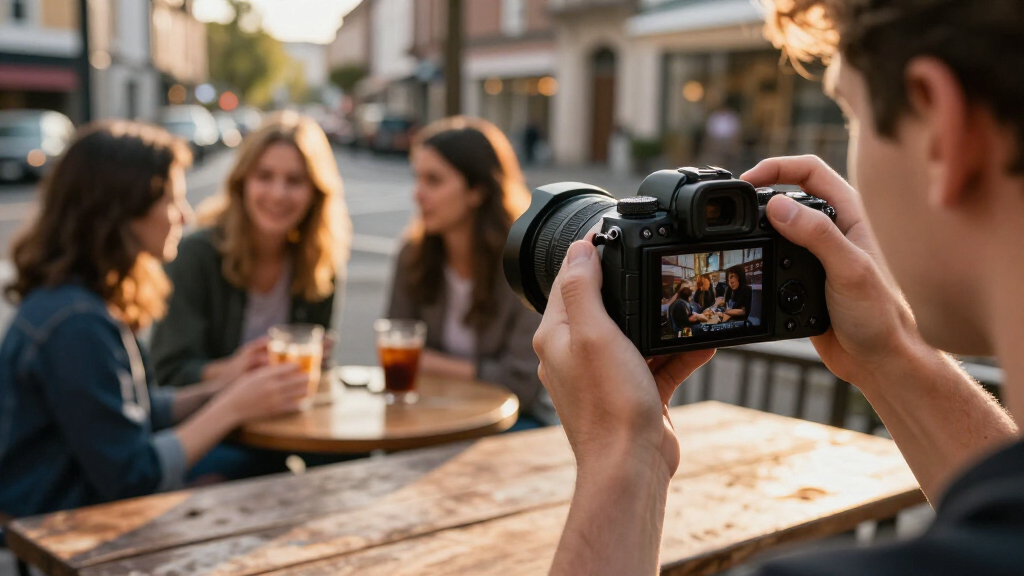
I ranked these options around the work content creators actually do: filming themselves, recording handheld or on a tripod, switching between video and stills, and building a setup that can grow. I gave weight to the camera body and lens combination, creator friendly features, portability, and how readily a buyer can understand what comes in the listed kit. A complete kit can be a practical starting point, but accessories do not make one camera body perform better than another.
The ranking favors recognizable camera systems with clear lenses and a useful balance of image making, usability, and room to expand. That places the Canon EOS R50 Content Creator Kit at the top as an approachable all-round setup, the Sony ZV-E10 listings among the compact vlogging choices, and the Alpha 7 IV as the premium option for more demanding workflows. I treat repeated camera bodies with different bundles as package choices rather than separate performance tiers; listings with limited technical detail rank lower because buyers have less evidence to judge long-term fit.
| mirrorless cameras for content creator | Connectivity |
|---|---|
| Canon EOS R50 Content Creator | — |
| Sony ZV-E10 APS-C Mirrorless V | Bluetooth, Wi-Fi, Micro HDMI, USB |
| Panasonic LUMIX S9 Full-Frame | Wi-Fi |
| Sony ZV-E10 24.2MP Mirrorless | Wi-Fi and Bluetooth |
| Canon EOS R10 Content Creator | — |
| 4K Pocket Vlogging Camera with | Built-in Wi-Fi |
| Canon EOS R100 Mirrorless Came | — |
| 4K Vlogging Camera with 330° G | Wi-Fi |
| Canon EOS R50 Mirrorless Camer | Bluetooth and Wi-Fi |
| Canon EOS R50 Mirrorless Camer | Bluetooth and Wi-Fi |
| Canon EOS R50 V Mirrorless Cam | USB-C |
| Sony Alpha 7 IV Full-Frame Mir | — |
| Sony ZV-E10 Mirrorless Camera | — |
| Insta360 Luna Ultra 8K Vloggin | — |
Factors to Consider When Choosing Mirrorless Cameras For Content Creators
Before choosing a body, I’d map the camera to the way you make content. A solo creator filming at a desk has different needs from someone recording interviews, travel, or product demonstrations. These decisions can prevent a capable camera from becoming an awkward or expensive setup.
Choose a camera around your actual filming setup
Start by listing where you record most often: at a desk, outdoors, in a studio, or while moving between locations. A compact body may be easier to carry, but a heavier camera and lens can become tiring during handheld sessions. If you film alone, think about how easily you can frame yourself and operate the camera without help. For interviews or a fixed setup, a flip screen and external audio connections may matter more than pocketable size. Avoid choosing a camera only by its video resolution; a setup that is hard to position or monitor can slow down every shoot. Match the camera to your most frequent format, then check that it can also handle the occasional different job.
Treat the lens as part of the camera decision
The bundled lens determines how wide you can frame a room, how much reach you have outdoors, and how often you need to change lenses. A wider lens can make a solo talking head shot easier in a small space, while a longer zoom is useful for distant subjects and varied scenes. Kit lenses are convenient starting points, but their maximum aperture and focal range can limit low light work or background blur. Before buying a bundle, check whether its lens covers your common shooting distances and whether the camera system offers a sensible next lens. A body that fits your plans today can become frustrating if the lens ecosystem does not match where your work is headed. Also account for the extra weight and setup time of carrying multiple lenses.
Plan for sound, power, and recording time
Clear sound often has a bigger effect on perceived video quality than a jump in resolution. Decide whether you need a camera microphone input, a hot shoe for an accessory, or a separate audio recorder for interviews and voiceovers. Long sessions also put pressure on battery life, heat handling, and storage capacity, so check those limits against the length of your typical shoot. A bundled microphone or grip can help you get started, but it may not suit every room or recording style. Leave room in your kit plan for spare batteries, memory cards, and a way to transfer files. That small planning step helps prevent a camera purchase from turning into an incomplete filming setup.
Balance portability with sensor and lens size
A smaller camera can be easier to carry and set up, especially for travel and frequent short clips. Sensor size affects how a camera handles low light and depth of field, but it is only one part of the image: lens choice, lighting, and framing all play a role. Full-frame bodies and lenses can add weight and bulk, which may matter more to a creator who shoots on the move than to one working from a studio. Before paying for a larger format, ask whether your usual lighting and output actually demand it. For many online videos, dependable autofocus, good audio, and an easy workflow will improve results more than a sensor upgrade. Consider the complete camera and lens combination rather than the body alone.
Check bundle contents and product identity
Camera listings often use similar names for different bundles, and the added accessories can range from useful to unnecessary. Compare the exact lens, microphone, grip, tripod, batteries, and other items included, then decide which you would otherwise buy. Several Sony ZV-E10 entries in this roundup share a camera name but list different accessory packages, so a larger bundle does not by itself indicate a different body. The Canon R50 options also vary by color, lens, or kit contents. For less familiar product names, verify the manufacturer’s specifications, service support, lens compatibility, and warranty details before relying on headline claims. Clear product documentation gives you a firmer basis for comparison than a long accessory list.
Pay for room to grow only when you will use it
A system camera can reward investment in lenses and accessories, but those additions bring cost, weight, and decisions of their own. If you are still learning, a straightforward kit may help you start publishing instead of spending time assembling a complex rig. If your work already calls for multiple focal lengths, client shoots, or low light performance, paying for a more capable body and compatible lenses can make sense. Think about the next year of content rather than a hypothetical professional future. A useful upgrade solves a current bottleneck, such as framing, focus, sound, or recording duration. If you cannot name that bottleneck, keep the setup simple and put effort into lighting and repeatable shooting habits.
Frequently Asked Questions
Should I get the Canon EOS R50 kit or a Sony ZV-E10 bundle for solo videos?
I’d compare the exact kit contents and the way you plan to shoot rather than assume one body is right for every solo creator. The EOS R50 Content Creator Kit is appealing if you want a packaged starting setup, while the ZV-E10 listings give you several accessory combinations to compare. Check whether the included lens suits your room and whether the bundle has the audio or support gear you will actually use. If you already own compatible lenses or accessories, that can outweigh a bundle’s convenience. For a first camera, prioritize easy framing, autofocus, and a simple way to capture clear sound.
Are the three Sony ZV-E10 listings different camera models?
The listed names point to the same ZV-E10 camera family, with differences in the lens or accessory package described in each listing. I would not treat the 38-piece or general accessory bundle as a body upgrade without confirming the exact included items. Compare the lens, audio accessories, power options, and support gear against your own setup. A large accessory count can include items you never use, while one well chosen microphone or tripod may be more useful. Verify the seller’s full package description before deciding between these entries.
When does a full-frame camera make sense for a content creator?
A full-frame body can be worthwhile if your work often involves dim environments, a particular depth-of-field look, or a lens range that fits your professional workflow. The Sony Alpha 7 IV with a 24–105mm lens offers a flexible starting range, but the complete setup is likely bulkier than the smaller creator focused choices here. For well lit talking head videos, product demos, or casual clips, lighting and sound may improve the result more than changing sensor format. Factor in the size and cost of compatible lenses over time. Choose full frame for a clear shooting need, not just as a general badge of higher quality.
Is a bundled camera kit a better choice than buying the body and accessories separately?
A bundle helps when its lens and accessories match your shooting plan and save you from sourcing basic gear one item at a time. It can be a poor fit when the extras are low priority or duplicate equipment you already own. Compare each item against a short list of needs: framing, sound, camera support, and power. Pay close attention to the lens because it shapes what you can record from day one. If the bundle leaves out a key item, buying the body and selecting accessories yourself may produce a more practical setup.
How should I choose between a named mirrorless camera and a rotating-lens vlogging camera?
Start by checking what you need from the device: interchangeable lenses and a clearly documented camera system, or a compact, self-contained vlogging design. The two generic 4K rotating-lens entries provide limited specification detail in their names, so confirm sensor size, stabilization, audio support, recording limits, and service information before purchase. The Insta360 Luna Ultra listing highlights dual Leica lenses, zoom, and a detachable screen, but verify how its controls and recording workflow fit your editing habits. A named mirrorless system may offer a clearer path to compatible lenses, while a purpose built vlogging device may be simpler to carry. Base the choice on confirmed capabilities rather than headline resolution claims.
Conclusion
For the best overall starting setup, I’d choose the Canon EOS R50 Content Creator Kit; its bundle makes it easier to begin without piecing together a kit. The Sony ZV-E10 is my value oriented pick for compact vlogging, especially when one of its bundles contains the accessories you need. For beginners who want a straightforward camera and lens combination, the standard Canon EOS R50 kit is a sensible place to start. Creators who need a premium full-frame system should look at the Sony Alpha 7 IV, while the Canon EOS R10 kit is better suited to someone who wants a longer zoom and included creator gear. I’d choose the R50 V bundle for a wider framing option, and investigate the rotating-lens or Insta360 listings only after confirming their specifications and support meet your needs.
Fall Picks
fall essentials
As an affiliate, we earn on qualifying purchases.