
🔍 Read the full analysis: SVG Carving Animation: A Look Inside “The Runestone Field — Carve Words Into Winter” (FABLE/175) on ThorstenMeyerAI.com

Get everyday essentials delivered free with Prime
- Fast, free delivery on millions of items
- Prime Video, Amazon Music and more included
- Member-only deals all year
TL;DR
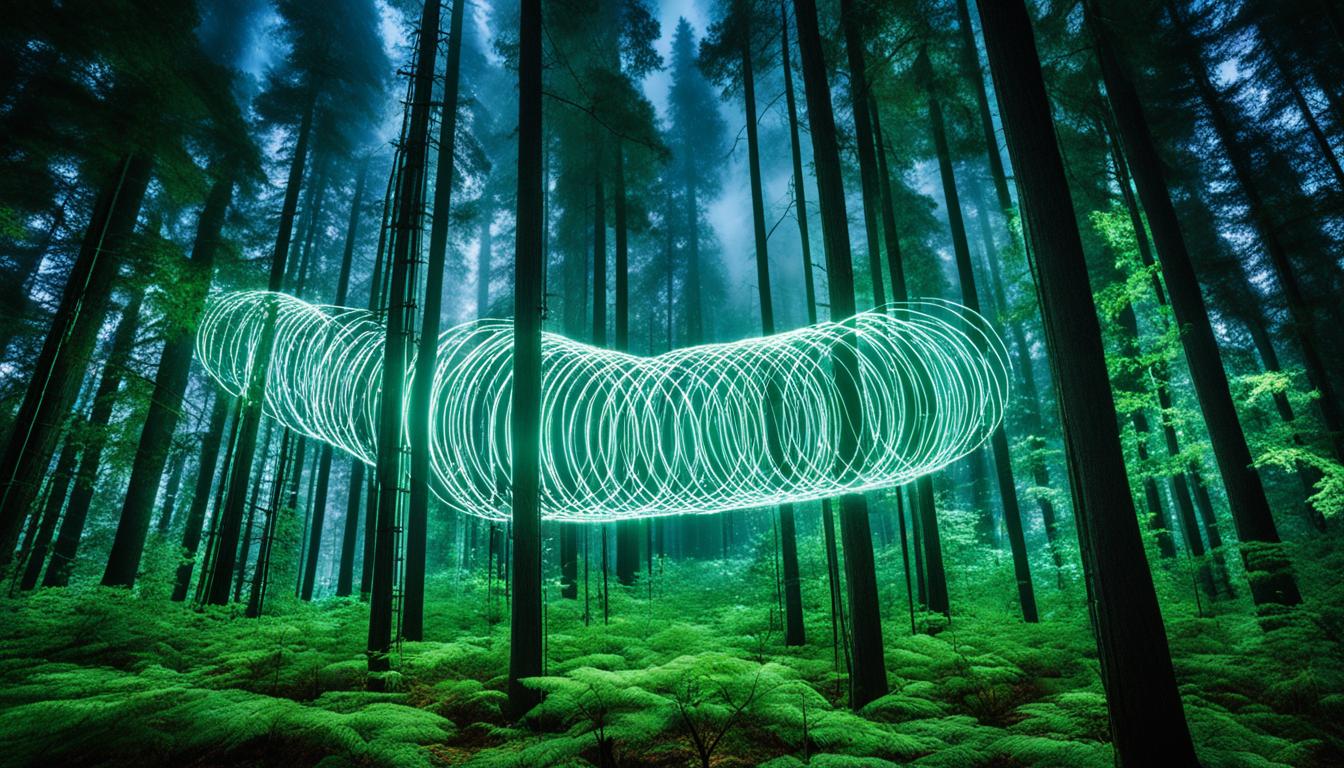
The project ‘The Runestone Field’ uses SVG carving animation to transform static runic carvings into dynamic, immersive visual narratives. This innovative approach blends traditional craftsmanship with modern technology, creating a new way to tell stories through digital art.
‘The Runestone Field — Carve Words Into Winter’ is a new digital installation that employs SVG carving animation to bring ancient runic carvings to life. Developed by a team led by Thorsten Meyer, the project transforms static images of runestones into dynamic, flowing narratives, offering viewers an immersive experience that fuses history with modern digital craftsmanship. This development highlights how automation and precise SVG techniques can elevate storytelling in visual design, making ancient art accessible and engaging for contemporary audiences. For more insights, see the detailed case study on the original analysis.
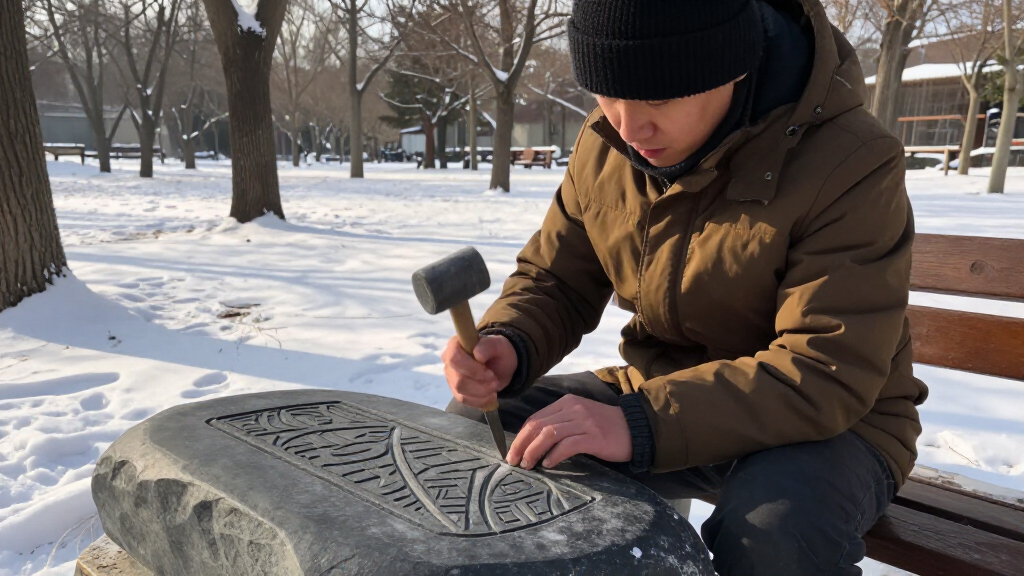
The project, titled ‘The Runestone Field — Carve Words Into Winter’, uses SVG (Scalable Vector Graphics) technology to animate carvings on virtual runestones. By meticulously designing SVG paths that mimic the intricate carvings, the team created fluid animations that simulate the carving process, revealing the artistry behind ancient runic inscriptions. The animation process involves precise vector paths that replicate the strokes of traditional stone carvings, which are then animated to appear as if the stones are being carved in real time. Learn more about SVG carving animation techniques in this in-depth article.
According to Thorsten Meyer, the project aimed to combine historical authenticity with digital artistry. The team faced technical challenges in replicating the texture and depth of real carvings within SVG’s flat vector environment. Details on how digital craftsmanship is evolving can be found in the original analysis. They overcame these by integrating shading techniques and layered animations, resulting in a convincing illusion of carving. The final piece is accessible via a dedicated online platform, where viewers can explore the runestones interactively, zooming in to see individual carvings and watch them animate step-by-step.
Developers also incorporated fluid animation sequences that mimic the chiseling process, which enhances the immersive quality of the experience. The project showcases how automation and vector graphics can be used to preserve and reinterpret ancient art forms, providing educational value and artistic innovation simultaneously. The case study detailing the technical process emphasizes the importance of precision in SVG path design and the creative use of animation timing to evoke a sense of craftsmanship.
SVG Carving Animation: A Look Inside “The Runestone Field — Carve Words Into Winter”
A new digital installation uses SVG vector paths to animate ancient runic carvings, simulating the chiseling process stroke by stroke — fusing Norse-era craftsmanship with modern motion design.
“Our goal was to merge historical authenticity with digital artistry, creating an experience that feels both educational and visually compelling.”
— Thorsten MeyerHow SVG Carving Animation Works
Path Design
Precise vector paths replicate the strokes of traditional stone carvings.
Shading & Depth
Shading techniques simulate texture and depth in SVG’s flat environment.
Layered Animation
Layered sequences timed to evoke the rhythm of a chisel at work.
Immersive Display
Viewers explore runestones interactively, watching carvings emerge in real time.
Tradition Meets Digital Craftsmanship
Reviving Ancient Art
Runestones carved centuries ago served as storytelling devices and cultural markers. Animation makes them legible and engaging for contemporary audiences.
Hands-On History
Viewers experience the carving process itself — a sense of craftsmanship that static images, 3D scans, and virtual reconstructions cannot convey.
A New Paradigm
The approach offers a template for future digital heritage projects in museums, exhibitions, and interactive storytelling platforms worldwide.
Project Dimensions at a Glance
Runestones: Preservation Methods Compared
| Method | Shows Carving Process | Interactivity | Texture & Depth | Scales to Other Artifacts |
|---|---|---|---|---|
| Static images | ✗ No | ✗ None | ~ Photo only | ✓ Yes |
| 3D scans | ✗ No | ~ Rotate only | ✓ Yes | ✓ Yes |
| Virtual reconstruction | ~ Partial | ~ Limited | ✓ Yes | ~ Costly |
| SVG carving animation | ✓ Yes, step-by-step | ✓ Zoom & explore | ✓ Simulated | ~ Promising, unproven |
What Remains Unclear — and What Comes Next
Unclear Aspects
- Specific algorithms for animation timing and shading effects remain undisclosed.
- Scalability to other carving and artifact types is not yet demonstrated.
- Long-term preservation and accessibility are still being evaluated.
- No confirmed integration into formal educational or museum platforms yet.
Future Directions
- More runestones added, plus user-controlled inscriptions and animation.
- Application to petroglyphs and ancient inscriptions from other regions.
- Collaboration with educational and cultural institutions planned.
- Refinements to animation efficiency and texture simulation in upcoming updates.
FAQ
How does SVG carving animation work?
Vector paths replicate the strokes of traditional carvings, then animate to simulate the chiseling process — mimicking stone being carved in real time.
Can this technique apply to other artifacts?
Yes. The underlying SVG and animation methods adapt to petroglyphs, inscriptions, and reliefs — a versatile tool for digital heritage.
What are the educational benefits?
The animation reveals the carving process and cultural significance of runestones in ways static images cannot convey.
Is the project publicly accessible?
Yes. It is currently live on a dedicated platform where viewers can explore and interact with the animated runestones online.
Will this technology reach museums?
Still in development, but there is strong potential for integration into museum exhibits and educational tools to boost engagement.
Innovative Fusion of Tradition and Technology
This project demonstrates how digital tools can revive and reinterpret ancient art forms, making them accessible to a broader audience. By animating runic carvings through SVG, the team has created an engaging way to explore history and storytelling, blending craftsmanship with automation. This approach could influence future digital heritage projects, offering a new paradigm for visual storytelling that respects tradition while embracing innovation. It also highlights the potential for interactive digital art to serve educational purposes, allowing users to experience history in an immersive, hands-on manner.
Popular right now

Shark Navigator Robot Vacuum with Self-Empty Base, Dark Grey (RV2120AE)

Dyson V8 Cordless Vacuum

De'Longhi Stilosa Compact Manual Espresso Machine with Milk Frother
As an affiliate, we earn on qualifying purchases.
Bridging Ancient Art and Modern Design Techniques
Traditional runestones date back centuries and are considered key artifacts of Norse culture and history. Historically, these stones were carved by artisans using chisels, with each inscription serving as a storytelling device or marker of cultural significance. In recent years, digital artists and historians have sought new ways to preserve and showcase these artifacts. Previous efforts included static images, 3D scans, and virtual reconstructions. However, the use of SVG carving animation introduces a new dimension, allowing viewers to see the carving process unfold dynamically, simulating the craftsmanship of ancient artisans.
The development of this project aligns with broader trends in digital heritage preservation and interactive storytelling. It follows a growing interest in using vector graphics and animation to make historical content more engaging and educational. The project also reflects ongoing advancements in SVG technology, which now supports complex animations and layered effects, making it possible to replicate textures and depth within flat graphics.
While the project is still relatively new, it has garnered attention for its innovative approach and potential applications in museums, educational platforms, and cultural exhibitions. It builds upon prior digital reconstructions but emphasizes the process of carving itself, offering viewers a sense of craftsmanship and artistry that static images cannot provide.
“Our goal was to merge historical authenticity with digital artistry, creating an experience that feels both educational and visually compelling.”
— Thorsten Meyer
Unclear Aspects of Technical Implementation
Details about the specific SVG techniques, such as the algorithms used for animation timing and shading effects, remain undisclosed. It is also not yet clear how scalable or adaptable this method is for other types of carvings or artifacts. Additionally, the long-term preservation and accessibility of the digital project are still being evaluated, and there is no information on whether this approach will be integrated into formal educational or museum platforms.
Future Directions and Potential Applications
Moving forward, the team plans to expand the project by incorporating more runestones and possibly integrating user interaction features, such as allowing viewers to customize inscriptions or control the carving animation. There is also interest in applying this SVG carving technique to other cultural artifacts, including petroglyphs and ancient inscriptions from different regions. Further collaboration with educational institutions and cultural organizations is expected to enhance the project’s reach and impact. Technical refinements, particularly around animation efficiency and texture simulation, are also anticipated in upcoming updates.
Key Questions
How does SVG carving animation work?
SVG carving animation uses vector paths to replicate the strokes of traditional carvings. These paths are animated to simulate the chiseling process, creating a dynamic visual effect that mimics the carving of stone.
Can this technique be applied to other artifacts?
Yes, the underlying SVG and animation methods can be adapted to other carved or inscribed artifacts, including petroglyphs, inscriptions, and reliefs, making it a versatile tool for digital heritage projects.
What are the educational benefits of this project?
The animation provides an engaging way to explore ancient craftsmanship, helping viewers understand the carving process and cultural significance of runestones, which static images cannot convey.
Is the project accessible to the public?
Yes, the project is currently live on a dedicated platform, allowing viewers to explore and interact with the animated runestones online.
Will this technology be used in museums?
While still in development, there is potential for this SVG carving animation technique to be integrated into museum exhibits and educational tools, enhancing visitor engagement and learning experiences.
Source: ThorstenMeyerAI.com