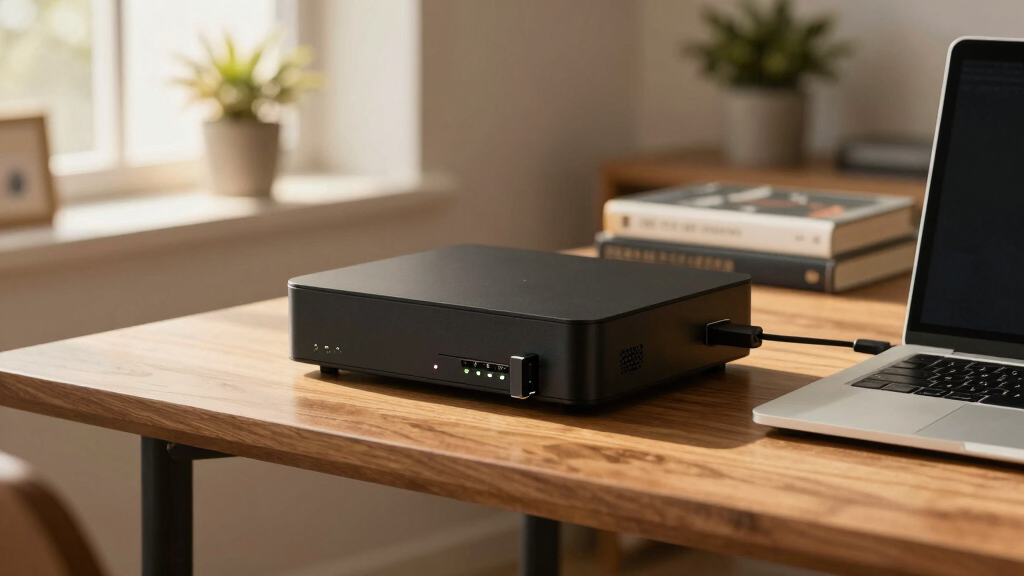
When searching for a network attached storage device, the goal is to find a solution that balances performance, ease of use, and expandability. The Synology DiskStation DS225+ stands out as the best overall choice for its reliable software ecosystem and versatile features. If you need a budget-friendly option, the Buffalo LinkStation 210 offers solid basic storage, while the UGREEN NAS DXP4800 provides high-end performance with faster networking and robust hardware. The biggest challenge in this category is choosing between raw performance, ease of setup, and future-proofing—each comes with tradeoffs. Continue reading for a detailed breakdown of these options to help you find the best fit for your needs.
Key Takeaways
- Top-tier NAS like the Synology DS225+ balances performance with user-friendly software, making it ideal for most users.
- Hardware specs such as RAM, CPU, and network speed significantly impact NAS performance, especially for demanding tasks.
- Diskless models offer flexibility but require additional investment in drives; preconfigured models are more convenient but costlier.
- Connectivity options like 2.5GbE and 10GbE are becoming standard for faster data transfer, especially in business or creative environments.
- Price varies widely, with premium models offering extra features like SSD caching or multiple M.2 slots, but many users can meet their needs with mid-range options.




More Details on Our Top Picks
Synology DiskStation DS225+ (Diskless) 2-Bay NAS
The Synology DiskStation DS225+ stands out for its high data transfer speeds reaching 282 MB/s and support for up to 40 TB of storage, making it ideal for users who need fast, reliable access to large files. Compared to the Synology DS223, which is more budget-friendly but offers fewer features, the DS225+ provides more advanced management options and surveillance integrations. However, its reliance on separate drives and more complex setup process can be a hurdle for less tech-savvy users. This makes it a strong choice for those who want a flexible, expandable NAS that balances speed and capacity but are comfortable with some initial configuration effort.
Pros:- High data transfer speeds with up to 282 MB/s read/write
- Supports large storage capacity up to 40 TB
- Multi-platform access for flexible data management
- Includes built-in file, photo management, and surveillance solutions
Cons:- Requires separate drives to operate, adding initial cost
- Limited to 2 drive bays, restricting future expansion
- Setup and configuration can be complex for beginners
Best for: Small businesses or advanced home users needing high-speed data transfer and multi-platform access
Not ideal for: Users seeking an all-in-one, plug-and-play solution without the need for separate drives or complex setup
- Model:DS225+
- Drive Bays:2
- Storage Capacity:Up to 40 TB
- Sequential Read/Write:282/217 MB/s
- Dimensions:9.14 x 4.25 x 6.5 inches
- Warranty:3-year limited hardware
Bottom line: This NAS is best suited for tech-savvy users who need a fast, expandable, and versatile storage solution for small-scale business or demanding home environments.
BUFFALO LinkStation 710 8TB 1-Bay NAS Network Attached Storage with HDD Included
The BUFFALO LinkStation 710 offers straightforward storage with 8TB of space in a single-bay design, making it perfect for users seeking a simple, no-fuss solution. Unlike the Synology DS225+, which supports multi-platform management and surveillance, the LinkStation 710 focuses on quick, secure backups and remote access for basic file sharing. Its performance is up to 7 times faster than older models, but the single-bay design limits future expansion, and network setup for remote access can be tricky for beginners. This pick makes sense for those who prioritize ease of use and immediate storage needs over scalability.
Pros:- Fast performance with up to 7x speed increase
- Secure data storage with SSL encryption and access controls
- No subscription fees for personal cloud storage
- Supports cloud integration with Dropbox, Azure, and OneDrive
Cons:- Limited to a single drive bay, restricting future storage expansion
- Requires network setup for remote access, which may be complex
- Basic feature set compared to multi-bay NAS options
Best for: Home users or small offices needing quick, secure backups without complex setup or expansion
Not ideal for: Power users or growing businesses requiring multi-bay scalability and advanced features
- Capacity:8TB
- Number of Bays:1
- HDD Included:Yes
- Performance:Up to 7x faster than LS 200
- Warranty:2 years
- Made in:Japan
Bottom line: This NAS is ideal for home users who want quick, secure backup and cloud integration without the complexity of larger systems.
UGREEN NASync DH4300 Plus 4-Bay Desktop NAS, Support Capacity 128TB (Diskless), Remote Access, AI Photo Album, 8GB RAM, 2.5GbE, 4K HDMI
The UGREEN NASync DH4300 Plus offers a substantial 128TB capacity in a diskless 4-bay configuration, making it perfect for media enthusiasts who want a centralized media server with AI photo management and remote access. Compared to the UGREEN NAS DXP2800, which is more geared toward small teams, the DH4300 Plus delivers higher capacity and media-focused features in a more compact design. Its support for Docker and 4K HDMI output makes it suitable for home media setups, but it lacks enterprise-level features and disks are sold separately, adding to initial costs. It’s well-suited for users who prioritize media sharing and easy organization over enterprise scalability.
Pros:- Large storage capacity up to 128TB, ideal for media libraries
- User-friendly setup with remote access and AI photo recognition
- Supports Docker containers and 4K HDMI output for media streaming
- Includes 8GB RAM for smooth operation
Cons:- Disks are not included, additional purchase required
- Supports Docker but not virtual machines, limiting some workflows
- Entry-level NAS may lack advanced enterprise features
Best for: Home media users and hobbyists seeking large capacity and media organization features
Not ideal for: Business users needing enterprise-grade security or virtual machine support
- Capacity:128TB (diskless)
- RAM:8GB
- Network:2.5GbE
- Video Output:4K HDMI
- Supported Devices:Desktop, Laptop, Smartphone, Tablet, Television
- Additional Features:AI photo album recognition, remote access
Bottom line: This NAS makes the most sense for media buffs looking for a large, easy-to-manage storage hub with multimedia capabilities.
UGREEN NAS DXP2800 2-Bay Desktop NAS with Intel N100, 8GB DDR5, 2.5GbE, M.2 NVMe Slots, 4K HDMI, Diskless
The UGREEN NAS DXP2800 combines a robust Intel N100 quad-core processor with 8GB DDR5 RAM, offering high-speed data handling in a 2-bay form factor. Unlike the Synology DS225+, which emphasizes user-friendly management, the DXP2800 targets tech-savvy users and small teams who need raw performance and large storage potential—up to 76TB—without sacrificing connectivity. Its support for M.2 NVMe slots enhances expandability, but since hard drives are sold separately, additional costs can add up. This device is best for those who want a powerful, private cloud with advanced encryption and remote access, but less suitable for users looking for an all-in-one, out-of-the-box solution.
Pros:- Powerful Intel N100 quad-core processor for fast data processing
- Large storage capacity potential up to 76TB
- Supports M.2 NVMe SSDs for cache and expansion
- Secure private cloud with remote access and encryption
Cons:- Hard drives are sold separately, increasing initial investment
- Limited to 2 drive bays, restricting some future expansion
- Requires more technical setup compared to simplified NAS options
Best for: Small businesses or enthusiasts requiring high performance and flexible storage options
Not ideal for: Casual users or those seeking a plug-and-play, ready-to-go NAS solution
- Processor:Intel N100 Quad-core
- RAM:8GB DDR5
- Storage Capacity:Up to 76TB
- Network:2.5GbE
- M.2 NVMe Slots:2
- Video Output:4K HDMI
Bottom line: This NAS is tailored for power users or small teams seeking high performance and flexible storage with advanced features.
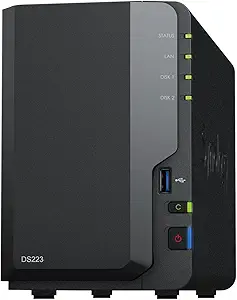
Synology 2-Bay NAS DS223 (Diskless)
The Synology DS223 offers a straightforward, diskless 2-bay design that supports easy sharing and syncing across multiple devices, making it a reliable choice for home users. Compared to the Synology DiskStation DS225+, which includes surveillance features and higher speeds, the DS223 focuses on simplicity and affordability, with less emphasis on advanced management. Its limited bays mean storage capacity is constrained, and it requires separate drives, which can be an inconvenience for users seeking an all-in-one package. This makes it a great option for basic data centralization and backup, especially for those new to NAS devices.
Pros:- Easy setup with multi-platform access
- Reliable data sharing and sync capabilities
- Includes surveillance tools for basic home monitoring
- Affordable entry-level NAS
Cons:- Requires separate hard drives, increasing upfront costs
- Limited to 2 drive bays, restricting future storage growth
- Lacks advanced enterprise features or high-speed performance
Best for: Home users or small households needing simple, reliable data sharing
Not ideal for: Power users or small businesses needing larger capacity or advanced features
- Number of Bays:2
- Diskless:Yes
- Warranty:2 years
Bottom line: This NAS is perfect for users seeking simple, dependable storage without the complexity or cost of larger systems.
Synology DS925+ 4-Bay NAS with 2.5GbE, Ryzen V1500B, 4GB RAM, 48TB Bundle with 4 Seagate Ironwolf 12TB HDDs
The Synology DS925+ stands out for its robust performance tailored to small and medium-sized operations, thanks to the AMD Ryzen V1500B processor and expandable RAM. It offers flexible storage options with hot-swappable bays and supports up to nine drives with an expansion unit, unlike the DS124’s single bay, making it more scalable. Its high-speed 2.5GbE ports provide quick data transfer—ideal for backup and virtualization tasks. However, this power comes with a higher price tag and requires some technical expertise during setup and expansion. Compared to the Ugreen NAS DH2300, which is more beginner-friendly, the DS925+ targets users comfortable with enterprise features and willing to pay for performance and flexibility.
Pros:- Powerful AMD Ryzen V1500B processor delivers fast performance
- Supports up to 9 drives with optional expansion for growing needs
- High-speed 2.5GbE connectivity ensures quick data transfers
- Includes four 12TB HDDs for immediate deployment
Cons:- Requires technical knowledge for setup and expansion
- Higher price point may be prohibitive for casual users
- Limited RAM out of the box, upgrade necessary for intensive tasks
Best for: IT professionals or small business owners needing scalable, high-performance storage with virtualization support
Not ideal for: Home users seeking simple, plug-and-play solutions without the need for expansion or enterprise features
- Processor:AMD Ryzen V1500B quad-core
- RAM:4GB DDR4 ECC, expandable up to 32GB
- Drive Bays:4 hot-swappable 2.5″/3.5″ bays
- Max Drive Support:Up to 9 drives with DX525 expansion
- Network Ports:2 x 2.5 GbE LAN ports
- Included Storage:4 x 12TB Seagate Ironwolf HDDs
Bottom line: This NAS suits professionals who need powerful, expandable storage and are comfortable with enterprise-level setup complexity.
UGREEN NAS DH2300 2-Bay Desktop NAS, Support 64TB Capacity, Remote Access, AI Photo Album, 4GB RAM, 1GbE, 4K HDMI, Diskless
The UGREEN NAS DH2300 is designed for home users or newcomers to NAS, offering an easy setup with support for up to 64TB of storage, which surpasses the capacity of many entry-level options like the Buffalo LinkStation 710. Its straightforward interface and remote access make it ideal for backing up personal files and sharing media, especially with features like AI photo tagging. The 4K HDMI output adds multimedia versatility. Nonetheless, its limited capacity—only two bays—restricts future expansion, and it doesn’t support virtualization or Docker containers, unlike more advanced models such as the UGREEN NAS DXP4800. It’s perfect for those seeking simple, reliable storage without enterprise complexity.
Pros:- Simple setup ideal for beginners
- Supports large storage capacity up to 64TB
- Fast transfer speeds up to 125MB/s
- Includes AI photo tagging for organization
Cons:- Limited to two bays, less future-proof for large storage needs
- No support for Docker or virtual machines
- Wi-Fi requires external USB adapter
Best for: Home users or beginners needing straightforward, reliable storage with media features
Not ideal for: Power users requiring virtualization, multiple drive bays, or large-scale enterprise features
- Capacity:Supports up to 64TB (diskless)
- RAM:4GB LPDDR4X
- Network:1GbE Ethernet port
- Video Output:4K HDMI
- Supported Drives:Compatible with WD, Seagate, Toshiba, excluding NVMe
- Security:RAID modes, two-factor authentication, encrypted transfers
Bottom line: This NAS is an excellent choice for home users seeking an easy-to-use device with multimedia and backup features.
Synology DiskStation DS124 (Diskless)
The Synology DS124 excels in small spaces, offering a compact, lightweight, single-bay NAS ideal for personal cloud setups. It supports Synology DiskStation Manager, enabling secure file sharing, backups, and surveillance features. Unlike the DS925+, which is geared toward multi-user environments, the DS124 is straightforward, with a focus on individual or small family use. Its single drive bay limits total capacity, making it less suitable for users with large or growing storage needs. However, its simplicity and compact size make it perfect for those wanting a reliable, private cloud without complex configuration or enterprise features.
Pros:- Compact and lightweight for easy placement
- Supports private cloud with DSM software
- Built-in backup and surveillance features
- Compatible with multiple devices
Cons:- Limited to a single drive bay, restricting capacity
- Requires setup and network knowledge
- No included drives, extra purchase needed
Best for: Home users or small households needing simple, secure data access and backup
Not ideal for: Users with large or expanding storage requirements or needing virtualization support
- Product Type:System Cabinet
- Compatible Devices:Desktop, Laptop, Smartphone
- Color:Black
- Enclosure Material:Alloy Steel
- Dimensions:2.8 x 6.54 x 8.82 inches
- Warranty:2 Years
Bottom line: This NAS makes sense for individuals or small families seeking a simple, secure private cloud solution.
Yxk Zero1 2-Bay Desktop NAS (Maximum 60TB, Diskless, 4GB RAM, 2.5GbE, 4K HDMI, Silent, User-Friendly Home Storage)
The Yxk Zero1 offers a user-friendly design tailored for home and small office environments, providing up to 60TB of storage with easy drive upgrades. Its quiet, compact metal enclosure makes it suitable for living spaces or small offices. Unlike the DS124, which prioritizes private cloud features, the Zero1 emphasizes scalability, remote access, and data safety with RAID and snapshots. Its 2-bay design limits maximum capacity compared to larger multi-bay options but makes setup and maintenance straightforward. This device is ideal for those who want a quiet, expandable storage solution without enterprise complexity, but it’s less suited for demanding workloads or large-scale data hosting.
Pros:- Supports up to 60TB with easy drive upgrades
- Quiet, compact metal enclosure fits in living or working spaces
- Remote access and RAID support provide data safety
- User-friendly setup via mobile or desktop app
Cons:- Limited to two bays, less suitable for very large data volumes
- Additional cost for drives, as it is diskless
- No support for virtualization or Docker
Best for: Home or small office users seeking scalable, quiet storage with multimedia support
Not ideal for: Users needing large-scale storage or enterprise features like virtualization or multiple bays
- Maximum Storage Capacity:60TB (diskless)
- RAM:4GB
- Network Ports:2.5GbE
- Video Output:4K HDMI
- Enclosure Material:Metal
- Dimensions:9″D x 4.1″W x 6.7″H
Bottom line: This NAS is perfect for users wanting a quiet, expandable storage device for home or small office use.
Synology 2-Bay DiskStation DS223j (Diskless)
The Synology DS223j stands out as an accessible, private cloud solution ideal for users prioritizing data security and multi-platform sharing. Compared with the Buffalo LinkStation 210, it offers more comprehensive data protection and flexible remote access options, but you must supply your own hard drives, which adds setup complexity. Its user-friendly interface makes it suitable for beginners, yet some technical knowledge might be needed during initial configuration. This NAS excels in providing a secure, private environment for personal files, although it lacks pre-installed drives and high-end features of larger systems. Its primary strength lies in easy, secure access for home users who want control over their data without enterprise-level complexity.
Pros:- Secure private cloud environment with multi-platform access
- Easy file sharing and syncing from anywhere
- Reliable data protection and backup options
Cons:- Requires users to supply their own hard drives, adding initial cost and setup steps
- Setup process may be challenging for users with limited technical experience
Best for: Home users needing secure, private cloud storage with easy remote access
Not ideal for: Small businesses or power users needing high performance and scalability, as it lacks advanced hardware features
- Model:DS223j
- Type:2-Bay NAS
- Storage:Diskless
- Warranty:2 years
Bottom line: This NAS is perfect for home users seeking simple, secure private cloud storage but less suited for demanding or scalable environments.
UGREEN NAS DXP4800 Pro 4-Bay Desktop NAS with Intel Core i3-1315U, 8GB DDR5, 128GB SSD, 10GbE, 2.5GbE, M.2 NVMe, 4K HDMI, Diskless
The UGREEN NAS DXP4800 Pro offers intense hardware capabilities tailored for demanding workflows, making it a clear choice over simpler models like the Buffalo LinkStation 210. Its Intel Core i3 processor, 8GB DDR5 RAM, and support for virtualization and AI functions position it as a mini server for small offices and media professionals. The extensive storage options—up to 144TB—paired with 10GbE connectivity, enable rapid data transfer and high-performance multitasking. However, this power comes with a complex setup process that may intimidate casual users, and its size and price make it less suitable for small or cluttered spaces. This device is best suited for tech-savvy users needing high performance and expandability rather than simple backup tasks.
Pros:- High-performance hardware capable of virtualization, Docker, and AI applications
- Supports large storage capacity with flexible RAID configurations
- Fast network connectivity with 10GbE and 2.5GbE ports
Cons:- Setup and configuration require technical knowledge and familiarity with network systems
- High price point and large size limit suitability for small or cluttered spaces
Best for: Small businesses or media professionals with demanding workflows and technical expertise
Not ideal for: Casual home users or those seeking a straightforward, plug-and-play NAS experience
- Processor:Intel Core i3-1315U 6-Core
- RAM:8GB DDR5 (expandable to 96GB)
- Storage Capacity:Up to 144TB (4x HDD + 2x M.2 SSD)
- Network Ports:1x 10GbE, 1x 2.5GbE
- M.2 NVMe Slots:2
- Form Factor:Desktop NAS, Diskless
Bottom line: This NAS is ideal for technically proficient users needing robust performance and expandability, but it’s overkill for simple backup needs.
Buffalo LinkStation 210 2TB 1-Bay NAS Network Attached Storage with HDD Included
The Buffalo LinkStation 210 provides a straightforward, out-of-the-box solution for users who want simple, centralized storage with minimal fuss. Its included hard drive and basic features make it a no-hassle option compared to the more complex Synology DS223j. While it’s easy to set up and suitable for basic backups and file sharing, it’s limited to a single drive bay, which restricts future scalability. Its basic feature set and slower network speeds mean it’s best for small households or individuals with modest storage needs. For those considering a more expandable system with advanced features, the LinkStation 210 might feel restrictive, but it excels as an entry-level, plug-and-play NAS.
Pros:- Easy to set up and operate with included hard drives
- No monthly fees for personal cloud access
- Secure file sharing with access controls
Cons:- Limited to a single drive bay, restricting future expansion
- Basic features lacking advanced options like virtualization or high-speed networking
Best for: Individuals or small households seeking simple, ready-to-use storage with no technical hassle
Not ideal for: Power users or small businesses needing scalable storage or advanced features
- Storage Capacity:2TB
- Number of Bays:1
- Included Hard Drives:Yes
- Warranty:2 years
Bottom line: This NAS makes the most sense for users seeking a simple, all-in-one storage device without extra complexity.

How We Picked
The products in this roundup were evaluated based on performance, build quality, ease of setup, expandability, and value for money. We prioritized devices with reliable software ecosystems, such as Synology’s DiskStation Manager, and considered hardware specs that impact real-world use, like CPU power and RAM. Devices were also judged on their future-proofing potential—support for faster networks or additional drives—and user-friendliness for both beginners and advanced users. Our rankings reflect a balance between these factors, ensuring choices cater to different needs from home users to small offices.Factors to Consider When Choosing Network Attached Storage
Choosing the right NAS involves understanding several key factors beyond just hardware specs. While initial capacity is important, consider future expansion options and how the device will fit into your network environment. Reliability and software support can significantly simplify management and enhance security. It’s also worth weighing the total cost of ownership, including drives, upgrades, and maintenance. Being aware of common pitfalls, such as overestimating your storage needs or opting for overly complex setups, will help you make a smarter investment.Performance and Hardware Specs
A NAS’s CPU, RAM, and network interfaces directly impact how well it performs with tasks like media streaming, data backup, and remote access. For demanding workflows, look for models with multi-core processors and at least 4GB of RAM, or more if you’re handling large files or multiple users. Budget models with basic hardware may suffice for simple backups or media serving but will struggle under load. Consider future needs; investing in slightly more powerful hardware can extend the device’s lifespan and usability.
Connectivity and Network Speed
Most NAS devices now feature at least 1GbE Ethernet ports, but models with 2.5GbE or 10GbE support are increasingly common, offering much faster data transfer rates. Think about your current network infrastructure—upgrading to faster Ethernet switches might be necessary if you choose a multi-gig NAS. For home use, 1GbE may be enough, but creative professionals or small offices will benefit from higher speeds to reduce transfer times and improve remote access experiences.
Ease of Use and Software Ecosystem
The availability of a user-friendly interface and robust software ecosystem can make or break your experience. Brands like Synology and QNAP provide intuitive management tools, automatic updates, and app ecosystems that add functionality over time. This is especially important for beginners or those who prefer a turn-key solution. Be cautious of NAS with complicated setup procedures or limited software support, which can lead to frustration and higher maintenance efforts.
Expandability and Future-Proofing
Consider how much storage you might need down the road. Devices with multiple drive bays, M.2 slots, or support for expansion units deliver more flexibility. Also, check for compatibility with newer network standards like 2.5GbE or 10GbE, and whether the NAS supports SSD caching or other performance-enhancing features. Over-investing in high-end hardware may be unnecessary for casual use, but skimping on expandability can limit your device’s lifespan and usefulness.
Price and Total Cost of Ownership
While budget models may seem attractive, they often require additional investments in drives, RAM upgrades, or accessories later on. Premium devices come with higher upfront costs but can save money and effort in the long run by offering greater durability, faster performance, and more features. Always factor in the price of drives compatible with the NAS, as they can significantly influence the total investment. A balanced approach considers both initial cost and future needs to avoid overspending or underspending.
Frequently Asked Questions
Should I buy a diskless NAS or one with drives included?
Choosing between a diskless NAS and one with drives included depends on your comfort with selecting and installing drives. Diskless models offer flexibility to choose drives that match your capacity and performance needs, but require additional setup time. Preconfigured models with drives included are more straightforward, especially for beginners, but tend to be more expensive overall. If you already have drives or prefer customizing your setup, a diskless model can be more cost-effective and adaptable.
Is a 2-bay NAS enough for my home media library?
For most home users, a 2-bay NAS provides sufficient capacity and redundancy options, especially if you plan to mirror drives for data protection. It’s a practical choice for media streaming, backups, and light file sharing. However, if your media library grows rapidly or you want more flexibility in managing multiple backups, consider models with more bays or support for expansion. Keep in mind that capacity planning now can prevent needing an upgrade sooner than expected.
How important is network speed when choosing a NAS?
Network speed is a vital factor, especially if you plan to transfer large files or stream high-definition media. A standard 1GbE port may suffice for casual use, but for faster transfers, a NAS supporting 2.5GbE or 10GbE can dramatically reduce wait times. Upgrading your network infrastructure to match these speeds ensures you get the most out of your NAS. Without appropriate network support, higher-performance models won’t reach their full potential, limiting your experience.
Can I upgrade the RAM or CPU in my NAS later?
Some NAS models allow upgrades to RAM or, less commonly, CPUs, but many are designed with fixed hardware to keep costs down. If future expandability is important, choose a model that explicitly supports upgrades. Keep in mind that upgrading hardware can be complex or limited, and sometimes replacing the entire device is more practical if your needs grow significantly. Consider your long-term plans and select a model accordingly to avoid unnecessary frustration.
What features should I prioritize for small business use?
For small business applications, prioritize NAS devices with faster network interfaces like 2.5GbE or 10GbE, robust hardware, and advanced security features. Redundancy options such as multiple drive bays with RAID support are essential for data protection. Consider models with enterprise-grade software, remote management capabilities, and scalability options to accommodate growth. Investing in a higher-end device initially can provide better reliability and performance as your business needs evolve.
Conclusion
For general home use or media streaming, the Synology DiskStation DS225+ offers a reliable balance of performance, ease of use, and expandability, making it the best overall choice. Those seeking budget-friendly storage should consider the Buffalo LinkStation 210, which provides straightforward, no-frills functionality. If you need high-end performance with faster network support, the UGREEN NAS DXP4800 is an excellent premium pick. Beginners or less technical users will benefit from models with simple interfaces, like the Yxk Zero1. For small businesses or demanding environments, investing in higher-performance models with more connectivity options will pay off over time. Ultimately, matching your storage needs and technical comfort level will help you choose the right NAS for 2026.