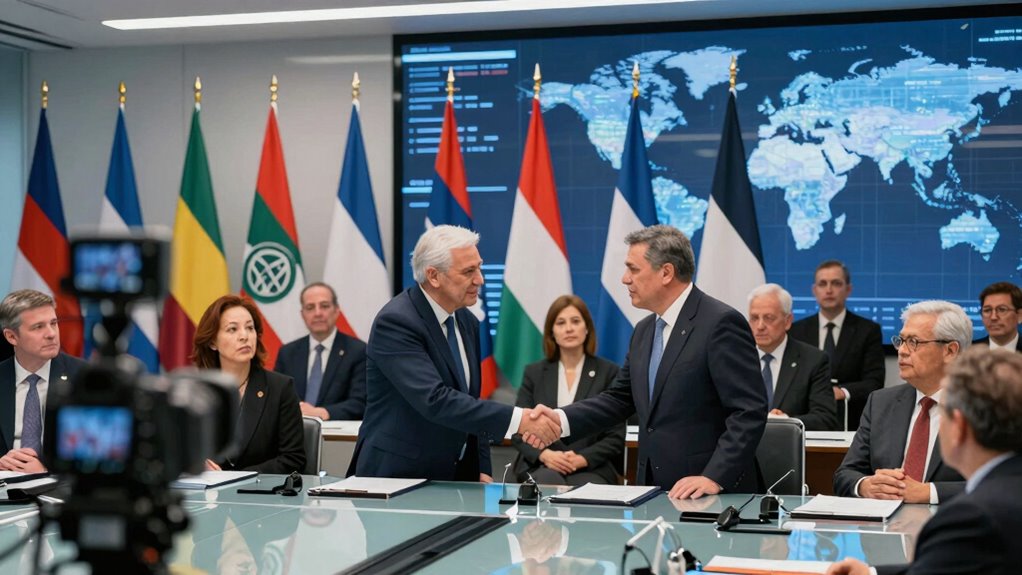

Global security partnerships are evolving beyond traditional military alliances to include cybersecurity, humanitarian aid, and responses to new threats like climate change and pandemics. You’ll see countries collaborating through multilateral initiatives that share intelligence, develop joint strategies, and use digital tools for real-time communication. This broader approach helps prevent conflicts and build resilience. If you want to understand how these changes shape global stability, there’s much more to explore.

Get everyday essentials delivered free with Prime
- Fast, free delivery on millions of items
- Prime Video, Amazon Music and more included
- Member-only deals all year
Key Takeaways
- Expanding collaborations beyond military alliances to include cybersecurity, intelligence, and humanitarian efforts.
- Leveraging digital transformation for real-time communication and data sharing among partners.
- Addressing non-traditional threats like climate change, pandemics, and cybercrime through coordinated international responses.
- Building trust through joint humanitarian aid, crisis response, and sharing intelligence during global emergencies.
- Developing integrated, adaptable security frameworks that prioritize resilience and technological innovation.

Have you ever wondered how countries work together to keep the world safer? It’s a complex web of diplomacy, intelligence sharing, and strategic alliances that constantly evolves to address emerging threats. Today, global security partnerships are being redefined by new challenges and shifting priorities. Traditional military alliances still play a crucial role, but now, cooperation extends beyond armies and borders to include cybersecurity, intelligence, and humanitarian efforts. One of the most pressing issues reshaping these partnerships is cyber espionage. As technology advances, nations recognize that cyber threats are as dangerous as conventional warfare. Countries now share intelligence on cyber attacks, develop joint cybersecurity initiatives, and establish protocols to protect critical infrastructure. These efforts help prevent devastating data breaches and cyber sabotage, which could cripple economies or compromise national security. Cyber espionage isn’t just about stealing secrets; it’s about safeguarding sovereignty in an increasingly digital world. In tandem with cybersecurity, humanitarian aid has become a key element in redefining security partnerships. When crises occur—be it natural disasters, conflicts, or pandemics—countries are more inclined to collaborate on relief efforts. This cooperation isn’t limited to distributing supplies; it involves coordinated responses to ensure aid reaches those in need swiftly and efficiently. By partnering on humanitarian aid, nations build trust and demonstrate a commitment to global stability that transcends traditional military alliances. These partnerships often include sharing intelligence on emerging threats, jointly training personnel, and deploying resources to affected regions. It’s a recognition that security isn’t just about defending borders but also about fostering resilience within vulnerable communities. The evolving nature of global threats demands flexibility and innovation from security alliances. Countries are increasingly engaging in multilateral initiatives, pooling intelligence, and sharing best practices. Technology plays a pivotal role, enabling real-time communication and data exchange that enhances collective response capabilities. The focus now extends to addressing non-traditional security challenges, such as climate change, pandemics, and cybercrime, which require coordinated international responses. This broader approach helps prevent conflicts from escalating and promotes stability worldwide. As you see, the landscape of global security partnerships is changing rapidly, driven by digital transformation and new threats. Countries understand that working together—whether through intelligence sharing to combat cyber espionage or delivering humanitarian aid during crises—is essential to maintaining peace and stability. This shift reflects a more integrated, adaptable approach to global security, emphasizing collaboration over isolation. Ultimately, it’s about creating a safer, more resilient world where nations support each other through evolving challenges. Recognizing the importance of cybersecurity in modern security frameworks is essential for adapting to these new realities.
Popular right now

Breville Barista Pro Espresso Machine with Grinder, Brushed Stainless Steel

Ninja Luxe Café Premier 3-in-1 Espresso Machine, Drip Coffee & Cold Brew

Roborock RockNeo Q110H Wire-Free Robot Lawn Mower
As an affiliate, we earn on qualifying purchases.
Frequently Asked Questions
How Do Emerging Technologies Influence Security Partnership Strategies?
Emerging technologies substantially influence your security partnership strategies by emphasizing technological sovereignty and fostering innovation diplomacy. You need to prioritize developing and controlling key technologies to maintain independence, while collaborating internationally to share innovations. This approach helps you strengthen alliances, defend against cyber threats, and address security challenges more effectively. By balancing sovereignty with diplomacy, you guarantee your partnerships remain adaptive and resilient in the rapidly evolving technological landscape.
What Role Do Non-Traditional Allies Play in Global Security?
They say, “the whole is greater than the sum of its parts,” and non-traditional allies embody this truth. You leverage unconventional diplomacy to build non-traditional alliances, filling gaps that traditional partnerships can’t. These unconventional relationships expand your security reach, bringing fresh perspectives and innovative solutions. By embracing non-traditional alliances, you strengthen global security, fostering collaboration beyond usual boundaries and adapting to an ever-changing geopolitical landscape.
How Are Cybersecurity Threats Reshaping International Security Collaborations?
Cybersecurity threats, like cyber espionage and attacks on supply chains, are pushing you to rethink international security collaborations. You realize that sharing intelligence, developing joint defenses, and establishing norms for cyber conduct are essential. These threats blur traditional boundaries, requiring you to build flexible, resilient partnerships that can adapt quickly. By working together, you strengthen defenses against cyber espionage and protect critical supply chains, ensuring global stability and security.
What Economic Factors Impact the Formation of Security Partnerships?
Economic sanctions and trade agreements directly influence security partnerships by shaping alliances based on shared economic interests. When sanctions target a country, you might see nations band together to counteract economic pressures, fostering security cooperation. Conversely, trade agreements can strengthen bonds, encouraging collaboration on defense and security issues. You realize that economic stability and mutual prosperity often serve as the foundation for enduring security partnerships, influenced by these economic factors.
How Do Regional Conflicts Affect Global Security Alliance Dynamics?
Regional conflicts cause shifts in global security alliances by prompting countries to reevaluate their partnerships. You’ll notice regional power shifts that influence alliance priorities, often leading to new diplomatic negotiations. These conflicts push nations to strengthen existing ties or forge new ones, aiming to address regional threats more effectively. As a result, global security dynamics become more fluid, reflecting changing power balances and strategic interests across different regions.
Conclusion
As you consider the shifting landscape of global security, remember that these partnerships are more than alliances—they’re living, breathing entities constantly evolving. What new challenges will shape these relationships next? Will emerging threats forge stronger bonds or fracture old alliances? The future of global security hangs in the balance, and only time will reveal whether these partnerships can adapt fast enough or if they’ll be left behind in a rapidly changing world. The next move is yours to watch.