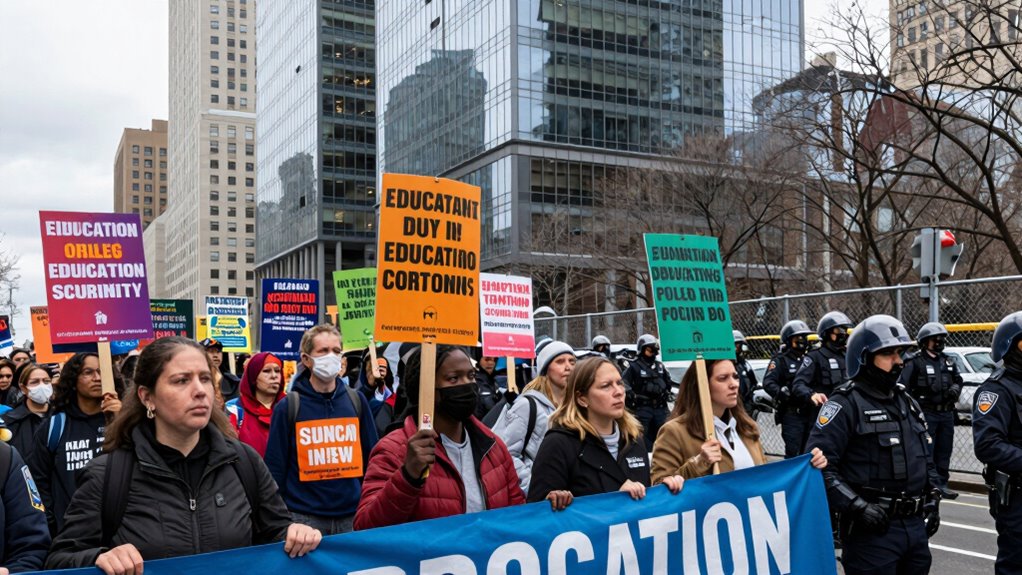

Policy battles over education keep expanding nationwide because disagreements over what should be taught and how resources are spread have become deeply rooted in political and cultural divides. These conflicts often get amplified by media coverage and politicians, turning schools into battlegrounds for broader societal issues. As tensions rise, communities become more polarized, making it harder to find common ground. To understand how these disputes grow and influence your local schools, keep exploring what’s really driving these debates.
Key Takeaways
- Cultural and societal conflicts are increasingly reflected in education policies, broadening the scope of disputes nationwide.
- Politicians leverage education debates to rally support and divert attention from other issues, fueling expansion.
- Media coverage amplifies conflicts, intensifying divisions and making consensus more difficult.
- Funding disparities and curriculum disagreements are intertwined with broader ideological battles, escalating disputes.
- Local and state conflicts are magnified at the national level, creating a cycle of expanding policy battles.
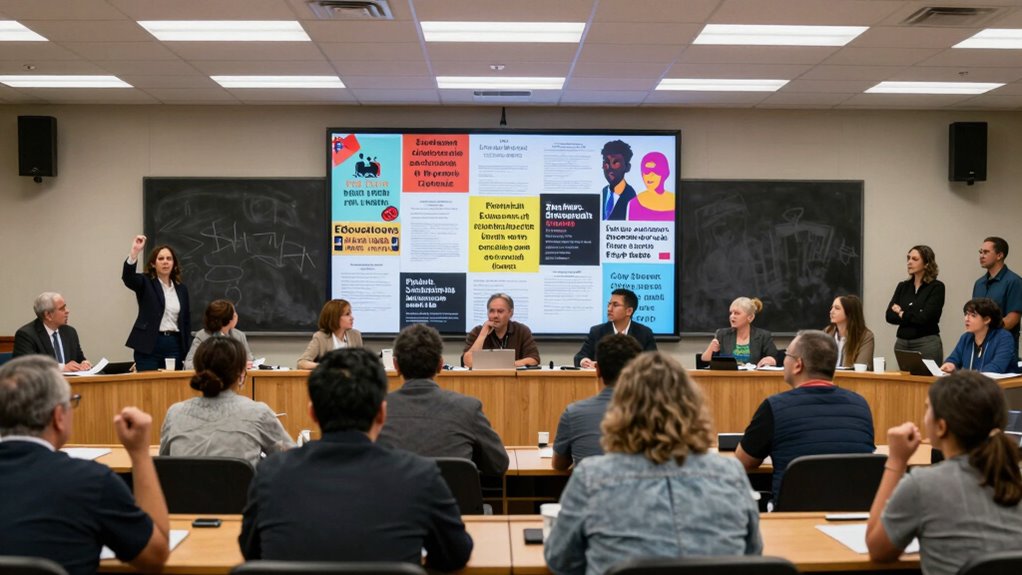
Have you ever wondered why debates over education policies seem to intensify every year? Part of the reason is the ongoing tug-of-war over what should be taught in classrooms. Curriculum controversies often become flashpoints, with different groups advocating for specific content that aligns with their values or political beliefs. Some push for more inclusive history lessons, while others seek to emphasize traditional subjects or religious perspectives. These disagreements are fueled by a lack of consensus on what constitutes a well-rounded education, making it easy for disputes to escalate and dominate public discourse. As these debates grow louder, policymakers feel pressured to take sides, which only deepens the divide.
At the same time, funding disparities play a significant role in fueling the expansion of policy battles nationwide. Schools in wealthier areas tend to have access to more resources, better facilities, and advanced programs, while those in poorer communities struggle with outdated textbooks, insufficient staff, and limited extracurricular options. These inequalities spark frustration among parents, teachers, and students, prompting calls for reform and more equitable funding. But funding issues are complex; they involve debates over tax policies, allocation formulas, and state versus local control. As different districts demand more resources or challenge existing funding models, the fight over money becomes part of the broader political contest over education. Additionally, the funding imbalance between districts often exacerbates tensions and complicates efforts to achieve equitable educational opportunities. Recognizing the importance of equitable resource distribution, some regions are experimenting with innovative funding models to address these disparities. Furthermore, the complexity of school finance systems often hinders straightforward solutions and requires careful policy design to ensure fairness. A clear understanding of school finance is essential for crafting effective reforms that can bridge the divide and promote fair access to quality education.
The combination of curriculum controversies and funding disparities creates a perfect storm that keeps pushing education policy debates to the forefront. When people see their children’s education being affected—whether through limited resources or contentious classroom content—they become more vocal and active. Political leaders quickly recognize this tension and often use it to rally support or deflect criticism. The media amplifies these conflicts, framing education as a battleground for ideological struggles, which further entrenches divisions and makes compromise more difficult.
Moreover, the national landscape is increasingly polarized, and education has become a symbol of broader cultural conflicts. Every new policy proposal or budget decision becomes a proxy for larger debates about values, identity, and the direction of society. As these issues intertwine, the battles over education policy aren’t just about schools—they reflect deeper disagreements about what kind of country we want to be. This ongoing clash ensures that education remains a central and contentious issue, expanding across states and localities, drawing more attention and raising the stakes with every new legislative session.
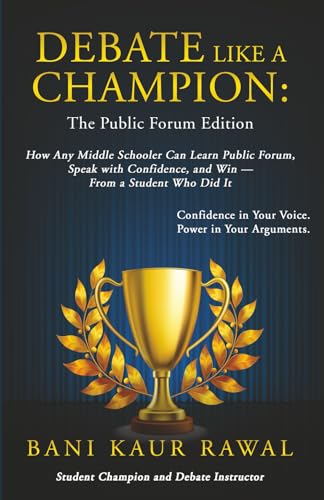
Debate Like a Champion : The Public Forum Edition: How Any Middle Schooler Can Learn Public Forum, Speak with Confidence, and Win – from a Student Who Did It
As an affiliate, we earn on qualifying purchases.
As an affiliate, we earn on qualifying purchases.
Frequently Asked Questions
How Do Local Communities Influence National Education Policies?
You influence national education policies through your community activism and engagement with local governance. When you rally others, participate in school board meetings, or advocate for specific issues, you shape local decisions that can ripple upward. Your involvement pressures policymakers to contemplate community needs, as widespread activism demonstrates public support or concern. Over time, these local efforts help set priorities and fuel larger policy debates nationwide, amplifying your voice beyond your immediate community.
What Role Do Teachers’ Unions Play in Policy Battles?
Teacher unions play a significant role in policy battles through teacher activism and union negotiations. You might see them advocate for better pay, smaller class sizes, or improved working conditions, shaping education laws. They organize protests and lobby policymakers to influence decisions. By mobilizing teachers and engaging in negotiations, unions actively shape education policies, making them key players in nationwide debates over education funding, standards, and reforms.
How Does Federal Funding Impact State Education Decisions?
Federal influence profoundly impacts state education decisions through funding priorities. When you receive federal funds, you often have to comply with specific requirements or policies attached to that funding. This can steer state priorities, encouraging you to focus on areas like standardized testing, teacher training, or technology. Consequently, federal influence shapes how states allocate resources, often aligning local policies with national priorities, which intensifies policy battles across the country.
Are Private Schools Affected by Nationwide Policy Conflicts?
You might think private schools are insulated from nationwide policy conflicts, but they’re not entirely detached. Private funding can be influenced by political debates, affecting resources and operational costs. While private schools often enjoy greater school autonomy, they still respond to broader policy shifts that shape funding options and regulatory environments. These conflicts can lead to changes in funding structures, impacting how private schools manage curriculum and maintain independence.
What Are the Long-Term Effects of Policy Battles on Students?
You’ll notice that ongoing policy battles can weaken student resilience, making it harder for students to adapt to change and stay motivated. These conflicts often create a confusing environment, reducing policy awareness and consistency in education quality. Long-term, students may face increased stress, lower achievement, and diminished confidence, which can impact their future opportunities. Staying informed and resilient helps students navigate these challenges and guarantees they remain focused on their learning goals.

A Guide for Using The Odyssey in the Classroom
Used Book in Good Condition
As an affiliate, we earn on qualifying purchases.
As an affiliate, we earn on qualifying purchases.
Conclusion
As you watch these policy battles unfold across the nation, remember that each fight isn’t just about textbooks or classrooms—it’s about shaping the future. Like a storm on the horizon, the clash of ideas grows louder, threatening to drown out reason and unity. But in the eye of this chaos, you have the power to listen, question, and advocate. Because, in the end, education’s true victory depends on whether we can find common ground amid the storm.

Mark Twain Industrialization Through the Great Depression Social Studies Workbook, American History Books for Middle and Upper Grades, Classroom or … (Volume 5) (American History Series)
As an affiliate, we earn on qualifying purchases.
As an affiliate, we earn on qualifying purchases.

Tools for Education Policy Analysis
Used Book in Good Condition
As an affiliate, we earn on qualifying purchases.
As an affiliate, we earn on qualifying purchases.