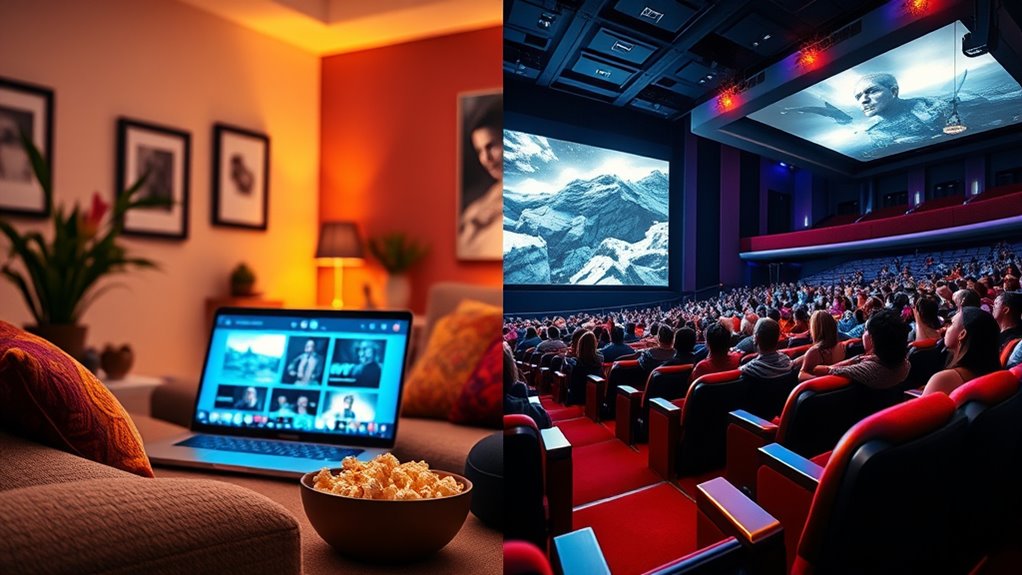
By 2025, streaming has transformed how you watch movies, making cinematic experiences more accessible and tailored to your preferences. High-quality visuals, immersive sound, and instant access mean you can enjoy films anytime, anywhere—even from remote villages or small towns. While theaters still offer social and large-scale visuals, technology now lets your home feel almost like a theater. Want to discover how this shift impacts your movie choices? Keep exploring to find out more.
Key Takeaways
- Technological advances like 4K, HDR, and immersive sound now enable high-quality home viewing comparable to theaters.
- Accessibility improvements allow audiences worldwide, including remote regions, to enjoy movies easily via streaming platforms.
- The pandemic accelerated hybrid releases, blurring traditional lines between theater-going and online streaming experiences.
- Home cinema tech, such as advanced projectors, offers immersive experiences, making home viewing more comparable to theaters.
- Personal preferences now guide choices more than availability, with both options catering to diverse lifestyles and technological readiness.
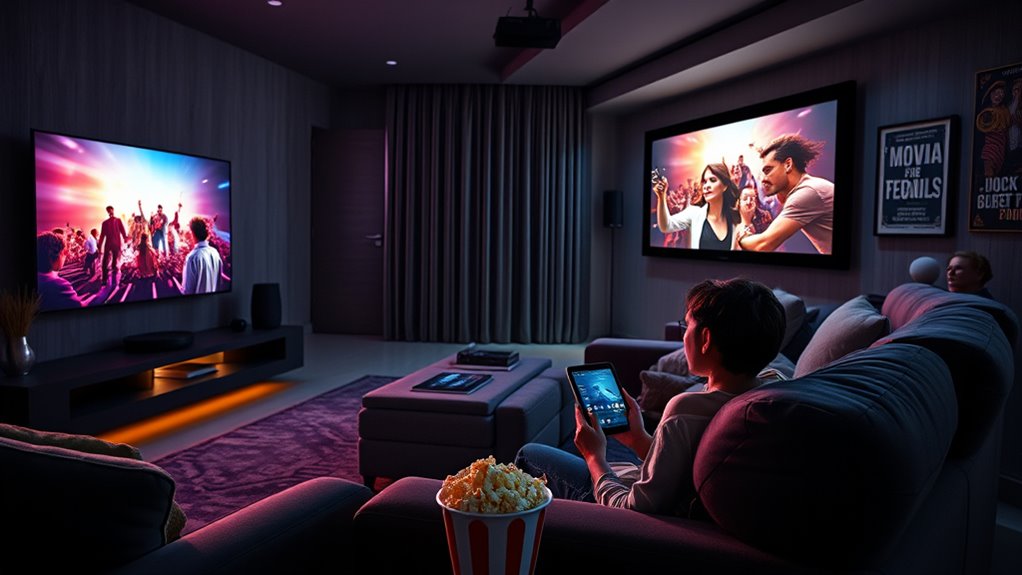
Have you ever wondered whether streaming or theaters offer the better movie experience? In 2025, that question has become even more nuanced as technological advances continue to reshape how we watch films around the world. One of the biggest shifts is in global accessibility. Streaming platforms now reach audiences in remote regions, making it possible for someone in a small village to access the latest blockbuster or indie film without leaving their home. This expansion has broken down geographical barriers that once limited viewership to urban centers or countries with well-established cinema industries. Now, viewers from diverse backgrounds can enjoy content that was previously out of reach, creating a more inclusive global movie culture.
At the same time, technological advances have enhanced the quality and convenience of streaming. High-speed internet, 4K resolution, HDR, and immersive sound systems have brought the home viewing experience closer to that of a theater. With just a click, you can stream movies in stunning clarity, often matching or surpassing what you’d see on the big screen. This level of technological sophistication has made streaming a practical alternative, especially as many prefer the comfort of their own space. You can pause, rewind, or skip scenes, customizing your viewing experience in ways theaters can’t offer. These advances also mean plenty of content options—from blockbuster hits to niche indie films—are available on demand, giving you control over what to watch and when.
Furthermore, the pandemic accelerated the adoption of streaming, prompting studios to release movies directly online or simultaneously in theaters and homes. This shift highlighted how technological advances could deliver cinematic quality without the need for a physical theater visit. As a result, the lines between traditional theater-going and home streaming blurred, forcing you to weigh convenience against the immersive experience. While theaters continue to offer a communal atmosphere and large-scale visuals that are hard to replicate at home, streaming services now deliver cinematic quality with unprecedented ease and accessibility.
In 2025, the convergence of global accessibility and technological advances means you have more options than ever before. Whether you prefer the social, sensory experience of a theater or the comfort and flexibility of streaming at home, both options have been transformed to suit diverse needs and lifestyles. These innovations have democratized movie-watching, allowing you to enjoy films on your own terms, regardless of where you are or your technological setup. The future of movie viewing is more inclusive, customizable, and technologically advanced than ever, making the choice between streaming and theaters a matter of personal preference rather than availability. Additionally, projector technology advances have further enhanced home cinema setups, enabling a near-theater experience right in your living room.
Frequently Asked Questions
How Did Streaming Technology Evolve by 2025?
By 2025, streaming technology evolved remarkably, transforming content delivery and boosting user engagement. You now experience faster, more reliable streams with higher quality visuals, thanks to advanced compression algorithms and widespread 5G adoption. Interactive features, personalized recommendations, and immersive experiences like VR have become common, making it easier for you to access content anytime, anywhere, and stay deeply connected to your favorite movies and shows.
What Are the Environmental Impacts of Streaming Versus Theaters?
You might think streaming is greener, but it’s a double-edged sword. Streaming’s vast digital highways consume significant energy, hiking its carbon footprint, while theaters, with their massive screens and lighting, also guzzle resources. Your choice impacts the environment—every gigabyte streamed or every movie seen on the big screen adds to energy consumption. Balancing convenience with sustainability means being mindful of how your viewing habits ripple through our planet’s health.
How Have Consumer Preferences Shifted Since 2025?
Since 2025, you’ve noticed a shift in consumer preferences toward more personalized experiences. Audience engagement has become a priority, with viewers seeking interactive and immersive content. You also value content diversity, enjoying a wider range of genres and formats accessible through streaming platforms. This shift reflects your desire for convenience, variety, and deeper connection with the media you consume, shaping how you choose between streaming and theater experiences.
What Are Future Predictions for Hybrid Viewing Experiences?
You’ll probably love the irony—future hybrid viewing will blend virtual screenings with personalized content, making it seem like you’re in the director’s chair from your couch. Expect immersive experiences where you select your perspective, interact with the story, and enjoy exclusive virtual premieres. This seamless integration promises a cinematic experience tailored just for you, blurring the lines between home and theater, and redefining how we watch movies forever.
How Did Global Events Influence Movie Distribution Trends?
Global events, like the pandemic, drove distribution shifts by pushing studios to prioritize digital platforms. You notice that audience engagement now occurs across multiple channels, blending theatrical releases with streaming premieres. This shift means movies reach wider audiences faster, encouraging more interactive experiences. As a result, you find yourself accessing movies through diverse methods, enjoying increased flexibility and personalized viewing, shaping a more dynamic and interconnected entertainment landscape.
Conclusion
As 2025 reshaped how you experience movies, you might wonder if the magic of the theater will ever fully fade or if streaming will continue to evolve. Both offer unique advantages, catering to different moods and moments. Ultimately, your choice depends on what you value most—immersive grandeur or convenience. So, as the lines blur, aren’t you excited to see how your own movie-watching habits will adapt in this ever-changing landscape?

Elena’s passion for the arts and culture shines through in her vivid reporting. From film festivals to gallery openings, her coverage is an essential source for anyone interested in the latest cultural trends and artistic movements.